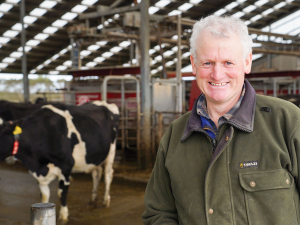
Federated Farmers Meat and Fibre chairman Rick Powdrell spoke at the Feds' annual conference last week. Here are excerpts from his speech.
One thing in life never changes: the moment you overcome one challenge, another is sure to arise.
Once in a while a challenge crops up that might be easier to abandon, but that's not my way. You guessed it, that's a reference to the New Zealand red meat industry.
At our February meeting we discussed our role, emphasising continued dialogue with key players, notably Beef + Lamb NZ, the Meat Industry Association, Meat Industry Excellence and other parties keen to engage.
Plenty of people have been willing to talk, some notable for their commercial self-interest and others on specific elements in the industry. All have relevant ideas and passion and desire to see the industry move forward. But until key players come together with a common goal the required quantum shift will not occur.
Since our February meeting we have talked with BLNZ, some of us getting involved in groups developing and testing BLNZ's market development plan.
Hopefully the coming together of all the parties -- farmers, processors, marketers, government and others -- will result in an agreed way forward. If so, similar approaches might help us address other industry issues.
In February, speaking about the UK lamb market, I referred to a need to try to bring together all industry participants for the betterment of all.
What the Brexit vote means to NZ is unknown, except there will be significant unrest in all aspects of the UK economy. How NZ industry leaders and government respond will be vitally important.
Now is not the time to sit back and watch what develops. Rather we should act to mould the future with our UK counterparts for the betterment of all.
The UK marketing strategy will likely be turned upside down. Our lamb exports to the UK face the biggest risk. We have a product that presently is not rewarding farmers for their effort; preservation is the minimal acceptable outcome.
As BLNZ has emphasised, the EU and UK are our most valuable sheepmeat markets. Maintaining our quota of 228,000 tonnes at zero duties to these markets will be important. How that can be achieved, what the end result will look like and over what time-frame is unknown.
The duration of the unrest as the UK settles into its new freedom may require some patience. But we must be patient at the table in the UK, not watching from the sidelines here in NZ.