Federated Farmers Praises Labour's Emissions Tax Backdown
For the first time in a quarter of a century, Federated Farmers has something positive to say about the Labour Party’s climate change policy leading into a general election.
 increase font size
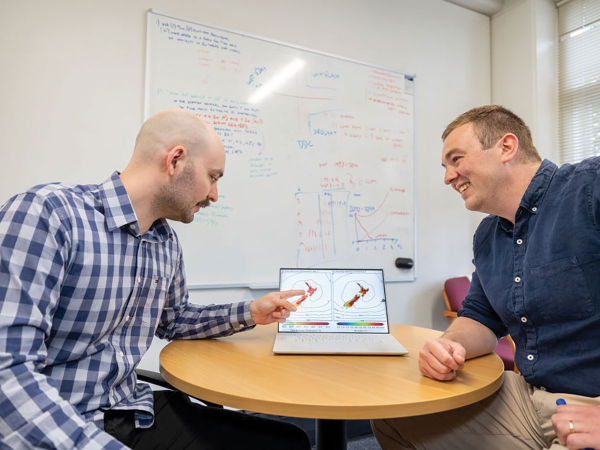 Hamish Lewis and Dr Luke Harrington used a range of climate models to explore future drought risk.
New research could help farmers prepare for a future where summer rainfall is increasingly unpredictable and where drought risk is rising, no matter what.
The study led by University of Waikato researchers Hamish Lewis and Dr Luke Harrington reveals a sobering truth: the driest years of today could become the average years of tomorrow.
Funded through the Endeavour Fund's Smart Ideas programme, Lewis and Harrington used a range of climate models to explore how uncertain rainfall projections interact with rising temperatures to shape future drought risk.
The research comes on the back of other recent findings by the pair along with colleagues from Earth Sciences New Zealand in which they found heatwaves that currently hit once a decade could potentially strike every other summer.
Rather than relying on a single forecast, they examined two plausible futures: one where summertime rainfall increases, and one where it decreases.
"In a wetter future, droughts are not too much worse. The temperature-driven drying of the land when the world heats up because of extra greenhouse gases is offset by the extra rain," postdoctoral research fellow Lewis explains.
"But when the world heats up and you also have less rainfall, drought events can worsen significantly. The average year in the future would resemble the driest summers we see in today's climate."
He says this pattern holds across regions from Waikato to Southland despite local climate differences.
"It's impressive how consistent the signals of change are across the country. This isn't a case where regions like Southland are off the hook. You can't simply sell your farm in one area and relocate elsewhere expecting to escape the impact. The risks increase everywhere."
Senior lecturer in climate change Harrington makes it clear that it is "inherently uncertain" which way the future weather could go, hence the two storylines chosen.
And it will mean that farmers have a choice.
"They can take a gamble, hope that we have wetter summers in the future, in which case the additional rain will offset the warming-induced risks of more extreme drought.
"Or they can take a pragmatic approach to risk management, and plan for the equally plausible outcome where rainfall does decline in the summer and drought risks increase substantially across the country."
As Harrington notes, adaptation strategies will vary depending on the farm, but the most effective responses are likely to come from those working on the land day to day.
"Whether it's planning ahead for supplementary feed during dry spells, improving water storage capacity, or exploring alternative land uses, farmers and growers are best played to make informed decisions, especially when equipped with clear, practical data."
For the first time in a quarter of a century, Federated Farmers has something positive to say about the Labour Party’s climate change policy leading into a general election.
Climate, nature and animal wellbeing make up Fonterra's refreshed sustainability roadmap released last week.
A five-year study has found that the cost of reducing emissions without technology may be significant and unsustainable for Northland dairy farmers.
OPINION: With the winter months officially here, I trust all is well at your place.
OPINION: The global crusade against fossil fuel is gaining momentum in some regions.


National’s pledge to introduce 19 new national standards shows the party is serious about getting Wellington out of farming, Federated Farmers says.
The National Party’s policies to make it easier to grow fresh vegetables, secure reliable water and energy and simplify farm planning are practical changes that will give growers the confidence to invest, according to Horticulture New Zealand (HortNZ).
Fonterra Co-operative Group chief financial officer Andrew Murray has resigned to take up a role outside the dairy giant.
A major move is about to get underway to improve the quality and viability of dairy beef and cattle in NZ.
Veterinarians say changes to the code of welfare for dairy cattle provides a positive foundation for improved cattle welfare across the country.
Today, 15 October, is the International Day of Rural Women, which recognises rural women’s contribution to farming, communities and the environment.