NZW Fellows: Sir Sam Neill Remembered for His Deep Love of New Zealand Wine
Sir Sam Neill made an extraordinary mark on the world, and on the world of New Zealand wine.
 increase font size
 Dr Suzi Keeling
A network of study sites on hill country farms around New Zealand is now providing a wealth of information and research to help guide farmers around pasture forage decisions.
The 18 study sites, ranging from Lake Hawea in Central Otago to Waiakaia near Gisborne, were established through the Hill Country Futures Partnership Programme.
The $8.1 million programme is co-funded by Beef + Lamb New Zealand, the Ministry of Business, Innovation and Employment (MBIE), PGG Wrightson Seeds and Seed Force New Zealand.
The programme focuses on future proofing the profitability, sustainability and wellbeing of New Zealand’s hill country farmers, their farm systems, the environment and rural communities.
It incorporates traditional science research, farmer knowledge, social research and citizen science and has a strong emphasis on forages and providing decision-making tools to help farmers select the best forage option for different land management units.
Dr Suzi Keeling, Sector Science Strategy Manager for B+LNZ, provides scientific oversight for the programme and says a key focus has been resilient forages for the future.
“The programme provided an opportunity to test different forage combinations in a number of research and commercial farms around New Zealand.
“Being able to do this in a range of different locations has ensured we have accommodated what farmers are really interested in, while also answering important science questions.”
The 18 locations include 12 forage trial sites evaluating different combinations of forages. There are six sites capturing soil temperature and moisture data (some overlap with forage trial sites) and three focused on assessing native plants as potential forage.
“Through the forage trials, we are looking at how we support farmers to have resilient forages into the future,” says Keeling.
“It is capturing real data on farms to make it tangible for farmers to see how forages perform in different locations. We are also building a large dataset to develop tools that farmers can use to help them select which forages are most ideal for their situation.”
A further outcome of the programme has been the AgYields national forage database, a central repository for all pasture and crop yield data collected in New Zealand to help farmers and farm consultants with decision-making around pasture planning. Planned videos will include showing how farmers can set up their own monitoring on farm and then add their data to AgYields.
Findings from the trials have been made available as factsheets through the Beef + Lamb New Zealand (B+LNZ) Knowledge Hub. Plans are also underway to create a series of ‘how to’ videos providing guidance on pasture management.
Sir Sam Neill made an extraordinary mark on the world, and on the world of New Zealand wine.
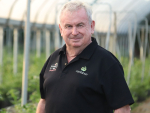
New Zealand needs to make sure that it continues to focus on its own food security, according to HortNZ board member and blueberry grower Dermott Malley.
Recent storm damage to roading infrastructure around New Zealand has prompted a call for the Government to change the settings for funding rural roads - with the aim of providing more money to make them more resilient to adverse events.
OPINION: New Zealand's soils and climate make our wine industry extraordinary. But it is the people behind the vines and wines who make it Altogether Unique.
A new app designed in New Zealand aims to help sheep, beef and deer farmers capture, analyse and use body condition score data more effectively.


An Auckland gelato shop and an established New Zealand ice cream maker have both been named Supreme Champions at the NZ Ice Cream & Gelato Awards 2026.

As the cost-of-living crisis continues to put pressure on household grocery budgets, new figures show pork remains one of the most affordable fresh meat options for New Zealand families.
OPINION: In politics, credibility is and should be big. It must surely rank higher than charisma, which is quite trite and superficial. Yet, voters nowadays are often wooed and influenced by how someone looks or talks at a superficial level. TV plays a huge role in this.
Farmers can spend less time on paperwork, thanks to a new data sharing agreement between DairyNZ’s DairyBase and LIC’s MINDA software.
Kaikōura families affected by July's severe storm have found a practical solution to a problem that's kept some children away from regular schooling for weeks: a washed-out section of Inland Kaikōura Road, which has stopped the local school bus from running its usual route.
Rural New Zealand is welcoming the Government’s recent package of rural healthcare initiatives.