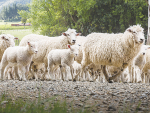
Handling sheep with care
I wrote an article in the May 6th issue of Rural News about how when set-stocking ewes for lambing, they need spreading lightly - and topped up with cattle after the lambs have dropped.
 increase font size
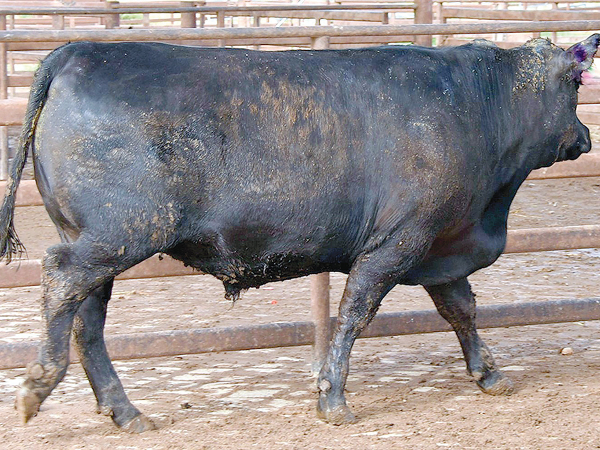 A young steer in prime condition.
I wrote an article titled ‘The Basics of Grazing’ in the May 6th issue of Rural News, with a follow-up on July 1st about stock handling, and now I’m continuing the theme with a discussion on assessing stock condition.
Having an “eye” for stock is what I mean - judging how well they’re doing, without weighing. One pointer being, if the wool on sheep and the coat on cattle has lost its sheen (bloom) then they’re doing no good.
A blunt, but wellmeaning discussion on this topic seems appropriate, because whilst tech savvy, some “modern” farmers don’t always have a grasp of the simple basics. So, lack of practical knowledge limits their observational skills.
I saw on TV a farmer sorting beef steers for slaughter – and he uttered all the correct terminology, such as, they were blocky and well finished with good covering. Yet, they were not prime at all. And when butchered, there was no marbling, and the small amount of fat cover was yellow.
As an indication of prime condition, a beast should be reasonably ‘full’ in the brisket, flank and cod. While most importantly, have good depth of loin on each side along the backbone. Including where the tail joins the top of the back, which should not be sticking up, and nor should the hip bones, other than a general bulge.
The inability to see the obvious often occurs when people are feeding a pet lamb. After a big bottle of water with a dash of milk powder added, they’ll say the lamb is fat – based on how full the stomach looks. While not noticing the backbone and ribs sticking out.
Analytical observation is also vital as regards grazing, that is, noticing that numerous sheep turds are showing above the pasture level. If set stocked for lambing, this not only indicates overstocking, but the worst thing is that sheep will be walking on all that exposed dung and thus contaminating the very short grass.
So, evaluating pasture at a glance is essential. Like, noticing it’s dirty (lost its glossy look). But, if it’s not until the sheep (especially lambs) get daggy before you react, then it’s too late. And the solution is not just drenching. The trick is to get the stocking rate (grazing management) right.
Being aware of all these things is basic common sense. But due to becoming dependent on technology, some farmers are losing the ability to think for themselves logically.
Another point is, when people are buying stud beef bulls, they don’t always understand some important traits, e.g. they look for a long body, but overlook a sway back. And they don’t make sure of a wedge body shape, i.e. narrower in the front to prevent calving problems. Nor do they take careful note of feet and leg structure.
And it seldom occurs to them to look for meaty ‘hams’ (rump). You know how some shapely women are blessed with beautifully rounded buttocks – well, while not meaning any disrespect to those gorgeous girls with such stunning attributes – that’s the sort of shape you want to see on the rear end of top quality beef cattle.
Kerry Butler farms in Waipawa, Central Hawke’s Bay
I wrote an article in the May 6th issue of Rural News about how when set-stocking ewes for lambing, they need spreading lightly - and topped up with cattle after the lambs have dropped.
OPINION: When I left school in 1962, I worked on our family farm at Tikokino, but learning about farming wasn't a priority at the time because I had other distractions on my mind, such as fast cars and hot girls.

A leading British farming politician says he's impressed with the positive attitude of New Zealand farmers that he met during his recent trip here.
OPINION: With 10,500 dairy farms, New Zealand continues to punch above its weight around the world.
The Southern Dairy Hub (SDH), which runs a demonstration farm for South Island farmers, has a new general manager.
Esther Guy-Meakin has been announced as the new chief executive of the New Zealand Meat Board (NZMB).
According to a progress report on the Aotearoa Horticulture Action Plan (AHAP), New Zealand's horticulture sector is making real progress on the big issues facing growers.
A team effort that is paying dividends for the wider New Zealand economy.