Federated Farmers Welcomes ACT’s New Farming Policies
Federated Farmers has welcomed new rural policies released by ACT, saying they align closely with its own election priorities.
 increase font size
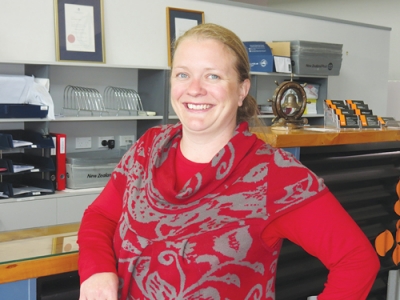 Anna Steele works as an accountant and takes an active interest in farming.
Farmers could make better use of accountants, says Federated Farmers’ Ruapehu meat and fibre chair Anna Steele.
Steele (36) works as an accountant in Taumarunui and takes an active interest in the family sheep and beef farm south of the town.
She says accountants are an important cog in the machine for farmers and farmers do not use such advisors as well as they could.
“Some of them think of us just as historians who produce end-of-year accounts and tell them how much tax they have to pay or how much they have made or lost,” Steele told Rural News. “Whereas I think we could be much more useful in helping their businesses grow and get better, but not a lot of people utilise us in that way. That needs to change with farmers and other small businesses.”
Many farmers plan and budget well, but many could benefit from some help, she says. The nature of farming has changed and is more complex: taxation and other compliance issues now must be met by farmers and that requires specialist advice. Producing regular cashflow reports is one way farmers can avoid ending up with nasty surprises at the end of the financial year.
Steele was born on a farm at Mamaku near Rotorua and her parents later moved to a bigger property at Kuratau, on the western shores of Lake Taupo. Then they bought their present farm near Owhango, south of Taumarunui.
“I went to boarding school and then to university and travelled overseas and then in my 30s came back here and worked on the farm again, but decided that working fulltime on the farm wasn’t for me. It’s not that I don’t love it, but it is not necessarily where my skills lie and I guess that’s when I decided to go back to university and get a degree in accountancy to match the degree in commerce.”
Before coming back to Taumarunui, Steele worked in supply chains – Fonterra, Mainfreight and Maersk, the giant shipping line. Accountancy gives her greater career flexibility, including working in the rural sector which she loves.
“As an accountant you can be anywhere – even places such as London – it doesn’t matter. I kind of wanted to have the option of being close to home and being involved in the family business if I could,” she explains. “If I chose not to I could to go to Sydney or Singapore and as it’s turned out I am working here in Taumarunui and am involved with the family farm. Now I am in farming politics and have the best of both worlds.”
During the week Steele lives in Taumarunui because the farm is an hour’s drive away. When in town she does town things such as attending client functions and playing squash. At the weekend it’s off to the farm with her dog to help her father. Again it’s the best of both worlds.
Federated Farmers has welcomed new rural policies released by ACT, saying they align closely with its own election priorities.
Federated Farmers is backing Feilding High School’s call to keep Agriculture and Horticultural Science as a standalone subject in Year 11.
National’s pledge to introduce 19 new national standards shows the party is serious about getting Wellington out of farming, Federated Farmers says.
Mobile phone coverage and reliability are deteriorating in rural areas, and farming families are bearing the cost, according to a Federated Farmers survey.
Central Otago District Council (CODC) has voted against a plan to spread treated sewage sludge from Cromwell and Alexandra on farmland near Lauder, a decision Federated Farmers says reflects strong opposition from rural residents.



Federated Farmers has welcomed new rural policies released by ACT, saying they align closely with its own election priorities.

Rural Contractors NZ says proposed changes to land transport rules for agricultural vehicles are a welcome response by the Government to out of date regulations which have seen members hit with huge fines.
Alliance is calling for final applications for its 2027 Graduate Programme, with applications closing on Sunday 25 October.
Decades piloting planes has ensured vet and farmer David Hayes is focused on safety. So, after a serious accident while welding on farm, he is sharing his experience so others can learn from it.
Canterbury milk processor, Synlait Milk has confirmed Leon Fung as its chief executive officer.
OPINION: Making it easier to collect rainwater and use it to grow crops and livestock is a no brainer.