App for smarter decisions
A new app designed to simplify forage planning and boost farm productivity has been launched.
 increase font size
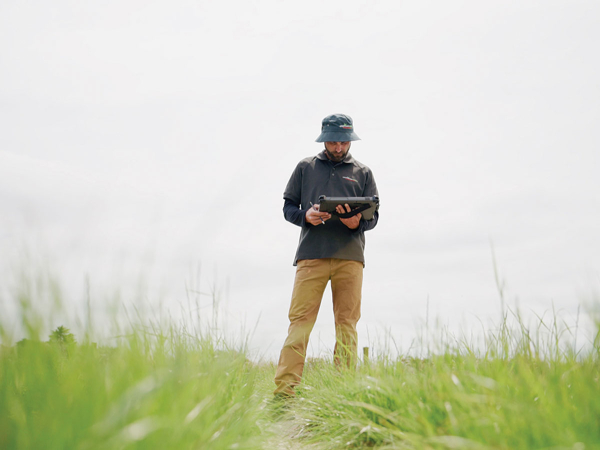 Cropmark R&D manager Stephane Montel says the pasture breakthrough is self-generated.
A tiny organism from the arid mountains of mainland Greece is facilitating a new way of growing healthier animals on farms across New Zealand.
Ten years of research, including long-distance travel, millions of dollars and countless hours spent on research and running DNA tests, have helped a small team of people achieve their goal - to develop something that previously only government labs with much deeper pockets had ever accomplished.
Meet one of the newest novel endophytes farmers can buy, CM142. The endophyte has been on the radar at Cropmark Seeds for more than a decade.
The company says that in all that time, it’s been an inside job - no outsourcing the heavy lifting.
“This pasture breakthrough is selfgenerated, by NZ’s only locally-owned private forage breeding company,” says Cropmark R&D manager Stephane Montel.
In terms of research, it was also a very long-shot, Montel says.
“The odds of finding a strain like CM142 are one in a thousand. And we had to start with the very basics. One thing with endophyte science, it’s all good to say, let’s get involved. But no one is going to tell you how to do it, because it’s commercially sensitive.
“As a small player in the seed industry we had to do it on our own. It pushed us, forced us not to rely on anyone else, and to eventually succeed with a commercial product was incredibly exciting.”
Endophyte screening tools created and refined by Cropmark’s team early in this process are now routinely used by others in the industry.
Simply finding CM142 in 2015 was a big task. It meant screening thousands of grass seed samples from around the world before settling on one particular line of germplasm collected in western Greece in 2012.
That was just the first step. To bring a new endophyte of this type to market in NZ, Cropmark researchers first had to ensure it wasn’t simply a copy of existing patented technology, says Montel.
While it contains epoxyjanthitrem alkaloids like some other novel endophytes on the market, they had to prove CM142 was unique, from its genetic makeup to its attributes.
Gathering the evidence to do so took years, and trial after trial on cultivar yield & persistence, animal safety, insect deterrence, fungicide resistance, stability, and transmission, among other things.
“We had pages of check lists to go through before we could ensure CM142 was commercially viable,” says Montel.
But the outcome is worth all the effort, she adds.
“It’s a very good achievement for our team. It has been an emotional rollercoaster, but we succeeded.
“Our goal was to maintain insect protection while increasing livestock performance with reduced toxicity and better forage production. We have achieved that and more with CM142 and believe it is the safest endophyte of its type on the market.”
A new app designed to simplify forage planning and boost farm productivity has been launched.


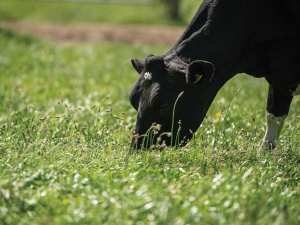
Farms across the upper North Island are trialling different pasture mixes as part of a research programme that aims to build greater resilience into farming systems.
Election years are always a concerning time for farmers, according to DairyNZ chair Tracy Brown.
The Ballance Farm Environment Awards are coming to the West Coast of the South Island.
Most dairy regions around the country have had a pretty good season so far says Tracy Brown.
Rural leader Mark Hooper has been appointed as an independent director to the NZPork board, bringing extensive farming, governance and advocacy experience to the role.