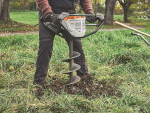
Stihl Launches BT140, Its First Battery-Powered Auger
With battery tools becoming more widespread and more importantly, productive and reliable, it was only time before we saw augers or post-hole borers.
 increase font size
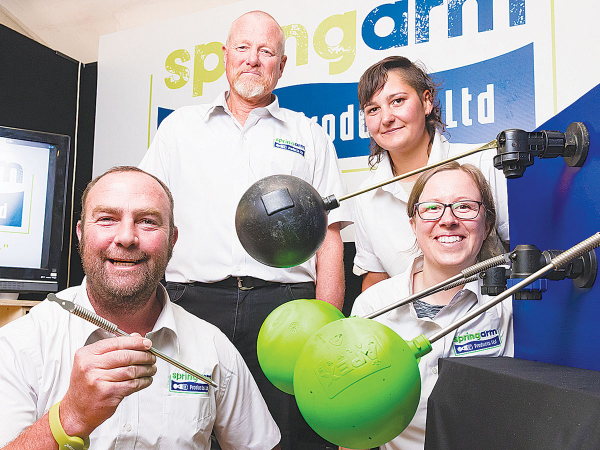 The Springarm team picked up the Prototype Award and a cheque for $10,000 at this year's Fieldays for inventing and developing a ballcock arm that won't break.
Sometimes the simplest product design can be uncannily clever and offer real benefits to the end user.
Two such designs caught the eye at the Fieldays Innovation Awards, one a godsend to anyone working with livestock and the other making life just a little easier for sheep farmers.
Walking away with the Prototype Award and a cheque for $10,000 was Springarm Products Limited. The company has adressed the age-old problem of inventing and developing a ballcock arm that won't break.
Instead of snapping when put under pressure by thirsty or inquisitive animals, the Springarm flexes - saving water, time, money, and reducing stress.
It was conceived by farm manager Ric Awburn; he was standing at an empty trough one evening, watching the cows nudging the ballcock, causing the arm to snap. He thought, "if only the arm could give a little". Fast forward two years and he has a durable and reliable ballcock arm that's easy to install on all types of valves and will be a saviour to livestock owners.
Throughout the Fieldays, a steady stream of farmers was handling the Springarm, wondering - no doubt - why they couldn't have thought of the simple solution.
"We received non-stop, positive feedback from farmers coming through who've been facing water supply issues for a long time," director of Springarm Products Limited, Marianne Awburn, told Rural News. "Many had relief on their faces as there's now a solution to a problem they've faced for so long."
At the other end of the spectrum, two farmers' daughters, Stacey Bell and Georgina Ranger - both students at St. Peters School Cambridge - have come up with the clever, simple and aptly named 'Mark It' drench gun.
The stand-out feature was an attachment at the base of the nozzle, taking the form of a round boss, which houes a sponge. Soaked with a food dye, after the animal is drenched and the nozzle is withdrawn from the mouth, the sponge leaves a streak of dye on the animal's cheek.
It is designed to fit all types of drench guns. The clever duo suggested the simple addition allowed users to be sure all stock had been drenched, removing the problem of under or overdosing animals - saving both time and money.
With battery tools becoming more widespread and more importantly, productive and reliable, it was only time before we saw augers or post-hole borers.
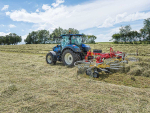
Austrian manufacturer Pottinger has released details of a new compact, linkage-mounted compact twin rotor rake, without a chassis, that is said to deliver impressive manoeuvrability.
The new Lemken Saphir XMR mechanical seed drill has been introduced as the successor to the proven Saphir 10m, with the manufacturer claiming new standards for precision, ease of use and area coverage.
Krone's XDisc 710 direct-cut header can now be used by John Deere and New Holland forage harvesters, as well as the Krone Big X it was originally designed for.
Fifty Eight years ago, on the 16th of August 1968, August Claas, the founder of the harvesting company and father of Helmut Claas, personally presented a Claas Senator combine harvester to Scottish farmer John Steven.


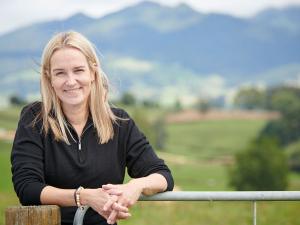
Minister of Conservation Hon Tama Potaka has appointed Susan O'Regan as Chair of the Queen Elizabeth II National Trust (QEII) for a three-year term.
Red meat farmers are welcoming Labour’s plan to review the Emissions Trading Scheme and not to campaign on pricing agricultural emissions.
Where any worker in the kiwifruit industry is mistreated, we expect the authorities to take action.
Mid Canterbury Federated Farmers arable chair, Bevan Lill, said Beef + Lamb NZ data indicated that for the last six years, the average arable return on investment was about 0.8% while inflation ran about 4% - so the average arable farm was going backwards at about 3% a year.
Seed and grain companies share the concerns of arable farmers about the viability of their sector, says Seed and Grain New Zealand chief executive Dr Sarah Clark.
The New Zealand Institute of Forestry (NZIF) says unnecessary changes to New Zealand’s Emissions Trading Scheme (NZ ETS) will seriously erode investor confidence and result in significant reductions in forest planting rates.