Made in New Zealand looks at the wealth of design and manufacturing ability we have in this country, producing productive and cost-effective products for the agricultural sector. This week Mark Daniel takes a closer look at Hansen Products, catching up with managing director Steve Sharpe.
Q – When was the company founded, by whom and why?
The foundation of Hansen Products goes back to 1953, when Bert and Dawn Hansen were building a house. They were unable to find a reliable toilet valve on the market, so Bert set about and invented one.
Q – Where are you located and how many people do you employ?
The Hansen Factory, where we produce our products – alongside our international and North Island distribution hubs are located in Whangarei, Northland. We also have a South Island distribution centre in Christchurch. Our sales team are based throughout New Zealand, we also have a market manager in Australia. Hansen currently employs 75 people.
Q – What are your key products and which markets do they serve?
Our key products can be broken down into three main areas:
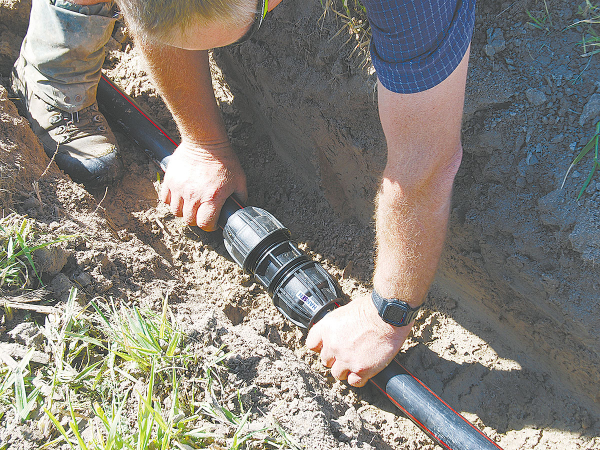
- Fittings (polyethylene pipe fittings, threaded, compression and tank fittings.
- Valves of all types including ball, check and foot, tank and trough valves.
We also offer a range of other products including the Irripod portable irrigation system, washdown nozzles and a broad range of accessories.
We serve a broad array of markets including the agricultural, horticultural and rural sectors, alongside the irrigation, commercial, marine and domestic arenas.
Q – Are your products unique; if so, what are the four key benefits?
Most certainly, our products are unique with one of the key points of difference that they are made by Kiwis for Kiwis and designed to solve Kiwi problems. They are also available in every town in New Zealand, cost effective and – importantly – easy to use.
Q – Looking at an ever-evolving market, what changes have you made over the last few years?
We’ve added more items to the range to ensure people do less re-work when maintaining their water systems. Going forward, we have several exciting projects in R & D at present, some of which we will showcase at regional and national field days over the next year.
Q— What has been the company’s greatest success since its formation?
Without a doubt our previous, current and ongoing success centres around listening to the customer, then designing and manufacturing innovative products that solve their problems.
Q – In contrast, what has been the biggest “Oh Bugger” moment or the steepest learning curve?
If we were being critical of ourselves, I think there may have been times when things were going well that we didn’t look forward early enough and just didn’t evolve into new products or areas quickly enough.
Q – If you were approached by someone looking to start a business, what would be your three key pieces of advice?
That can be summed up easily – firstly make products that people are likely to use every day, be sure those products are profitable – profit is not a dirty word. Then keep going back to your customers to confirm the products are what they want and need.
Q – Where do you see the company in the next three, five and ten years. What changes do you foresee to keep relevant and grow your business?
Our growth and the future will be focussed on being in more markets, both here in NZ and internationally. We will also retain our key point of difference by staying in NZ and employing more Kiwis and continue to develop and introduce more products into the water sector each year. We will explore and develop new ideas to get our products into customers’ hands and on to their sites more easily.