DairyNZ Strategy Review: Farmer Feedback Closes 15 Nov
Farmers have until the end of this week to help shape DairyNZ’s future focus.
 increase font size
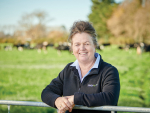
 Tony and Briar Lunjevich have increased their equity by $500k in 2-3 years.
A young dairy farming couple have increased their equity by at least $500,000 in two-three years on a less-than-ideal Far North farm and despite two years of low dairy payout.
They were losing money on a $7/kgMS payout before becoming a partner farm three years ago under the jointly funded DairyNZ and Northland Dairy Development Trust (NDDT) project.
Tony and Briar Lunjevich, of Kaitaia, told their story at the NDDT annual meeting. They are 50:50 sharemilking for Tony’s parents at Takahue and purchased an adjoining run-down beef block just before the partner farm started. About 22ha of this block has now been added to the 107ha milking platform.
Tony says they came into sharemilking very inexperienced – they had virtually none -- but they were hard working and ready to accept ideas about how to do things right.
They went into dairy farming to gain equity because they had always wanted to be farm owners at some stage.
Briar says they became part of the partner farm scheme three years ago because they wanted to become farms owners, so they had to specify their goals more clearly and put them into monetary terms.
To gain $500,000 in equity over three years was challenging in itself; for the previous three years they had been losing money on a $7/kgMS payout, she says.
Tony says they had their work cut out. Their farm is a long triangle shape with a dairy shed in one corner and the longest walk is 2.5km. It is steep, rolling, has a big ridge through the middle and was covered in kikuyu.
They started dairy farming with about 230 cows of a low index mixed breed. They couldn’t afford an employee and the pasture eaten was fairly low. Farm working expenses were about average.
Briar says they were “glass half full people” and recognised there were ways to get ahead.
“We have a big farm, we have a lot of area we can utilise. We have the management and their knowledge we could draw on.
“We had a low milk price!” – not usually considered good, and it means a low cull price.
“We had a low index herd, so this was a prime opportunity to improve our herd.
“We also had heaps of potential: we owned a block of land that was undeveloped. We could develop and gain equity this way, we could gain equity through our herd. We had limited knowledge… but we were willing to learn and work hard.”
With the management team they looked at focus areas: pasture, stock and financials.
Tony says key actions introduced included:
Knowing how much grass they had on hand so they could allocate what the cows need
Spring rotation planning so they had the right rotation at the right time
Pasture species – introducing big areas of chicory every year
Regrassing the whole farm to get high index pasture species in and get kikuyu out
Getting residuals right down to get the quality next time around.
With the stock they concentrated on reproduction -- cow condition, hitting targets, drying in accordance with body condition scoring, calving dates, heat detection and learning from others in the group.
For lameness they introduced once-a-day milking to reduce the walking. They worked with a lame cow specialist, learning how to treat cows properly and work around the shed.
To improve the value of the herd they brought in high BW heifers while they were cheap, grew them well, weighing them constantly.
Briar says they had always done a financial budget and stuck to it. With the help of the team they broke it down more, benchmarked and made it tougher.
“We also managed to dilute our farm working expenses by increasing our milk production,” Briar says.
“We identified areas where we could gain equity and we developed our purchased land. We converted 18ha into dairy platform so that increased its value. We increased our herd size and we bought higher BW heifers. We had to buy replacements so we decided we might as well buy the best we could and improve the index as so much of our equity was within our herd.”
Farmers have until the end of this week to help shape DairyNZ’s future focus.
The New Zealand dairy sector set a record in the 2025/26 season, producing more than two billion kilograms of milksolids for the first time.
Students will be able to study Agriculture and Horticultural Science from Year 11, creating a clear pathway into Years 12 and 13 and future careers in New Zealand’s primary industries, Education Minister Erica Stanford says.
OPINION: New Zealand dairy is delivering. In the year to June, dairy exports earned a record $28.8 billion for New Zealand. They were part of a record $65.2 billion earned by our wider food and fibre sector.
Today, 15 October, is the International Day of Rural Women, which recognises rural women’s contribution to farming, communities and the environment.



During the nesting season, from September to December, industrious starlings can quickly build nests in the darker areas behind tractor and vehicle, usually close to hot engines, typically resulting in localised damage or in some cases complete write-offs.
The meat processing industry is much more collegial than it was in the past and is now more focused on common goals.
With the last couple of months having seen some potential tractor purchases put on hold with the impending election and continued input cost rises, year-to-date figures, ending September, has seen deliveries up around 5% over the same period in 2025, with a total of 2026 units.
Beef+Lamb New Zealand is calling for nominations for director roles in the Northern South Island and Northern North Island electoral districts.
Fonterra chief executive, Richard Allen says being resilient has helped the dairy industry overcome extreme volatility in recent years.
The head of the Ministry for Primary Industries (MPI) trade and international relations group says New Zealand is well-positioned to secure trade access and compete internationally as the world becomes more complicated, demanding and uncertain.