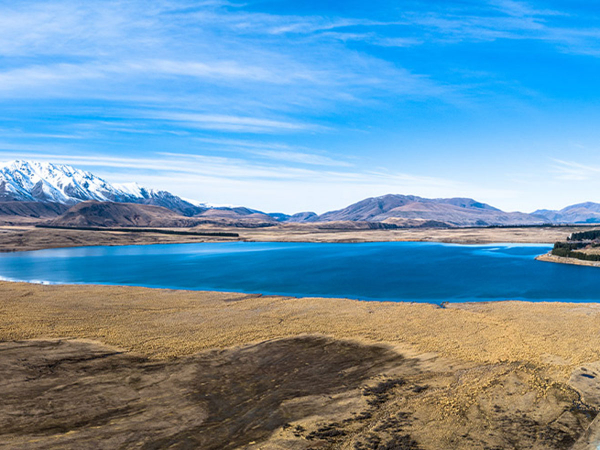
Hundreds of water samples taken from Ōtūwharekai Ashburton Lakes and streams over the past year confirm that water quality remains a concern, according to Environment Canterbury.
The water monitoring results were presented to the Ashburton Water Zone Committee by Environment Canterbury and the Department of Conservation (DOC), who are part of the Ōtūwharekai Working Group to restore lake health and cultural values.
The findings from the results show negative and some positive changes across the different lakes and streams of the catchment, says Dr Tim Davie, director of science at Environment Canterbury.
“These are small to medium-sized lakes and streams in the high country, which means results often fluctuate from year-to-year due to climate conditions and other variables.”
Davie says, however, that the results seem to show increasing nutrients and algae, which are causing worsening water quality over the past ten years.
“Work is already underway to reduce nutrients entering the waterways from farming activity, and the nearby long-drop toilets in the huts settlement have been decommissioned. However, these actions could take some time to make a difference to water quality results,” he adds.
According to Davie, there is some good news.
“The positive news is there had been a real willingness by landowners and local farmers to continue to go beyond their regulatory requirements to address issues in the catchment, so we’re confident change is possible.”
All of the lakes in Ōtūwharekai are above their Tropic Level Index (TLI) limit, meaning they do not meet the outcomes for freshwater health expected by the community. The TLI measures overall lake health by assessing nitrogen and phosphorus (nutrients) and algal biomass (algae).
The amount of algae in the lakes was generally high for these types of lakes but there were some individual differences from lake-to-lake.
“It was pleasing to see Te-Puna-a-Taka/Lake Clearwater decrease in algae biomass this summer but it’s too early to say if this is pause in decline or reversal of the degrading trend,” says Davie.
“On the other hand, Ōtūroto/Lake Heron, is showing a continued increase in algae, and high numbers of the nuisance algae Ceratium, which is very good at outcompeting other algae for nutrients.”
Department of Conservation technical advisor – freshwater Dr Tom Drinan says nitrogen concentrations in streams have increased significantly in the Ōtūwharekai catchment in the last ten years.
“Most sample sites have seen a two to three-fold increase in nitrogen concentrations, with current concentrations being very high for these high-country streams,” he says.
“For comparison, nitrogen concentrations at our reference site at Paddle Hill have remained consistently low during the same ten-year period. These worsening nitrogen concentrations continue to pose a risk to the ecological health of these streams and the lakes and rivers they flow into.
“Encouragingly, there has been some reduction in phosphorus concentrations over the same period at these sites.”
The Ōtūwharekai Working Group was established in 2019 to instigate collaborative and urgent action to halt and reverse the degradation of Ōtūwharekai ecology and values.
The Group is made up of Papatipu Rūnanga with connection to the area – Te Rūnanga o Arowhenua, Te Ngāi Tūāhuriri Rūnanga and Te Taumutu Rūnanga – as well as Te Rūnanga o Ngai Tahu, Environment Canterbury, farmers in the area, Department of Conservation, Toitū Te Whenua LINZ, Ashburton District Council, Central South Island Fish & Game, the Ministry for the Environment and Ministry for Primary Industries.