Invivo X SJP Spicy Jalapeño Sauvignon Blanc Lands in NZ
The launch of Invivo X, SJP Spicy Jalapeño Sauvignon Blanc in New Zealand is the latest innovation in the Kiwi wine company’s partnership with Sarah Jessica Parker.
 increase font size
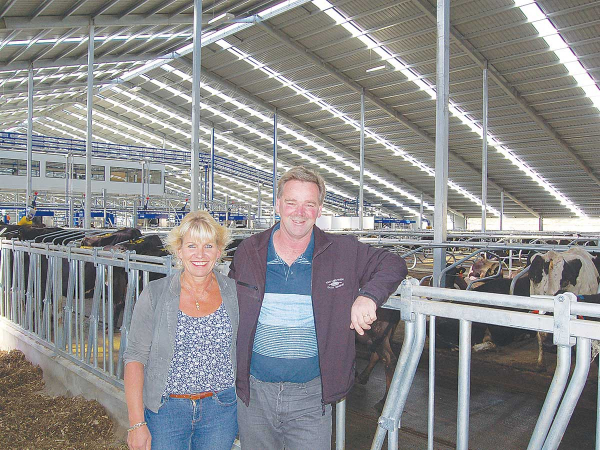 Aad and Wilma van Leeuwen and family look set to continue milking cows on their 14 South Island farms, despite them been placed into receivership last month.
The Van Leeuwen family looks set to continue milking cows on their 14 South Island farms, despite them being placed into receivership last month.
Under a new deal, the New Zealand Rural Land Company (NZL) is paying $114 million for the properties, which will be leased back to three farming groups involving the Van Leeuwens for annual rentals of nearly $6m.
NZL shareholders will meet on May 24 to vote on the deal.
Chairman Rob Campbell says it has entered into conditional agreements with Van Leeuwen Group and associated entities (VLG) and their major lender to acquire dairy assets in South Canterbury and North Otago totalling 6,350 hectares.
"Over the past four months NZL has, through its manager, undertaken extensive due diligence on these assets and the incoming tenants. NZL considers that, based on its due diligence, the acquisition represents an attractive purchase," he says.
Three farms will be leased to Sustainable Grass Dairy Limited, whose directors include Aad Van Leeuwen and Wilma Van Leeuwen Junior and two independent directors, retired ASB chief executive Mark Heer and former chief executive of Crop and Food Research, Paul Tocker.
Five of the farms will be leased to Performance Dairy Limited, whose board includes Heer, Tocker, Aad Van Leeuwen and Dion Van Leeuwen.
The final six farms will be leased to Performance Livestock Limited, governed by a board comprising Heer, Tocker, Aad Van Leeuwen and Rodney Van Leeuwen.
Campbell says, following due diligence, it is satisfied with the depth of New Zealand dairy farming experience that each tenant entity has and with their respective governance arrangements.
The leases are each for an initial term of 11 years, with two 12-year rights of renewal.
NZL will finance the purchase of farms through a mixture of debt and cash: $71 milliion in cash and a new loan from Rabobank.
While the company has set an internal policy of debt being no more than 30% of the value of NZL's total assets, its latest acquisition will take total debt to 42.6% of total assets.
Campbell says should NZL acquire any of the additional assets, this debt level may increase furhther.
The Van Leeuwen Group was placed into receivership by Australian-based funds manager Merricks Capital. It had refinanced VLG under a $140 million deal two years ago.
VLG is considered one of the largest dairy farming operations in the country, comprising 10 dairy platforms and four support blocks with 8,000ha under management, milking approximately 10,000 cows. It also includes one of the world's largest robotic farms.
New Zealand Rural Land Company is a NZX listed company (NZL.NZX) which invests in high quality rural land in New Zealand. The company has an external manager, NZ Rural Land Management, which is 50% owned by NZX listed Allied Farmers (ALF.NZX).
The launch of Invivo X, SJP Spicy Jalapeño Sauvignon Blanc in New Zealand is the latest innovation in the Kiwi wine company’s partnership with Sarah Jessica Parker.
New Zealand Rural Land Company (NZL) has lifted its annual profit on the back of being a "disciplined, yield-focused land vehicle", the company says.
New Zealand Rural Land Co (NZL) has announced its intention to reinstate the company’s dividend and amend its dividend policy.
Australia-based specialist private market investment manager Roc Partners is set to acquire 25% of the portfolio of rural land assets of New Zealand Rural Land Company (NZL) for approximately $44 million.
New Zealand Rural Land Co (NZL), which leases out highly productive farms, made a net profit after tax of $2.5m last financial year.


Farmer-owned fertiliser company, Ballance Agri Nutrients is welcoming National’s plan to negotiate security agreements with key supplier countries to protect New Zealand-bound products from export restrictions and greater supply chain certainty.

Carrfields has announced the appointment of Stu Hall to the newly created role of chief operating officer, Carrfields Ltd, reflecting the continued growth of their agribusinesses and the need to ensure the company has the leadership capacity and support in place as it pursues the emerging opportunities ahead.
New Zealand's role is not to compete with Indian growers, according to NZ Apples and Pears.
The potato industry is celebrating the success of two rising stars - James Blair, the 2026 Young Grower of the Year and runner-up and innovation award winner, Amber Davy.
Twenty-eight emerging leaders from across the horticulture sector spent two days last month learning valuable skills and connecting with industry experts.
There are five entrants in this year’s Young Horticulturist of the Year, competing in a series of technical, practical, business and leadership challenges.