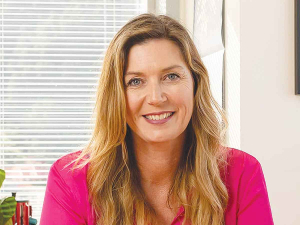
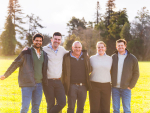
Bill Wright wants to see Beef + Lamb NZ become a strong advocate on behalf of red meat producers.
Currently chair of BLNZ's central South Island farmer council and a member of the council's national executive, Wright will contest the vacant central South Island board seat.
He and wife Shirley farm 380ha at Cannington, near Timaru, running sheep and bull beef with some dairy heifer grazing, and growing 70ha of lucerne for lamb finishing and maize for summer cattle grazing, and barley.
Wright believes BLNZ should be focussed on innovation and capturing opportunities, to provide tools and services for farmers in a changing regulatory and legislation environment.
He also wants to see the organisation continue advocating on behalf of farmers.
"Market access is fundamental to the success of the NZ farmer and it is important that BLNZ (through the Meat Board) continues this key role," Wright told Rural News.
He concedes that long term sustainability is a key issue currently facing red meat producers, but believes other areas are just as important.
"Compliance – through the legislative and regulatory process –has placed a new burden on farmers. Ultimately, we want to reach the point where compliance, once achieved, becomes part of the business so that, one day, farm health and safety and nutrient management are normal practice, just like ASD forms and GST," Wright adds.
He also believes that branding of our products in the marketplace is still needed, so NZ producers can move into the value chain and out of commodity products.
"Branding will continue to evolve and make a difference to industry profitability. It will continue to benefit all farmers."
Wright understands the concerns about long term viability of the red meat sector. However, he believes in the industry's future, despite the loss of many beef and lamb producers to the dairy industry in recent years.
"There will always be change, but I see a slowdown in [dairy] conversions, as environmental challenges and land class impose limits.
"Farmers have always adapted to economic challenges and there will be change, if a sector is underperforming economically. This is one of the challenges ahead of sheep and beef farmers. We have a great product in lamb and beef and if we can market this product to the affluent we have an exciting future.
"There will always be innovators who lead change; it's exciting to be part of a sector that adapts and innovates."
Wright believes sheep farming in NZ will have a great future if profitability is returned to lamb through market value.
"NZ farmers are the most efficient grass farmers in the world and produce the most 'environmentally clean' red meat product. There will always be change as opportunities or key food producers become more or less popular."
He also believes that BLNZ has role to play in ensuring better returns for meat producers. Wright reckons it should focus in four key areas: on-farm uptake of research and innovation; cross-sector investment to the mutual benefit of NZ's pastoral farming in areas such as genetics, forages and on-farm tools; market access; and investing in people and encouraging the next generation into agriculture.
Wright supports BLNZ putting money into schemes like the RMPP and PGP, but would like to see more measurable outcomes from such investments.
Wright says BLNZ has a relatively small budget compared to some industry bodies.
"There will always be debate over the budget spend and priority areas and farmers. It is important BLNZ's budget process is board led and communicated across the sector with performance measures to justify spending in any budget areas so farmers benefit from all activities."
He also wants to see the organisation work with other sectors when approaching industry policy affected by legislation.
"We need to work with Federated Farmers, DairyNZ, the arable sector and others to express a view. No one can work in isolation, especially on policy and compliance."