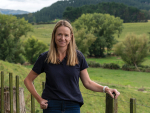
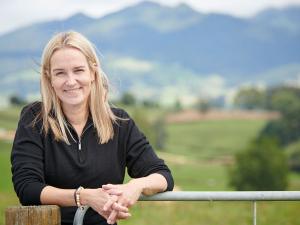
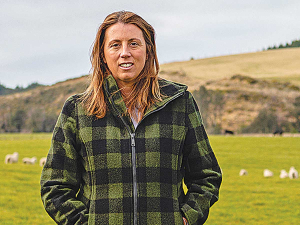
SUSTAINABILITY MUST be built into everyday farming, not bolted on, was one of the key messages delivered to agribusiness and industry leaders by Canterbury farming ambassadors Roz and Craige Mackenzie.
National Winners of the 2013 Ballance Farm Environment Awards, the Mackenzies recently met with key industry stakeholders to promote good environmental practices and swap ideas on how to improve environmental management.
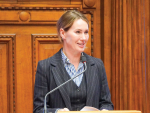
The five-day trip in November was organised by the New Zealand Farm Environment (NZFE) Trust and included an address to the Primary Production Select Committee.
The Mackenzies also met with sponsors of the Ballance Farm Environment Awards and were impressed with how these organisations had taken the sustainability message to heart.
"They have made sustainable practices a part of their daily business, and that is what good farmers are doing too," says Roz Mackenzie.
An important part of running a sustainable operation is the ability to plan for and adapt to change, and Roz says many of the business leaders she and Craige met were eager to gain ideas on how they could shape their businesses for the long term.
"They realise that what farmers are doing right now is going to affect how they run their businesses in future."
She says the tour also enabled them to give a personal perspective of some of the issues and opportunities facing farmers. A key challenge is how to improve farmer access to scientific research.
"There is some really good work going on at the moment, but there appears to be a growing disconnect between farmers and scientists. It's a worldwide problem, but New Zealand has a significant advantage because a lot of farmers do have close ties with industry bodies and research organisations. So we need to take ownership of this issue and do our bit as well. By working collaboratively with science organisations we can ensure that good science will reach farmers."
Technology also offers significant opportunities for helping farmers improve sustainability.
"There have been some big improvements in technology over the last five to ten years and that is allowing us to do a better job on farm," says Roz.
Variable-rate irrigation, for example, is helping farmers to manage water more efficiently. The Mackenzies make good use of this innovation and other 'precision agriculture' technologies on their intensive arable farm near Methven.
"For us, precision agriculture is about the five 'r's'. That's using the right inputs at the right amount in the right place at the right time and in the right manner."
Other issues discussed during the tour included the challenge of getting more young people into agriculture, and how to improve ties with urban communities.
"We have to have that conversation with our urban neighbours and explain what we are trying to do about sustainability. A lot of farmers are doing a really good job of environmental management and they are proud of what they do. We should be singing this from the rooftops."
Next year the Mackenzies will travel overseas to represent New Zealand as ambassadors for agriculture and environmental sustainability.
Organised by NZFE Trust, the trip will be supported by a range of industry groups.