Rural NZ Welcomes $8.5m Government Health Package
Rural New Zealand is welcoming the Government’s recent package of rural healthcare initiatives.
 increase font size
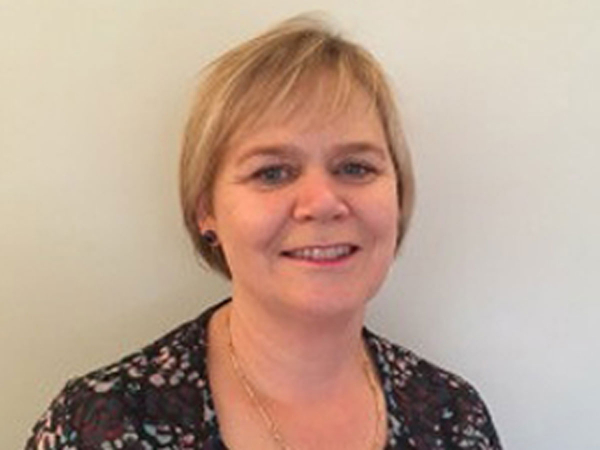 Rural Women NZ chief executive Gabrielle O'Brien.
Rural Women New Zealand’s (RWNZ) new chief executive says the organisation’s ability to provide opportunities to women sold her on the job.
“I think that one of the things that really appealed to me about the organisation is that it is an organisation for women and one of the things that we do is provide opportunities for women to develop,” Gabrielle O’Brien told Rural News.
O’Brien comes to the role from a background in human resources and organisational development, having previously worked for the Law Society and Birth Right New Zealand. She took over the role on May 3.
O’Brien says that she comes to the role with experience in “understanding how to work with members and make sure their voices are heard and represent what matters to them.”
She says that, from her perspective, RWNZ has three key roles: supporting rural communities, strengthening those communities, and connecting with them.
“We have a role of ensuring that we’re actually helping provide connectivity in rural communities which is really important,” she told Rural News.
She says that in the near future, RWNZ will be tackling the issue of the health reforms recently announced by the Government. O’Brien believes adding a rural lens and engagement with rural communities will be an important part of the process.
“What happens with the health reforms is something that we’ll be closely watching and wanting to make sure that that rural voice is heard and that the voice of women and their families and communities is heard as well.”
She says that the organisation will also be taking a look at mental health.
“I think in terms of mental health and wellbeing, it’s almost… one of the reasons that we exist in terms of trying to make sure that we are encouraging strong connection in rural communities.
“Obviously, we want to see an improvement in awareness but also services to make sure that when people are struggling with mental health issues, there is support available for them.
“But we also want to do preventative work in terms of actually assisting those communities… we know that rural communities are very good at supporting each other,” O’Brien says. “But we want to make it as easy as possible for those communities to be strong and be connected which can be challenging.”
Rural New Zealand is welcoming the Government’s recent package of rural healthcare initiatives.
Deputy Prime Minister and ACT Party leader David Seymour says advocacy group Rural Women New Zealand (RWNZ) has submitted against a controversial bill without consulting its members.
Women up and down the country are the glue that hold rural communities together, giving so much to so many, says the inaugural Rural Woman of the year award winner Kate Acland.
Rural Women New Zealand has announced the winners of the 2026 NZI Rural Women Business Awards.
Rural Women New Zealand this month submitted on the Draft Mental Health and a Wellbeing Strategy 2026-2036, because a person's postcode should not determine the quality of their mental health support.
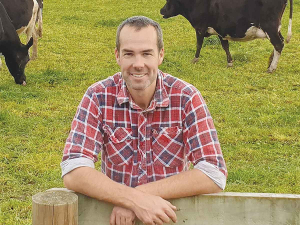
DairyNZ deputy chair Cameron Henderson has been re-appointed unopposed for another term.
Farms across the upper North Island are trialling different pasture mixes as part of a research programme that aims to build greater resilience into farming systems.
Election years are always a concerning time for farmers, according to DairyNZ chair Tracy Brown.
The Ballance Farm Environment Awards are coming to the West Coast of the South Island.
Most dairy regions around the country have had a pretty good season so far says Tracy Brown.