NZ Cuts Drone Red Tape for Farmers — Aviation Pushes Back
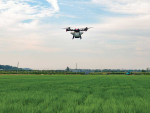
The agricultural aviation industry has reacted angrily to government plans to cut regulations to make it easier for farmers to buy drones and use them on their farms.
 increase font size
 Opportunity Party deputy leader and ag spokesman Daniel Eb.
The Opportunity Party has faced criticism during the election campaign that its policies are too urban-focused and offer little for rural communities.
But deputy leader and agriculture and forestry spokesman Daniel Eb says the party’s approach is designed to tackle some of the structural problems affecting both rural and urban New Zealand.
Eb is running in the Kaipara ki Mahurangi seat set to be vacated by former Defence Minister Chris Penk. Prior to entering politics he launched Open Farms, the national open farm day designed to reconnect urban New Zealanders with farming land.
Over the past few weeks, he has travelled up and down the country, attending events with rural Opportunity candidates, with events previously held in Masterton, Wanaka and Whangarei.
“We’re getting into more of the rural New Zealand heartland through public meetings primarily,” Eb told Rural News.
A key part of Opportunity’s pitch, he says, is a willingness to listen to experts and make longer-term changes rather than repeatedly reversing policy when governments change.
Eb points to health as an example, arguing that successive governments have created a “cycle of instability” by restructuring or abandoning policies introduced by their predecessors.
“And that’s been particularly keenly felt in health,” Eb says.
He cites changes to capitation funding, which GP practices rely on when planning staffing and resources, as an example of the uncertainty facing the sector.
“So, things like rural health just can’t really be a political football anymore. We actually need to take the politics out of health care planning as much as possible,” Eb says.
That philosophy also shapes Opportunity’s approach to agriculture.
“We’re more about big systemic, transformational changes that affect everyone because whether you’re rural or urban New Zealand, you have to participate in the tax system, you participate in the health system, you participate in the education system. And so we’re more interested in shifting the really big underlying pillars of our systems rather than little carve-outs to help this industry or little carveouts to help that industry.
“So, we’re more interested in that than, you know, what does this slice of regional New Zealand need? We think that is a recipe for more bureaucracy. And that sort of administration, that’s not always effective.”
Eb says he doesn’t believe the rural versus urban framing within New Zealand is helpful.
“You know, you sort of see this line trotted out, an attack on farming. No one is attacking farming. What we’re trying to do is enable New Zealand’s economy to take a transformational shift, right? Like we did in the ‘80s. We’ve done it prior to that before. The New Zealand story has always been about taking a big shift to the next model.
“I don’t think this reflexive pushback from some in the agricultural sector is helpful. Frankly, it’s rather, sit down, compromise, have mature adult discussions about these things, instead of labelling each other as the enemy.”
One of Opportunity’s flagship policies is an overhaul of the tax system that includes an annual land-value tax (LVT) of 0.5% on rural land and 1.75% on urban land.
The policy is likely to be one of the more significant points of interest for farmers considering the party’s platform.
Deputy leader Daniel Eb says that for those farmers who are land rich but cash poor, a deferral scheme will be in place. This, he says, is because the party recognises farming as a “boom and bust business”.
“Prices are really good right now, but they weren’t two years ago, so that mechanism exists in the system,” he says.
The agricultural aviation industry has reacted angrily to government plans to cut regulations to make it easier for farmers to buy drones and use them on their farms.

OPINION: In politics, credibility is and should be big. It must surely rank higher than charisma, which is quite trite and superficial. Yet, voters nowadays are often wooed and influenced by how someone looks or talks at a superficial level. TV plays a huge role in this.
When Northland farmer Mark Cameron entered parliament six years ago, the Beehive was a lonely place.
I think it's going to greatly weaken National at the election. That's the view of a former senior National MP on the recent attempted coup against Prime Minister Christopher Luxon.
OPINION: Flicking through some global news headlines just recently, I spotted something tucked away, which in my opinion rather conveniently had less visibility than it deserved.
A partnership between state-owned enterprise Pāmu (Landcorp Farming Limited) and charity Meet the Need is putting more than quality New Zealand beef into food bank parcels this year.

The Opportunity Party has faced criticism during the election campaign that its policies are too urban-focused and offer little for rural communities.
The chair of the country's environmental regulator, the Environmental Protection Authority (EPA), says changes are already under way to improve the performance of the agency to better meet the needs of those who interface with them.
Alliance Group's $16 million programme to install innovative heat pump systems at its Otago and Southland processing plants wins a New Zealand Energy Excellence Award after cutting annual emissions by more than 24,000 tonnes of CO₂e.
The arable sector losing good people and land is a major concern for the 2026 Arable Farmers of the Year, Mid Canterbury seed growers John and Mel McCaw.
The terrible floods that hit the Wairarapa may have subsided, but the danger to farmers still exists, according to local Federated Farmers president Rob Hickson.