Callaghan Innovation: Connecting industry problems with startup solutions
Gaining exposure to relevant innovation, "without being swamped in the sheer volume of options", is one of the main challenges for winegrowers considering agrictech.
 increase font size
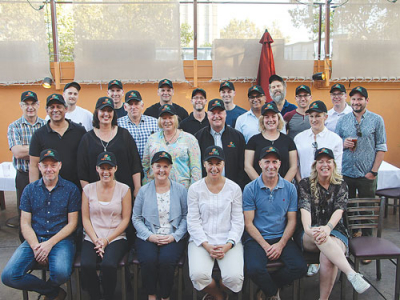 The delegation from NZ Agritech visiting Silicon Valley.
New Zealand companies aren’t bold enough when taking innovation overseas, says Callaghan agritech innovation expert Nicky Molloy.
US companies are much bolder in the early stages of the business, she told Rural News. You don’t realise the scale until you go there.
That was one reason for leading a team of 30 NZ delegates – from smaller agritech start-ups to big businesses like Zespri and research groups -- on a week-long trip to Silicon Valley and California.
The Agritech Immersion Programme and Conference visited large US growers and producers, connecting with local trends while scoping investment and export opportunities.
From the outset US companies are bolder in messaging, story-telling and how fast they move to scale, Molloy says.
“In NZ we want to get little things solved and get it right before we take it to market whereas they take it to market and then get it right. They just do it. When you talk to a US company you almost think they are bigger than they are.”
The big challenges for US farming are the same as here -- labour, environment and water -- but on a much bigger scale. One US orchard can be equivalent to the whole NZ apple industry.
“You can be solving a small problem in the NZ, but go and do that in the US and gain way bigger traction. We encourage doing your R&D in NZ, but going offshore for scale. That is part of why we have instigated these trips.”
Molloy says much needs to be done on the NZ storytelling piece and Callaghan is working with companies on this.
“When they land in the US we don’t want them to be shy.”
The research groups on the trip realised challenges in the way NZ runs research: our seven-year programmes may instead need to be “short sharp iterations”.
The Callaghan Innovation trips to Silicon Valley are a three-year programme so companies from the first year now entrenched in that market talked about their journey. It emphasises connecting science with onfarm problems needing a solution and then the need for entrepreneurs to take it to market.
A key message from farmers was “make sure the tech works and don’t just give me another app”. They don’t want apps that just solve one problem; they want more integration.
Another key message was the recognition that NZ farmers aren’t behind in adopting technology.
“In the US… a 300,000ha farm will be more reluctant than an NZ-size farm in bringing something onfarm. We are more nimble in our ability take up technology and give things a go. Our universities are quite connected; they are talking with farmers who give us honest feedback,” Molloy says.
“Robotics, automation, managing data -- some of that technology is more advanced in NZ. There is more opportunity for NZ in those areas to really make a play.”
At a panel session, Tony Laming from Blinc Innovation talked about how the global industry can connect into NZ.
“We have an opposite season to the northern hemisphere so there is an opportunity for companies to do a 12 month programme rather than stop because it is the end of the growing season. They can come down and continue it in NZ,” Molloy explained.
Getting NZ companies in the agritech community to get away from their business, talk to each other and think longer term was a highlight of the trip.
“That’s the bit I love: getting the NZ businesses all interconnecting.”
Gaining exposure to relevant innovation, "without being swamped in the sheer volume of options", is one of the main challenges for winegrowers considering agrictech.
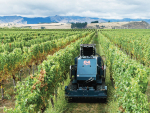
Covid-19 has escalated the need for greater automated solutions within vineyards, orchards and farms, says Nicky Molloy, Business Innovation Manager for Agritech at Callaghan Innovation.
Should New Zealand and Australia be working more closely together in the agritech space to present a regional offer to the world?
Blockchain and distributed ledger technologies have the potential to help our primary industries capture high-value niches, according to a new report.
Dr Vlatko Materic, a researcher at Callaghan Innovation and founder of Hot Lime Labs, is developing a CO2 capture material which can significantly boost glasshouse vegetable and flower yields.



The Royal New Zealand College of General Practitioners (the College) and Hauora Taiwhenua Rural Health Network are calling for investment in a proposed new training pathway for rural GPs, warning that many rural practices are struggling to recruit while a large share of the existing workforce nears retirement.
Federated Farmers has called on Central Otago District Council (CODC) to drop or vote down a plan to truck sludge from Alexandra and Cromwell to farmland near Lauder, warning it would compound an "outrageous" situation created by a separate council's decision weeks earlier.
Synlait has swung to second-half profit as operations stabilise, but the dairy processor still posted a $75.4m annual loss.
LIC shareholders have elected a new North Island representative to the co-operative's Board, along with five representatives to its Shareholder Reference Group (SRG), following the company's Annual Meeting held in Invercargill.
Farmers across parts of Southland and South Otago are continuing to deal with difficult conditions after a prolonged run of wet weather, with pressure building around feed supply, stock management, pasture damage, farm infrastructure and everyday workloads.
Federated Farmers says it welcomes Labour's commitment to reviewing the Sharemilking Agreements Act, calling on other major parties to do the same.