Fonterra FY26 Results: $9.69 Milk Price, $3.4bn Profit
Fonterra has unveiled its annual results for the 2026 financial year, posting $27 billion in revenue and close to $20 billion returned to New Zealand farmer owners and unit holders.
 increase font size
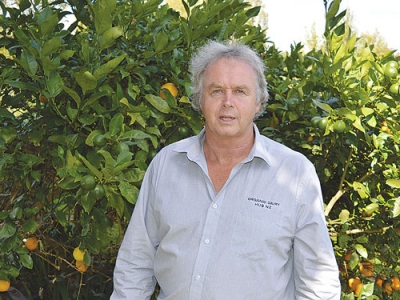 Organic Dairy Hub project manager Bill Quinn.
The battle for organic milk is heating up with a new farmer co-op launching in Taupo later this month.
The Organic Dairy Hub (ODH) Cooperative will compete with Fonterra for New Zealand’s fledgling organic milk supply; next season ODH will have about 1 million kgMS from about a dozen farms, some not currently supplying Fonterra organic.
ODH will be an organic milk wholesaler only, supplying milk to local processors and will have toll manufacturing arrangements with global marketers.
South Auckland organic milk processor Green Valley Milk is backing the hub and will be a major buyer of its milk.
ODH project manager Bill Quinn told Rural News farmers will “stick to their knitting, which is milk production on-farm”. The old milking stool has three legs: suppliers, processors and marketers; each is a skill and discipline in its own right.
“The hub will coordinate between them; we have marketers who want products like organic butter and we will link them with processors who can do that; we’ve got the milk.”
Quinn believes Fonterra has not been sincere with its organic suppliers in recent years, cancelling contracts to satisfy its organic growth strategy. Fonterra’s organic milk suppliers has dropped to 73 from 127 three years ago. This has left milk suppliers and processors frustrated, he says.
Fonterra recently announced a 45c/kgMS hike in its organic milk premium; its organic suppliers will now receive $1.50/kgMS above the conventional milk price. The co-op is also seeking an extra 600,000kgMS next season.
Quinn says Fonterra only lifts its game when another player enters the organic market. He says farmers needed an alternative market to Fonterra and this led to ODH’s formation over the last three seasons.
ODH has also received expressions of interest from farmers in the process of converting to organics. It is also talking to processors looking at boosting organic milk processing.
“A number of processors are frustrated about organic milk supply; they have got through to Fonterra but as its volumes dropped, Fonterra has a responsibility to process its own organic milk because that’s where the money is.
“We have a number of processors wanting to enter organics, to change from conventional milk lines to organic milk lines. They either want to introduce an organic line to their current portfolio or have established a market presence with conventional New Zealand milk – they wish to either change or add an organic line.”
Green Valley Dairy chief executive Corrie Den Haring says ODH is a positive development for the organic sector.
Den Haring says Green Valley has been working with ODH for two years. “The aim of the exercise is to get enough milk and have enough available so we can grow the market; it’s about providing robustness and stability to the organic dairy market.”
Green Valley has its own organic farms but Haring says it has been short of organic milk for 18 months.
“This has hampered local growth and our ability to maximise local opportunities.”
Fonterra has unveiled its annual results for the 2026 financial year, posting $27 billion in revenue and close to $20 billion returned to New Zealand farmer owners and unit holders.
Fonterra Co-operative Group has confirmed the independently assessed candidates standing for election to its board in 2026.
Fonterra has revised its Farmgate Milk Price forecast for the 2026/27 season, lifting the midpoint and narrowing the range on the back of improving global dairy commodity prices.
Outgoing Fonterra Co-operative Council chair John Stevenson says that it has been a privilege to represent the co-op's farmer shareholders.
OPINION: It seems Canterbury processor Synlait is still in the doldrums.


Pāmu has released its FY26 Integrated Annual Report, reporting a Net Operating Profit of $113 million, more than double the $49 million recorded in FY25.

Meat Industry Association data, released alongside the Red Meat Sector conference in Wellington, shows export value climbing across the US, China, UK and Canada.
Applications are set to open for the 2027 Zanda McDonald Award, a trans-Tasman award recognised for identifying and fast-tracking talented young leaders in agriculture and agribusiness.
The Royal New Zealand College of General Practitioners (the College) and Hauora Taiwhenua Rural Health Network are calling for investment in a proposed new training pathway for rural GPs, warning that many rural practices are struggling to recruit while a large share of the existing workforce nears retirement.
Federated Farmers has called on Central Otago District Council (CODC) to drop or vote down a plan to truck sludge from Alexandra and Cromwell to farmland near Lauder, warning it would compound an "outrageous" situation created by a separate council's decision weeks earlier.
Synlait has swung to second-half profit as operations stabilise, but the dairy processor still posted a $75.4m annual loss.