Ravensdown Named Naming Rights Sponsor of A&P Show
Farmer owned co-operative Ravensdown has signed a two-year naming rights sponsorship of the Canterbury A&P Show.
 increase font size
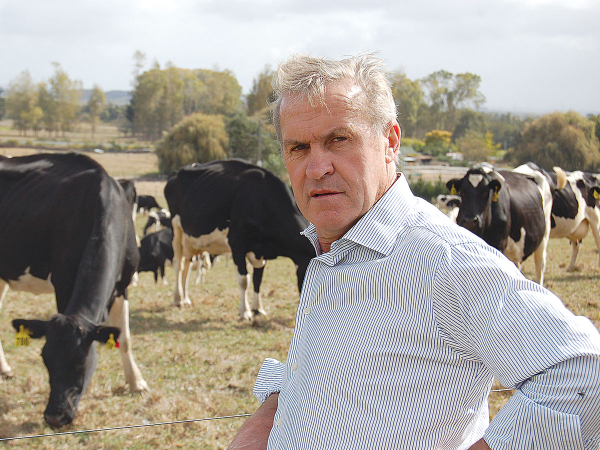 Former Agriculture Minister David Carter believes a priority for the new government is to tackle the plethora of impractical regulations passed by Labour.
Former agriculture minister and speaker of Parliament Sir David Carter says the new National-led coalition faces significantly more important issues to deal with than previous governments.
He told Rural News that as a result of the performance of the Labour government over the past six years, Christopher Luxon and his team will have to deal with a number of these issues with a great deal of urgency, which will put pressure on the new Prime Minister and his cabinet.
Carter say managing a coalition with two other partners is challenging but he believes that Luxon is up to the job.
"He will give responsibilities to his ministers and caucus clearly setting out his expectations and will review their performances. That will be the pattern of his operation over the next three years."
Carter adds that while people say Winston Peters and NZ First only got 6% of the vote, the fact is without Winston Peters in the coalition, National would be a minority government.
"Mr Peters is a very experienced politician and he's used his skills and knowledge well.
"His presence in the coalition means that NZ has a majority government for the next three years."
Carter says a lot is now expected of the new government and he believes they need to be given time to meet the promises made in the lead up to the election. Carter also points out that despite what individual parties promised during the campaign, the actual deliverables are enshrined in the very detailed and complex coalition agreement between three parties - which means there will be compromises.
"Christopher Luxon is well aware of the promises and can expect to be judged on the delivery of these at the next election."
One of the first priorities Carter believes that the new government will have to tackle is the plethora of impractical regulations passed by Labour, which are putting regional councils under pressure as they try to implement them.
"The councils are stuck in the middle of the stupid regulation and the farming fraternity are very unhappy. That needs to be dealt with immediately," he told Rural News.
"Then there's the whole of the RMA legislation."
"While it's fine to take out what Labour put in place, the new government has to find something the replace it with and this will take years - but not more than three years. So, there is an enormous amount of work to do."
Farming is Back
Carter says over the last six years, the farming community has been treated with complete disdain by the Ardern/Hipkins governments.
He says National and its coalition partners recognised this and actively canvassed for that rural vote and got it.
Carter praises the decision of Christopher Luxon to split the responsibilities of the argiculture portfolio held by Todd McClay. He says by appointing four associate ministers, Luxon is showing how important he thinks the primary sector is.
"The appointment of Nicola Grigg to look after horticulture is a good move because the sector is massive and a vital part of the NZ economy. Horticulture is performing well, while some of the other sectors are facing tough times."
Given the challenges the new coalition faces, the question many ask is will it survive the next three years. Carter hopes it will, but says this will depend on one person - Winston Peters!
Farmer owned co-operative Ravensdown has signed a two-year naming rights sponsorship of the Canterbury A&P Show.

Farmer co-operative Ruralco has slumped to its second straight financial loss.
The new chair of the Canterbury A&P Association (CAPA) board, Sir David Carter, is pleading for public support for this year's Christchurch Show.
The new Minister of Horticulture, Nicola Grigg, says the reason that she came into Parliament was because of her interest in and commitment to agriculture.
New Northland MP Grant McCallum is calling for cross Parliament consensus on long-term issues like water quality.



National’s pledge to introduce 19 new national standards shows the party is serious about getting Wellington out of farming, Federated Farmers says.
The National Party’s policies to make it easier to grow fresh vegetables, secure reliable water and energy and simplify farm planning are practical changes that will give growers the confidence to invest, according to Horticulture New Zealand (HortNZ).
Fonterra Co-operative Group chief financial officer Andrew Murray has resigned to take up a role outside the dairy giant.
A major move is about to get underway to improve the quality and viability of dairy beef and cattle in NZ.
Veterinarians say changes to the code of welfare for dairy cattle provides a positive foundation for improved cattle welfare across the country.
Today, 15 October, is the International Day of Rural Women, which recognises rural women’s contribution to farming, communities and the environment.