Damien O’Connor Criticises Budget 2026 as ‘Miserable’ for Rural New Zealand
A miserable budget that didn’t deliver much for anyone.
 increase font size
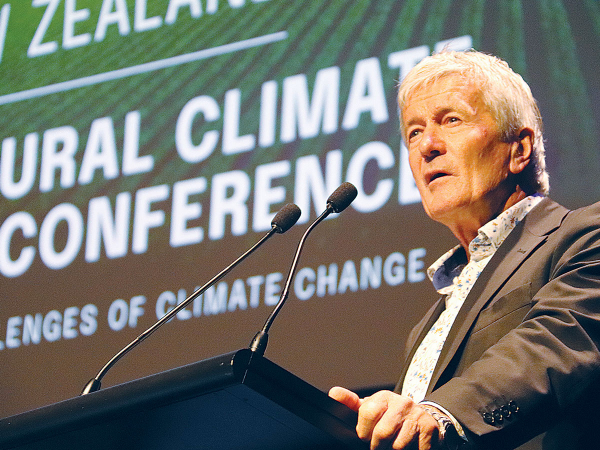 Agriculture Minister Damien O’Connor claims concerns around climate change are driving international consumer preferences.
Look for market trends, rather than market signals.
That was the key message from Agriculture Minister Damien O'Connor speaking at the recent Agricultural Climate Change conference in the capital.
O'Connor says the reality is that market trends give a longer term view and give producers and marketers more advanced warning of what consumers are looking for, and NZ has to be on the ball, ready to change.
In his opening remarks to the conference, O'Connor made reference to the changes and disruption which are now a part of daily life in the primary sector. He noted the impacts of climate change, proof of which he says is evident in particular by the disastrous trail of damage caused by Cyclone Gabrielle.
"With few exceptions, most people now recognise that climate change is a reality and that we as humans have contributed to it."
O'Connor claims concerns around climate change are driving consumer preferences and this also includes some of the big multi-nationals such as Nestle, which buy our products. He says they have committed to eliminate emissions from their supply chain and says he's not too sure how they will apply that to their individual suppliers such as NZ.
"But clearly those sort of signals show there are some... risks emerging and we may face some barriers," O'Connor added.
"I can tell you that having negotiated the UK and EU FTAs, for the most part, people don't necessarily want our products. We can only feed about 40 million people, so our contribution to global food security is not huge in quantum, but in technology, yes, we can play a bigger part."
O'Connor says NZ has to be at the forefront of food safety, quality, premiumisation and marketing.
He says, at the moment, NZ is not facing any trade barriers in relation to its emissions status, but we ignore the risks at our peril and to future generations.
A miserable budget that didn’t deliver much for anyone.

National's decision to ‘dribble’ information about the NZ/India to Labour contributed to the delay in it deciding to supported the FTA.
When it comes to international trade, politicians from all sides of the aisle are united, says Labour's trade spokesman Damien O'Connor.
Federated Farmers have reiterated their support for the coalition Government to abolish the present ban on the live export of animals.
As the coalition Government mulls new regulations to reinstate the export of live animals, debate is heating up between supporters and opponents.



National’s much-touted free trade deal with India featured in the Rural Issues Debate at Mystery Creek, Hamilton on Wednesday night.

New Zealand's 2026-27 freshwater fishing season has opened, with anglers encouraged to head to rivers and lakes over the coming days as conditions look favourable across much of the country.
Central Otago District Council (CODC) has voted against a plan to spread treated sewage sludge from Cromwell and Alexandra on farmland near Lauder, a decision Federated Farmers says reflects strong opposition from rural residents.
Pāmu has released its FY26 Integrated Annual Report, reporting a Net Operating Profit of $113 million, more than double the $49 million recorded in FY25.
Meat Industry Association data, released alongside the Red Meat Sector conference in Wellington, shows export value climbing across the US, China, UK and Canada.
Applications are set to open for the 2027 Zanda McDonald Award, a trans-Tasman award recognised for identifying and fast-tracking talented young leaders in agriculture and agribusiness.