Once-a-Day Calf Feeding: How Probiotics Boost Heifer Growth
Matt Collier, Probiotic Revolution, says calves will drink a lot of milk once-a-day with their probiotic Calf Xtreme.
 increase font size
The result of two probes into the supply of bad sire semen to over 1100 LIC farmer customers will be made public next month.
Following the semen quality issue LIC experienced in October last year, a thorough investigation was done, looking at all operational processes and possible improvements. An independent review was also carried out to look into LIC's response to the issue.
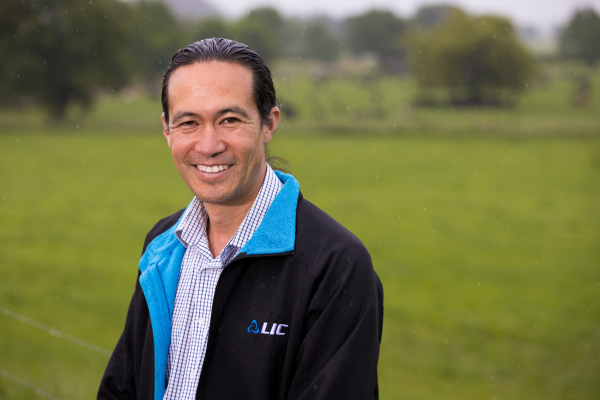
LIC chief executive David Chin says the outcomes of the investigation and independent review are being finalised and will be presented to the board next month.
Following that meeting, all farmer shareholders will be informed of the outcomes and any improvements that will be made to our business as a result, Chin says.
“We thank farmers for their patience and understanding while we work through this.
“We are disappointed as a co-op that we didn't deliver to the high standard farmers expect of us, and we continue to take this situation very seriously,” he says.
The farmer-owned co-operative has already paid out over $2 million to farmers as compensation for supplying some dairy farmers bad sire semen.
Two batches of bad semen were delivered to 1127 farms around the country; semen collected, processed and packed into straws and then sent to farms on October 15th and October 21st failed to pass quality control tests on day three. The straws were used over three days to mate herds and resulted in lower pregnancy rates. Fifteen of the 39 straws collected on October 16th and five of 31 straws collected on October 21st were affected.
Matt Collier, Probiotic Revolution, says calves will drink a lot of milk once-a-day with their probiotic Calf Xtreme.

After a winter of frozen pipework and refrigeration call-outs, Terravest chief executive Kip Bodle and chief operating officer Luke Walker explain why this El Niño summer calls for a different kind of preparation, before the first heatwave finds the weak points for you.
Farmers can spend less time on paperwork, thanks to a new data sharing agreement between DairyNZ’s DairyBase and LIC’s MINDA software.
After delivering a strong financial year, rural trader PGG Wrightson says the coming months will depend on customer confidence and weather.
An LIC bull, Tronnoco AR Sadio-ET S3F, bred by Tony and Keri O'Connor of Tronnoco Farming Co Ltd near Timaru, has won the 2026 Mahoe Trophy.


An Auckland gelato shop and an established New Zealand ice cream maker have both been named Supreme Champions at the NZ Ice Cream & Gelato Awards 2026.

As the cost-of-living crisis continues to put pressure on household grocery budgets, new figures show pork remains one of the most affordable fresh meat options for New Zealand families.
OPINION: In politics, credibility is and should be big. It must surely rank higher than charisma, which is quite trite and superficial. Yet, voters nowadays are often wooed and influenced by how someone looks or talks at a superficial level. TV plays a huge role in this.
Farmers can spend less time on paperwork, thanks to a new data sharing agreement between DairyNZ’s DairyBase and LIC’s MINDA software.
Kaikōura families affected by July's severe storm have found a practical solution to a problem that's kept some children away from regular schooling for weeks: a washed-out section of Inland Kaikōura Road, which has stopped the local school bus from running its usual route.
Rural New Zealand is welcoming the Government’s recent package of rural healthcare initiatives.