Seeka Posts Record $62m Profit as Zespri Lifts 2026 Forecast
More signs of a booming kiwifruit sector.
 increase font size
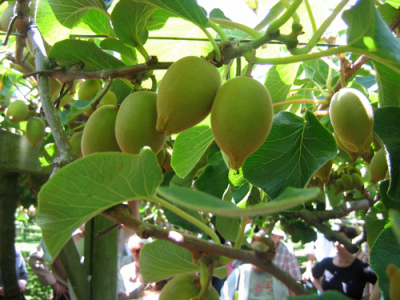 Kiwifruit sales rose by $694m from the 2015/16 - 2016/17 seasons.
The New Zealand kiwifruit sector is set for growth following 2017’s record season and new development opportunities across the country, according to the ANZ Kiwifruit Insights paper.
The sector has bounced back following the PSA crisis, helped by increasing global demand which saw kiwifruit sales rise by $694m from the 2015/16 - 2016/17 seasons.
“The success of the kiwifruit sector is remarkable. It has continued to invest in new varieties while staying connected to consumer demand and has worked hard to keep international markets alive,” says ANZ managing director for commercial & agri, Mark Hiddleston
“The industry is a great example of how working together, sharing information and continuously looking to improve, can benefit the entire sector. The co-operative mind-set is a big part of the success we see today.”
The paper, which outlines industry investment opportunities and challenges, shows strong global demand, coupled with Zespri’s ambition to grow global sales to $4.5b by 2025, is driving demand for kiwifruit orchards which are selling at record prices.
While the scene is set for growth, Hiddleston says, the trick for the sector will be sustainable growth over a number of years.
“Sustainable growth will require ongoing market development, delivering to customer demand on a consistent basis, and building the infrastructure required for higher production,” he says.
“That steady growth is what we need to achieve to meet the aspirational goals that the industry has set.”
Other findings in the ANZ research showed:
- Land values across the country have increased.
- In Bay of Plenty values have doubled in some cases, with green orchards currently valued in the $300 - $450k/ha range and SunGold orchards in the $700 - $1,000k/ha range.
- Diminishing available land in Bay of Plenty creates an opportunity for greenfield development in Northland, Gisborne and Hawke’s Bay.
- Zespri are forecasting orchard gate returns of $57k/hectare for green and $112k/hectare for SunGold.
- Direct growing costs have moved higher over the past two years with average green and SunGold cost per canopy hectare at $32k/ha and $37k/ha respectively.
- Government pledge to increase minimum wage will have a financial impact across most orchards.
- Kiwifruit growers are aging with 53% aged over 60. High capital requirement for orchard ownership poses similar barriers to entry as in other agri industries.
- Labour is identified as a key capacity constraint as well as the large amount of capital required to build the scale and infrastructure required to support a significantly higher level of kiwifruit production.
More signs of a booming kiwifruit sector.

Case IH has unveiled its redesigned next generation Puma Series tractors, said to offer improvements in connectivity, operator comfort, fuel efficiency and drivability.
After delivering a strong financial year, rural trader PGG Wrightson says the coming months will depend on customer confidence and weather.
New Zealand growers have always adapted to changing conditions, but one challenge is steadily gaining ground across the horticulture sector: resistance.
Blueberries have the potential to become a major horticultural export, earning up to $150 million within the next three to five years.


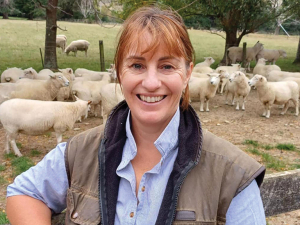
B+LNZ's Wormwise veterinarian Mary Bowron has won the Best Sheep and Beef Vet of the Year Award in recognition of her outstanding contribution to New Zealand’s sheep and beef sector.
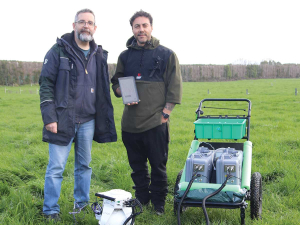
Researchers at Massey University are using a special piece of scientific equipment to improve the measurement of greenhouse gas emissions from pasture soils.
More signs of a booming kiwifruit sector.
OPINION: David Seymour and James Meager's plan to make it easier for farmers and orchardists to operate drones can best be described a 'courageous' move.
New Zealand wool is reaching new heights as air filtration companies move away from synthetic products to biodegradable alternatives.
Opuha Dam's ability to protect South Canterbury communities from major flooding has taken a significant step forward, with Opuha Water Limited (OWL) successfully commissioning a new outlet valve capable of releasing record volumes of water from the dam ahead of a weather event.