Damien O’Connor Criticises Budget 2026 as ‘Miserable’ for Rural New Zealand
A miserable budget that didn’t deliver much for anyone.
 increase font size
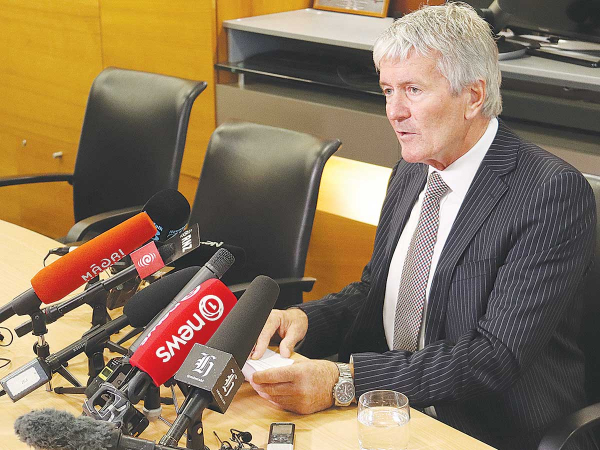 Agriculture Minister Damien O'Connor.
The Government is investing in new integrated advisory services for farmers, foresters and growers in the latest budget released today.
Agriculture Minister Damien O’Connor says Budget 2022 demonstrates the Government’s commitment to New Zealand’s food and fibre sector.
A total of $190 million was announced within the budget, including the following:
O’Connor says the funding announced today will help the sector adapt practices and drive value growth as they respond to changes in the international market.
“Consumers across the world are demanding higher requirements in areas like sustainability and animal welfare practices. New Zealand’s food and fibre sector products are known for their quality the world over, but we must continue to adapt,” he says.
More than $118 million over the next four years will go towards boosting advisory services for farmers, foresters, growers and whenua Māori owners.
“Many of our farmers and growers are already undertaking positive practices, like wetland restoration, setback fencing from waterways, riparian planting and low-till cultivation,” says O’Connor.
“People on the land need confidence they can access excellent information and sound advice that complements existing industry efforts. The vast majority acknowledge it’s a changing world and are adapting. What is important is that all farmers and growers are supported in their business decisions as they necessarily focus on sustainability.”
Forestry Minister Stuart Nash says a $40 million investment over four years will also accelerate transformation in the forestry, fisheries, food and beverage, and wood processing sectors.
“Industry Transformation Plans are being developed in partnership with industry and Māori to identify high-impact actions that strengthen the performance of our primary sector.
“Our primary sector is leading New Zealand’s economic recovery from COVID-19, guided by the Government and sector 10-year roadmap Fit for a Better World, and the Budget will help those efforts,” Nash says.
Associate Agriculture Minister Meka Whaitiri says Māori agribusinesses continue to diversify and grow and it is important to provide on-the-ground support to them.
“We need to focus on solutions that encompass Māori tikanga but also offer opportunities to lift sustainability and productivity for our people.
“Through Budget 2022, we are also committing almost $32 million over four years to protect New Zealand’s animal health and welfare system and reputation. This includes increasing compliance and enforcement, for example, through more on-farm inspectors and providing more help on the ground when responding to adverse events,” Whaitiri says.
The announcement follows a pre-Budget announcement on Monday of $710 million to tackle agricultural emissions, including through the Centre for Climate Action on Agricultural Emissions and accelerating carbon sequestration through forestry.
A further $110 million was also announced last week to boost the biosecurity system and continue the M. bovis eradication programme.
A miserable budget that didn’t deliver much for anyone.

National's decision to ‘dribble’ information about the NZ/India to Labour contributed to the delay in it deciding to supported the FTA.
When it comes to international trade, politicians from all sides of the aisle are united, says Labour's trade spokesman Damien O'Connor.
OPINION: Listening to the hysterical reportage of gun law reforms being pushed through by Associate Minister of Justice Nicole McKee, your old mate wrongly asumed the Minister must be planning to hand out free AK-47s.
Federated Farmers have reiterated their support for the coalition Government to abolish the present ban on the live export of animals.


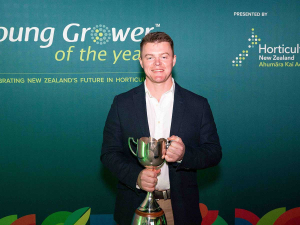
The potato industry is celebrating the success of two rising stars - James Blair, the 2026 Young Grower of the Year and runner-up and innovation award winner, Amber Davy.
Twenty-eight emerging leaders from across the horticulture sector spent two days last month learning valuable skills and connecting with industry experts.
There are five entrants in this year’s Young Horticulturist of the Year, competing in a series of technical, practical, business and leadership challenges.
A seasoned horticulturist has been appointed to deliver the Apple Action Plan, a key initiative of the India-New Zealand Free Trade Agreement.
New Zealand's citrus growers have been told to compete on the value built into their fruit rather than the volume they grow.
Hawke's Bay fruit growers are being reminded of the need to prepare for whatever the El Niño weather system may bring in the coming months.