Resilient Global Dairy Industry Overcoming Volatility
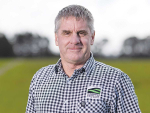
Fonterra chief executive, Richard Allen says being resilient has helped the dairy industry overcome extreme volatility in recent years.
 increase font size

Fonterra has delivered some good news to farmers.
It has reported half-year normalised earnings before interest and tax (EBIT) of $665 million up 77% on the comparable period last year, and net profit after tax of $409 million up 123%.
Farmers will receive an interim dividend of 20c per share next month, easing some financial pain caused by the low payout. Last year Fonterra paid 10c as interim dividend.
The co-op has not changed its forecast payout, which remains at a milk price of $3.90/kgMS and earnings per share range of 45-55c.
Chairman John Wilson says that the supply and demand imbalance in the globally traded dairy market has brought prices down to unsustainable levels for farmers around the world, and particularly in New Zealand; the strong New Zealand dollar has also had a negative impact on the milk price.
"The low prices have placed a great deal of pressure on incomes, farm budgets, and our farming families," he says.
"Our priority is to generate more value out of every drop of our farmers' milk by focusing on the areas within our control. We aim to efficiently convert as much milk as possible into the highest-returning products.
"Our management is aware of the need for strong performance to ensure that we get every possible cent back into farmers' hands during a very tough year.
"We have lifted profitability from last season to this season, resulting in higher earnings per share to help offset low global dairy prices. As a result, we have delivered an interim dividend of 20 cents per share, up from an interim dividend for last year of 10 cents per share.
"Our forecast farmgate milk price of $3.90/kgMS reflects low global dairy prices, with whole milk powder decreasing around 17% cent this season to date. Forecast total available for payout of $4.35-$4.45/kgMS currently equates to a forecast cash payout of $4.30/kgMS after retentions for a fully shared up farmer."
Fonterra chief executive, Richard Allen says being resilient has helped the dairy industry overcome extreme volatility in recent years.

Northland farmer Greg Collins has taken over as chair of the Fonterra Co-operative Council.
Fonterra’s 2026 financial year was a year of delivery, with record volumes of milk collected, processed and shipped by the co-op.
Dairy farmers, still holding onto their Fonterra shares despite switching milk supply elsewhere or exiting the industry, now face a stricter share sell-down requirement.
Milk powder prices are continuing their merry run, firming up a potential $10/kgMS farmgate price this season.

During the nesting season, from September to December, industrious starlings can quickly build nests in the darker areas behind tractor and vehicle, usually close to hot engines, typically resulting in localised damage or in some cases complete write-offs.
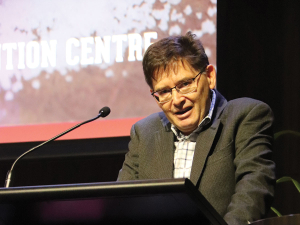
The meat processing industry is much more collegial than it was in the past and is now more focused on common goals.
With the last couple of months having seen some potential tractor purchases put on hold with the impending election and continued input cost rises, year-to-date figures, ending September, has seen deliveries up around 5% over the same period in 2025, with a total of 2026 units.
Beef+Lamb New Zealand is calling for nominations for director roles in the Northern South Island and Northern North Island electoral districts.
Fonterra chief executive, Richard Allen says being resilient has helped the dairy industry overcome extreme volatility in recent years.
The head of the Ministry for Primary Industries (MPI) trade and international relations group says New Zealand is well-positioned to secure trade access and compete internationally as the world becomes more complicated, demanding and uncertain.