Massey Uses Portable Analyser to Measure Pasture Soil GHGs
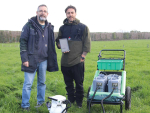
Researchers at Massey University are using a special piece of scientific equipment to improve the measurement of greenhouse gas emissions from pasture soils.
 increase font size
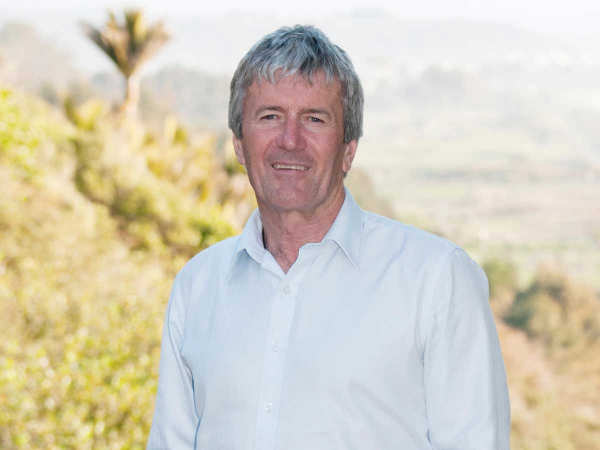 Agriculture Minister Damien O'Connor
The Government is backing what it says is the largest ever study on the sustainability of New Zealand’s farming sector, Agriculture Minister Damien O’Connor has announced.
He says the $26.1 million programme will be the most comprehensive study of pastoral farming in New Zealand.
The Whenua Haumanu programme is being led by Massey University’s School of Agriculture and Environment and aims to enable farmers to make informed decisions on the financial and environmental benefits of adopting regenerative farming practices.
“New Zealand’s economic security depends on our primary sector, which this year earned us a record $53.3 billion in exports. Our future competitive edge in food and fibre will depend on demonstrating our sustainability credentials to ever more discerning consumers,” O’Connor says.
“The new Whenua Haumanu programme will study the whole pastoral farming system from field to fork.”
The Government will commit $17.6 million over the course of seven years through the Ministry for Primary Industries’ Sustainable Food and Fibre Futures (SFF Futures) fund.
The programme will involve several research sites and bring together universities, Crown research institutes, and industry groups. Research partners include AgResearch, Lincoln University, and Dairy Trust Taranaki. Additional guidance will be provided by an End User Advisory Group comprised of the pastoral industry, iwi, investment and consumer groups.
Research sites include Massey University’s Dairy 1 farm, Massey University’s Pasture and Crop Research Unit, and Lincoln University’s Field Research Centre, with additional monitoring sites planned on some Pāmu farms and pastoral industry demonstration farms.
“This is the most comprehensive study ever undertaken of our pastoral systems, both conventional and those incorporating regenerative farming practices,” O’Connor says.
He adds that the Whenua Haumanu programme is part of a broader coordinated work the Government is backing that aims to provide a robust evidence base to explore regenerative farming practices alongside conventional pastoral practices in both dairy cattle and sheep systems.
“In doing so it will also test claims that many of our conventional pastoral practices are already regenerative.
“One key aim of the programme is to investigate potential benefits of diverse pastures for grazing animals, as well as regenerative farming practices, as these have yet to be thoroughly studied for the New Zealand farming context.
“Developing a sound evidence base for what works well with our soils, climates, and farming systems will aid our efforts to transition to a more sustainable future for our food and fibre sector.
“Purchasing decisions by consumers in our export markets are increasingly being driven by their values. The work by Whenua Haumanu will help New Zealand tell the story of its food production so we can grow exports and deliver economic security.”
Researchers at Massey University are using a special piece of scientific equipment to improve the measurement of greenhouse gas emissions from pasture soils.

Interest in agritech and production animal systems has prompted Massey University's School of Agriculture and the Environment to new majors to its popular animal science degree.
The industry is crying out for graduates with agricultural related degrees.
A four year trial has reaffirmed that mixing plantain into dairy pastures can help reduce nitrogen losses to freshwater while maintaining milk production and profitability, say researchers.
Special courses for secondary school teachers to help excite kids about agriculture and horticulture are now being run at Massey University.


Minister of Conservation Hon Tama Potaka has appointed Susan O'Regan as Chair of the Queen Elizabeth II National Trust (QEII) for a three-year term.
Red meat farmers are welcoming Labour’s plan to review the Emissions Trading Scheme and not to campaign on pricing agricultural emissions.
Where any worker in the kiwifruit industry is mistreated, we expect the authorities to take action.
Mid Canterbury Federated Farmers arable chair, Bevan Lill, said Beef + Lamb NZ data indicated that for the last six years, the average arable return on investment was about 0.8% while inflation ran about 4% - so the average arable farm was going backwards at about 3% a year.
Seed and grain companies share the concerns of arable farmers about the viability of their sector, says Seed and Grain New Zealand chief executive Dr Sarah Clark.
The New Zealand Institute of Forestry (NZIF) says unnecessary changes to New Zealand’s Emissions Trading Scheme (NZ ETS) will seriously erode investor confidence and result in significant reductions in forest planting rates.