BVD Control Begins Long Before You See A Problem
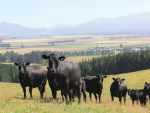
Bovine Viral Diarrhoea (BVD) is sometimes viewed as a dairy industry issue, but the reality is that the disease can have serious consequences for beef breeding herds as well.
 increase font size
 Agriculture Minister Damien O'Connor.
The Government has committed an investment of $4 million over four years to expand a biosecurity readiness and response app developed by Onside Ltd.
The funding comes from the Ministry of Primary Industries’ Sustainable Food and Fibre Futures Fund (SFF Futures).
“As a trading nation and one with an abundance of unique plants and wildlife, biosecurity is fundamental to our economic security,” Minister for Agriculture Damien O’Connor says.
O’Connor says primary sector exports support the growth of the New Zealand economy.
“This is why we are continuously improving our systems to stop incursions from occurring, and ensuring we have the ability to quickly stamp them out if needed.”
He says Onside’s biosecurity software (OSI) uses data from a range of sources to map out rural interactions and potential disease pathways in a way he says is faster than previously possible, which O’Connor says could save the country hundreds of millions of dollars by helping the speed of a response.
“Our investment together with Onside’s $6 million contribution means a quick scale-up and adoption by the sector.”
Onside began in 2016 as a visitor management and health and safety tool, providing a digital check-in to keep track of farm visitors.
It has since evolved into a comprehensive operations software for all rural sectors.
Onside is already used on over 14,000 properties with wide use in the kiwifruit sector and is gaining traction in the viticulture sector.
The funding is set to support Onside to grow these further while continuing to develop the OSI algorithms and technology in collaboration with some of the world’s top data scientists.
“We’ve shown with the success of the Mycoplasma bovis programme what we can achieve together when an incursion happens, but we want to reduce risk as much as possible to prevent the costs and effects for individual farmers and growers,” says O’Connor.
“We’re proud to back this programme, which is paving the way towards providing biosecurity solutions that protect our environment, our animals and our economic security.”
Bovine Viral Diarrhoea (BVD) is sometimes viewed as a dairy industry issue, but the reality is that the disease can have serious consequences for beef breeding herds as well.

Election years are always a concerning time for farmers, according to DairyNZ chair Tracy Brown.
Testing confirms H5 bird flu in a single northern giant petrel, found dead on a remote Cape Palliser beach in the Wairarapa, says Dr Mary van Andel, the Ministry for Primary Industries' (MPI) Chief Veterinary Officer.
Bovine Viral Diarrhoea (BVD) is sometimes viewed as a dairy industry issue, but the reality is that the disease can have serious consequences for beef breeding herds as well.
Four years since it was first detected in New Zealand, researchers and growers now know much more about management of maize pest fall armyworm (FAW).
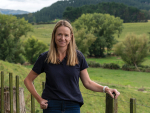


LIC shareholders have elected a new North Island representative to the co-operative's Board, along with five representatives to its Shareholder Reference Group (SRG), following the company's Annual Meeting held in Invercargill.
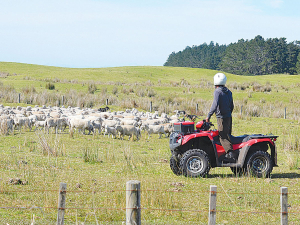
Farmers across parts of Southland and South Otago are continuing to deal with difficult conditions after a prolonged run of wet weather, with pressure building around feed supply, stock management, pasture damage, farm infrastructure and everyday workloads.
Federated Farmers says it welcomes Labour's commitment to reviewing the Sharemilking Agreements Act, calling on other major parties to do the same.
For Canterbury dairy farmers Sian Meijer and Rick Wobben, wearable technology has become one of their most valuable on-farm tools - helping manage 1850 cows across an expansive, high-performing dairy operation while improving efficiency, mating outcomes and day-to-day decision making.
Fonterra has unveiled its annual results for the 2026 financial year, posting $27 billion in revenue and close to $20 billion returned to New Zealand farmer owners and unit holders.
The first major update to the Dairy Cattle Code of Welfare in more than a decade has been released, marking what DairyNZ describes as an important step in ensuring animal welfare standards continue to evolve alongside scientific evidence and on-farm realities.