
US Launches Lamb Safeguard Probe, NZ Exports at Risk
As expected, the US has launched a safeguard investigation into lamb imports, a move that could impact New Zealand sheepmeat returns.
 increase font size
 Nathan Guy.
Opposition agriculture spokesman Nathan Guy says it is chilling that the Government will force the cattle industry outside of an agreed mandate to pay to eradicate M. bovis.
“In 2013 the National Government established the Government Industry Agreement (GIA) to set out a framework for cost-sharing between the Government of the day and 16 primary sector organisations as and when bio-security incursions arise,” says Guy.
“That framework sets out that the industry should meet about 12% of the cost to eradicate this disease.
“However, Damien O’Connor has confirmed publicly today that he wants the industry to stump up 40% to 50% of a bill that’s estimated to cost between $500 million and $870 million.
“The Minister justified this in a radio interview this morning by effectively saying that the agriculture industry earns a lot of money and can afford it.”
Guy says O’Connor calls himself a farmer and should therefore understand the stresses and pressures of the industry.
“He is attempting to defend the indefensible. This Government inherited one of the fastest growing economies in the OECD. Treasury is projecting rising surpluses and Government coffers are awash in cash.
“That Damien O’Connor is forcing farmers outside of an agreed mandate to pay for an incursion that the Government can easily cover – while they’re having to destroy their cattle herds and the banks are knocking on their doors – is disgraceful,” Guy says.
As expected, the US has launched a safeguard investigation into lamb imports, a move that could impact New Zealand sheepmeat returns.

New Zealand's red meat sector says it welcomes the Government's focus on trade ahead of the general election in November.
New Zealand red meat exports are booming but a pending decision in the White House, Washington D.C., could dent sheepmeat earnings.
Politicians calling for New Zealand to withdraw from the Paris Agreement on climate risk damaging two of our gold-plated free trade deals.
Prime Minister Christopher Luxon says the red meat sector is doing an excellent job promoting our pasture-fed system around the globe.


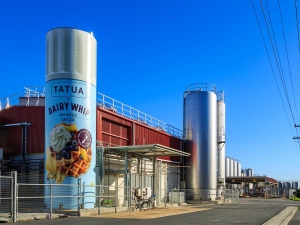
Waikato milk processor Tatua has again declared a record milk payout to farmer shareholders, leaving other processors in the dust.

A Labour-led Government won’t be bringing back the controversial freshwater rules of 2020.
National’s much-touted free trade deal with India featured in the Rural Issues Debate at Mystery Creek, Hamilton on Wednesday night.
New Zealand's 2026-27 freshwater fishing season has opened, with anglers encouraged to head to rivers and lakes over the coming days as conditions look favourable across much of the country.
Central Otago District Council (CODC) has voted against a plan to spread treated sewage sludge from Cromwell and Alexandra on farmland near Lauder, a decision Federated Farmers says reflects strong opposition from rural residents.
Pāmu has released its FY26 Integrated Annual Report, reporting a Net Operating Profit of $113 million, more than double the $49 million recorded in FY25.