HortNZ Welcomes $400 Million Boost for State Highway Resilience
Horticulture NZ says the funding boost to improve state highway resilience will support growers and strengthen the transport links they rely on to get produce to market.
 increase font size
 Wairoa mayor Craig Little believes there is a 100% chance of Wairoa going down the gurgler if infrastructure issues aren’t properly resolved.
"The roads into our town are so fragile that another storm could take them out at any time."
That's how Wairoa Mayor Craig Little describes the predicament that Wairoa is facing following Cyclone Gabrielle. He says the town's access to the outside world is hanging by a thread due to the state of the highway between Napier and Wairoa.
Little points out that the town was cut off for three months when the Waikere bridge was washed away, which has just been replaced by a single land Bailey Bridge.
He told Rural News the problems with fragile infrastructure are putting the economic viability of the town at risk. Little believes there is a 100% chance of Wairoa going down the gurgler if infrastructure issues aren't properly resolved.
"Any company or potential investor coming to town and looking at those roads and the connectivity would likely think twice," he adds. "There is little or no tourism happening at the moment and any downturn in the rural economy will put pressure on retail in the town."
Little says that horticulture is a sector that could work well for the district. He believes there is a lot of suitable land available, and fruit grown in Wairoa ripens earlier than fruit grown in Hawke's Bay.
He says the Tātau Tātau o Te Wairoa Māori Trust has developed a significant horticulture operation around Wairoa, but they are having second thoughts about expanding until the uncertainty of infrastructure - especially roading is resolved.
According to Little, most of the roads that service the town were built before the era of larger trucks and the advent of these has put pressure on the existing network.
The horror and power of Gabrielle is clearly visible in both the township and in the rural hinterland. People are still living in temporary accommodation and there are red stickered homes all around Wairoa. In the rural areas, water still ponds in what were paddocks of maize, which have been destroyed.
Silt covers pastures and homes and sheds are gone or beyond repair. Fencing remains a massive problem.
"Everyone is feeling it. Sheep and beef farmers are struggling to repair fences," Little says.
"They have probably got kilometres and kilometres to fix and at the moment. Myself, and others, are just putting up hot wires to keep the cattle in, but that doesn't keep the sheep in - so there is a long way to go yet."
Horticulture NZ says the funding boost to improve state highway resilience will support growers and strengthen the transport links they rely on to get produce to market.

The chief executive of Apples and Pears New Zealand, Danielle Adsett, says fruit quality this year is phenomenal and the sector is hitting crop estimates, which is great for growers.
Nearly three years on from Cyclone Gabrielle, Hawke's Bay apple orchardist Paul Paynter says they are still doing remedial work around their orchards and facing financial challenges.
If there was a silver lining in the tragedy that was Cyclone Gabrielle, for New Zealand Young Grower of the Year, Grace Fulford, it was the tremendous sense of community and seeing first-hand what good leadership looks like.
Listed carpet manufacturer, Bremworth is undertaking a $6 million expansion at its Napier plant more than two years after the site was heavily damaged by Cyclone Gabrielle.

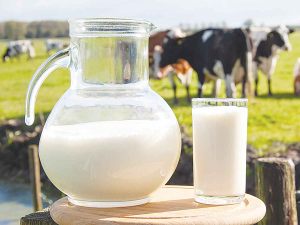
New Zealand dairy farmers are set to be the first in the world to receive access to a new digital physical milk pricing tool that enables them to fix the price for their physical milk.
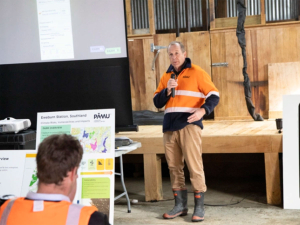
State farmer Pāmu is opening its farm gates this summer in an effort to give the rural sector the opportunity to see how large-scale, multi-system farming is delivering productivity and profitability across New Zealand.
A five-year study has found that the cost of reducing emissions without technology may be significant and unsustainable for Northland dairy farmers.
DairyNZ says Waikato farmers need certainty on Plan Change 1, but they say that certainty must be matched with practical, workable rules and a clear transition that doesn't get ahead of the new resource management system currently under review.
While the Government has moved quickly to make commercial hauliers' lot easier during the current fuel crisis, they appear to be stuck in the creep box when it comes to the agricultural industry.
Waikato farmers have been told that the Government’s new planning system legislation and the region’s Plan Change 1 (PC1) “won’t mesh together very well”.