Fonterra Names Four Independently Assessed Director Candidates
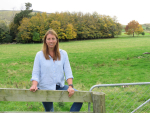
Fonterra Co-operative Group has confirmed the independently assessed candidates standing for election to its board in 2026.
 increase font size
 Fonterra chief executive Theo Spierings and chair John Wilson front the co-op’s annual result last week.
Fonterra chairman John Wilson says the board has no regrets over its $700 million investment in troubled Chinese child nutrition trader Beingmate.
Despite writing off $35m from the value of its 18.8% stake in Beingmate in the last financial year, the board had “strong expectations”, says Wilson.
With Beingmate securing new regulatory approvals to sell infant formula in China from January 1, 2018, Fonterra hopes the company’s fortunes will turn around.
“We’re watching what is happening in that market carefully; we took the prudent step of impairment this year and will continue to monitor that,” Wilson told Rural News.
“We’ll get a far better insight over the next 6-12 months. Is this business going to track back to historically what it used to be at? We see no reason why it won’t do so.”
A regulatory overhaul of the infant formula market by Chinese authorities has put Beingmate and a handful of other players in pole position to regain market share.
Since January 1 a few companies have been issued approvals for infant formula recipes in China; Beingmate got approval for 15 recipes. Fonterra’s Anmum got its approval last month.
Wilson says the clampdown on infant formula brands in China is a good thing for consumers, who are demanding safe, quality products.
“It was good to see Beingmate receive some of the very first regulatory approvals,” he says. “We expect fewer sellers in the marketplace; that’s a quite a remarkable change and it’s difficult to see why we won’t be well placed in the next 6 to 12 months.”
The crackdown on infant formula brands caused a drop in sales last year.
Retailers are reluctant to hold products that won’t be certified for sale next year.
Beingmate also had its own problem, reporting a loss of $158m last year versus a profit of $20m in 2015.
Late last year its reputation was hit by a case of alleged milk powder tampering, causing it to forecast a loss of up to $48 million for the first quarter of this financial year.
An authorised Beingmate infant formula dealer had been linked to a ring that bought cheaper powder and repackaged it so it appeared to be a more expensive product.
Chinese business
The Beingmate investment is just one part of Fonterra’s China business that has been performing strongly.
Chairman John Wilson says while the co-op is facing challenges in the China infant formula segment, the rest of its business there is booming.
“Our consumer and food service and ingredients businesses in China are doing exceedingly well.”
Last year the co-op pumped 5.5 billion litres of milk equivalent (LME) into China – about 25% of its total yield.
Fonterra does business in at least 100 countries; while most regions are doing well there are challenges in Venezuela (political uncertainty) and Brazil (recession). Russia’s embargo on dairy products is also affecting its business.
A global business “will always have unders and overs,” Wilson says. “Rightly we’re attentive to what’s happening in Beingmate” but many of the co-op’s investments are going “exceedingly well.”
The industry is food
A key message from Origin Green is that it’s selling food, not agriculture.
This issue is canvassed in NZ by commentators such as Ian Proudfoot, of KPMG, who talks about the agri-food sector.
“Food is what we are exporting, agriculture is what produces that food,” he explains.
Brennan says in today’s environment the authenticity and provenance of food is becoming more important to consumers, as are nutrition and health issues – all of which are incorporated in the Origin Green brand.
Brennan concedes other countries, including NZ, have tried to copy or establish similar programmes. Bord Bia has worked with many other countries and he says it’s important that food producing nations collaborate to keep quality food on supermarket shelves for 12 months of the year because if consumers don’t see a product they will change to another one.
While Origin Green has served Ireland well, Brennan says there is no room for complacency.
“The challenge for us in Origin Green is not to sit still, but to continue to develop and evolve and that is what we are actively working on all the time.”
Fonterra Co-operative Group has confirmed the independently assessed candidates standing for election to its board in 2026.

Fonterra has revised its Farmgate Milk Price forecast for the 2026/27 season, lifting the midpoint and narrowing the range on the back of improving global dairy commodity prices.
Outgoing Fonterra Co-operative Council chair John Stevenson says that it has been a privilege to represent the co-op's farmer shareholders.
OPINION: It seems Canterbury processor Synlait is still in the doldrums.
OPINION: Get offside with New Zealand First leader Winston Peters at your own peril.


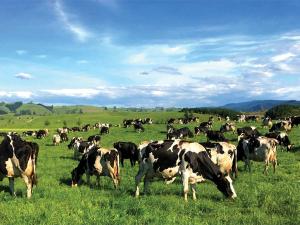
The first major update to the Dairy Cattle Code of Welfare in more than a decade has been released, marking what DairyNZ describes as an important step in ensuring animal welfare standards continue to evolve alongside scientific evidence and on-farm realities.

Ravensdown shareholders have elected Jane Montgomery and Kate Acland to the Ravensdown Board for three-year terms, following a closely contested director election.
Federated Farmers says new legislation replacing the Resource Management Act will cut red tape, unlock investment and help grow New Zealand's export-led economy, after the Planning Bill and Natural Environment Bill passed their third reading in Parliament yesterday.
Leading figures from the major political parties will be questioned on their primary sector policies at the Rural Issues Debate at Mystery Creek Events Centre, Hamilton, on 30 September.
OPINION: Have a plan in place now!
Beef + Lamb New Zealand (B+LNZ) says it welcomes the passage of the Natural Environment Bill and Planning Bill, calling the bills a positive step for sheep and beef farmers.