Milk Powder Prices Prop Up Farmgate Milk Price
Milk powder prices are keeping farmgate prices up, helping processors offset the dip in milk fat prices.
 increase font size
 Theo Spierings.
Fonterra is defending chief executive Theo Spierings’ hefty $8 million pay packet, saying he hit “far-reaching and demanding targets” set by the board.
Fonterra chairman John Wilson agrees that Spierings’ pay, revealed in the co-op’s 2016-17 annual report, is “big numbers”.
“We benchmark this remuneration using independent advisors,” Wilson says.
“Clearly these numbers are high from a New Zealand perspective and we absolutely respect and understand that; but from an Australasian and global perspective we are still well within the bands of what those global executives earn.”
Fonterra’s annual report shows Spierings received a base salary of $2.4m, short-term incentives totalling $1.8m and $3.8m in long term incentives.
Wilson says 5600 employees received short term incentives aligned to key operating metrics.
A new set of incentives was agreed between the board and senior management on the co-op’s transformation project called ‘velocity’.
“We had an extraordinary result this year; to give credit to management they were able to hit those targets and the outcome... are what we call ‘velocity’ payments.”
He says the ‘velocity’ project made $2 billion cash and working capital for the co-op.
Fonterra shareholders council chairman Duncan Coull says feedback from his councillors attending farmer meetings last week shows there weren’t “a lot of discussion or questions from the floor” on the issue.
Coull says the level of transparency in Fonterra’s annual report and directors’ explanations gave context to the pay package and put farmers at ease.
“I think there’s more interest in the issue from those outside Fonterra,” he told Rural News.
Coull says Fonterra paid $10b to farmers in the last financial year -- a total payout of $6.52/kgMS. “These are big numbers.”
Federated Farmers dairy chairman Chris Lewis says there were “mixed reactions” from farmers he spoke to. Some question whether Spierings would be paid $8m by another global dairy giant like Nestle or FrieslandCampina, Lewis says.
“The $8m pay package is certainly eye-watering and some farmers are asking whether he is an $8m man,” he says. “But some point out that the $8m is not his salary; most of it is bonus for meeting targets set by the board and the board is satisfied with his performance.”
Lewis says Spierings’ leadership delivered results for Fonterra last year and setting the remuneration package is “a difficult balancing act” for the board.
Milk powder prices are keeping farmgate prices up, helping processors offset the dip in milk fat prices.
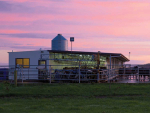
Climate, nature and animal wellbeing make up Fonterra's refreshed sustainability roadmap released last week.
Speculation of a possible joint move by Fonterra and a2 Milk to buy Synlait raises a much bigger strategic question, says agribusiness expert Dr Nic Lees.
In the past, much has been made of the concept of farm to fork, but an Australian expert in food science and marketing with experience in the dairy industry, Dr Angeline Achariya, says the reverse of this slogan is critical to win modern day consumers.
A four year trial has reaffirmed that mixing plantain into dairy pastures can help reduce nitrogen losses to freshwater while maintaining milk production and profitability, say researchers.


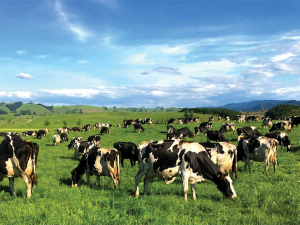
Most dairy regions around the country have had a pretty good season so far says Tracy Brown.
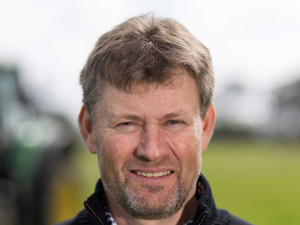
Rural leader Mark Hooper has been appointed as an independent director to the NZPork board, bringing extensive farming, governance and advocacy experience to the role.
Opportunity says its land value tax (LVT) is unlikely to force farmers into a position where asset sales or increased debt are required.
Milk powder prices are keeping farmgate prices up, helping processors offset the dip in milk fat prices.
Climate, nature and animal wellbeing make up Fonterra's refreshed sustainability roadmap released last week.
The Government is introducing a new nationwide rural recycling scheme that will significantly increase the recovery of farm plastics from March next year, Minister for the Environment Nicola Grigg announced today.