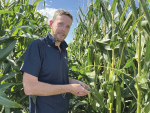
Fall Armyworm in NZ Maize: Four Years of Research
Four years since it was first detected in New Zealand, researchers and growers now know much more about management of maize pest fall armyworm (FAW).
 increase font size
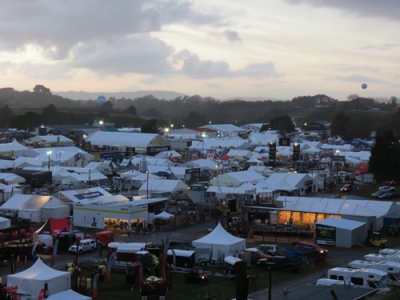 "We're thrilled with the economic impacts of Fieldays 2015," says NZ National Fieldays Society CEO Jon Calder.
The Fieldays 2015 Economic Impact report reveals the events contributes $166m to the GDP of New Zealand and $53m to Waikato.
Dr Warren Hughes of the University of Waikato Management School's Institute of Business Research and Hughes Economics independently prepared the report.
"When preparing the impact study, we look at three sources — visitor spending, equipment spending and organisation spending," says Hughes.
The decrease in both Waikato and New Zealand's revenue and GDP of 13-14% has been attributed to the dairy forecast.
"Unfortunately, as we came into Fieldays, we knew there was bad news ahead in the dairy sector and equipment purchase fell directly, and the overall total price fell accordingly," say Hughes.
However, he says all other sectors, including sheep, beef, horticulture and wine, are on the up.
"We're thrilled with the economic impacts of Fieldays 2015," says NZ National Fieldays Society CEO Jon Calder.
Calder says the event is "more than just four days in June".
"We're incredibly proud to have such relationships with our stakeholders and customers to be able to contribute so significantly to New Zealand's primary sector."
Four years since it was first detected in New Zealand, researchers and growers now know much more about management of maize pest fall armyworm (FAW).
Generative AI in the workplace, trials in the field, and industry-relevant research took centre stage at this year’s Grape Days events in Central Otago, Hawke’s Bay and Marlborough.
Walking around the Fieldays this year, expected most of the conversations to be about machinery purchases and farm infrastructure upgrades. Instead, one topic seemed to keep cropping up more frequently with farmers – the price of PKE.
A new digital assistant is now helping Ballance Agri-Nutrients farmers speed up nutrient information and ordering.
OPINION: At Fieldays this year, one theme kept surfacing across the sector: global shocks are no longer something that happens “over there”. They are now translating quickly into local, farm-level impacts through increasingly complex and connected channels.


Dairy processors are ready to further boost New Zealand’s export earnings but want the incoming government to match their ambition with good policy.
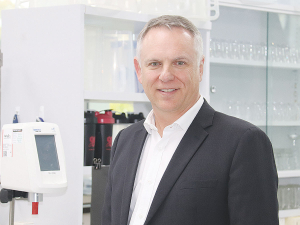
Massey University is best placed to solve the “problems” facing the dairy industry, says vice chancellor, Pierre Venter.
Synlait's longest serving employee – a man who joined the Canterbury-based milk processor even before it began processing milk – is now its newest executive.
A dairy industry leader believes eradicating the common and costly disease, Bovine Viral Diarrhoea (BVD) is within reach.
A farmgate milk price of $10/kgMS this season is firming up as milk powder prices soar and the New Zealand dollar weakens.
Federated Farmers has welcomed new rural policies released by ACT, saying they align closely with its own election priorities.