
Beef + Lamb New Zealand Awards 2026 Winners Announced in Christchurch
Last night saw the winners of the 2026 Beef + Lamb New Zealand (B+LNZ) Awards named at a gala dinner at Te Pae Christchurch Convention Centre.
 increase font size
 Fencing waterways is proven as effective in combatting contamination, says AgResearch’s Rich McDowell.
Fencing waterways is proven as effective in combating the risk of contamination in waterways.
However, AgResearch professor Rich McDowell says other mitigation strategies need to be looked at because it’s impractical to fence all waterways.
McDowell recently had a paper on a model he developed published in the American Journal of Environmental Quality.
He told Rural News his model is designed to calculate the loads of various contaminants, e.g. nitrogen, sediment and E.coli in rivers and streams, and produce scenarios to help mitigate problems in waterways. An important conclusion is the scientific proof about the value of fencing off waterways.
“Fencing counts,” he says. “We know fencing knocks off 10 - 90% of contaminant transfer from land into waterways.
“It just depends which contaminant you are talking about. For instance, at the upper end you have surface-runoff derived contaminants such as sediment, phosphorous and potentially E.coli; and at the lower end it’s probably nitrogen because it goes lower into the subsurface.”
McDowell says fencing works especially well for E.coli and phosphorous contamination that can result from animal waste or stream destabilisation. But he points out that New Zealand’s topography makes it impossible to fence all streams.
He says the cost of fencing streams high up in a catchment is effectively prohibitive and therein lies the problem.
“We see most contaminants coming from shallow narrow streams in catchments steeper than 15 degrees,” McDowell explains. “Beyond that, there is a component that is natural and a component derived from farming activity. The bit that is natural is between 25 and 75%, depending on the contaminant and local context.”
According to McDowell, the alternative to fencing streams in steeper country is other mitigation strategies -- having an optimal Olsen P concentration, not grazing gullies until later in the season and providing deer with wallow areas away from streams. Such mitigation options are very cost effective.
McDowell notes that in the last ten years an awareness of the issues and good management practices have begun to reverse the degrading of waterways by phosphorus and sediment.
He says fencing in the right situation is obviously a good idea because it’s simple, visual and the concept resonates with the public. But mitigation requires a horses-for-courses approach.
Winter forage crops work in some regions but will not work in others and farmers need an open mind on what is best for their particular circumstances.
McDowell points out that this is not just a dairy problem.
“There are loads of various contaminants coming in from a variety of land uses – dairy, drystock and even the arable and horticultural sectors. They have their own ‘signatures’ in terms of contaminants.
“Equally, they have their own mitigation strategies.”
McDowell says in some seasons very wet or very dry ground causes runoff into streams. His advice to farmers is to mix and match strategies and possibly get a second opinion to ensure action lines up with regional council rules.
Last night saw the winners of the 2026 Beef + Lamb New Zealand (B+LNZ) Awards named at a gala dinner at Te Pae Christchurch Convention Centre.
A significant breakthrough in understanding facial eczema (FE) in livestock brings New Zealand closer to reducing the disease’s devastating impact on farmers, animals, and rural communities.
A breakthrough in the understanding of Facial Eczema (FE) in livestock could bring New Zealand closer to reducing the disease’s impact.
An innovative idea for transforming mechanically deboned meat (MDM) into a meat flake for seasoning has taken top honours in the Meat Industry Association’s (MIA) first-ever Dragon’s Den competition.
The Government's plan to merge the seven crown institutes presents exciting possibilities for plant technology company Grasslanz Technology, says chief executive Megan Skiffington.


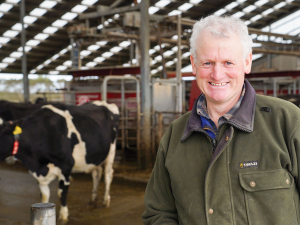
In Dacre, near Invercargill in New Zealand’s South Island, Bruce Dinnington is running a dairy operation unlike any other.

A free online platform aggregating governance vacancies across rural and regional New Zealand has been launched.
Environment Minister Nicola Grigg has announced details of a new rural plastics recycling scheme.
Agricultural drone operators say that a government decision to allow lower-risk drone work without certification won’t lower standards but drive innovation and efficiency.
OPINION: Warning bells are ringing in the arable sector.
Farmgate lamb prices are down by 8%, beef cattle by 4.5% and farm expenditure up by 4.2%.