Federated Farmers Backs Year 11 Agricultural Science
Federated Farmers is backing Feilding High School’s call to keep Agriculture and Horticultural Science as a standalone subject in Year 11.
 increase font size

Be wary of apparently well-meaning surveys of flora and fauna on your land because the findings could come back to haunt you, warns a Federated Farmers national board member.
Feds Meat and Fibre group chair Jeanette Maxwell is referring to a voluntary biodiversity survey done in conjunction with Ashburton District Council (ADC).
The Mid-Canterbury foothills farmer says she has no problem with district councils wanting to identify local indigenous biodiversity areas.
"But the important thing is that landowners understand clearly what the information will be used for and by whom. Will it be included in future district plans? If so, what will be the likely outcomes for farmers?"
Information given freely by farmers in the interest of protecting areas of high conservation value has in the past resulted in ordinary farming practices being curtailed, she says.
"Mid Canterbury high country farmers who assisted in the Protected Natural Areas programme in the late 1980s did so in good faith only to find they had effectively put their heads in a noose."
Areas of potential interest were identified but full assessment and selection of sites worth including in the PNA programme were not done. Lacking its own database, ADC adopted the PNA survey's preliminary data in its entirety and noted all sites in its next district plan.
Despite an Environment Court ruling that some areas in dispute be re-assessed within five years, the notifications and subsequent farming restrictions remain.
Maxwell is concerned history may be about to repeat itself.
Recent changes to the RMA mean that rather than having 'regard for' regional biodiversity policies, district councils must now enact them.
In 2010, frustrated by Environment Canterbury's (ECan) tardiness in developing a regional biodiversity statement, ADC launched its own initiative. It set up a community-based biodiversity working group, telling it to develop and implement a plan giving effect to ECan's proposed regional policy statement. Maxwell and Robin Grigg were appointed the group's Feds representatives.
Maxwell worries that ADC's mission statement refers not only to indigenous biodiversity but also to habitats and systems which support indigenous biodiversity – systems such as shelter-belts.
"The mission statement's vague, warm-fuzzy terminology is open to wide interpretation and gives regard to biodiversity full-stop. It allows the working group to capture virtually anything it wants, and given the strong conservation leaning of its membership, that capture is pretty green."
She and Grigg have withdrawn from the group, saying Feds cannot be seen as supporting an ADC/Forest & Bird-driven initiative to survey and virtually classify local indigenous biodiversity.
Grigg says the survey builds on a previous limited vegetation survey of Ashburton Plains roadsides but has been broadened to "looking over fences onto private land."
He fears that in the absence of other data ADC will use the survey's raw information to define outstanding indigenous biodiversity values, elevating all sites to 'outstanding' status no matter how low-value or repeated they are. Once listed in the district plan, the sites will become subject to council monitoring and rules.
Federated Farmers is backing Feilding High School’s call to keep Agriculture and Horticultural Science as a standalone subject in Year 11.
National’s pledge to introduce 19 new national standards shows the party is serious about getting Wellington out of farming, Federated Farmers says.
Mobile phone coverage and reliability are deteriorating in rural areas, and farming families are bearing the cost, according to a Federated Farmers survey.
Central Otago District Council (CODC) has voted against a plan to spread treated sewage sludge from Cromwell and Alexandra on farmland near Lauder, a decision Federated Farmers says reflects strong opposition from rural residents.
Federated Farmers has called on Central Otago District Council (CODC) to drop or vote down a plan to truck sludge from Alexandra and Cromwell to farmland near Lauder, warning it would compound an "outrageous" situation created by a separate council's decision weeks earlier.



Alliance is calling for final applications for its 2027 Graduate Programme, with applications closing on Sunday 25 October.
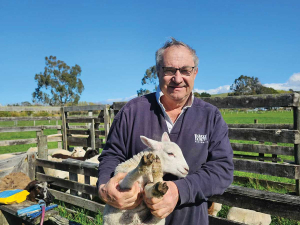
Decades piloting planes has ensured vet and farmer David Hayes is focused on safety. So, after a serious accident while welding on farm, he is sharing his experience so others can learn from it.
Canterbury milk processor, Synlait Milk has confirmed Leon Fung as its chief executive officer.
OPINION: Making it easier to collect rainwater and use it to grow crops and livestock is a no brainer.
As part of its Election 2026 coverage, Rural News asked political parties how they would help pull the arable sector out of the doldrums. Here's what they said:
Farmers are being encouraged to rethink how they manage waste on farm with the launch of ruralwastesorted.co.nz, a new website bringing together practical tips, real farmer experiences and resources.