
Federated Farmers Welcomes ACT’s New Farming Policies
Federated Farmers has welcomed new rural policies released by ACT, saying they align closely with its own election priorities.
 increase font size
 The primary sector has laid out the five key issues they want acted on during the first 100 days of the new Government.
While the new Coalition Government hopes to make fast progress in its first 100 days on key commitments made during the election campaign, farmers are hoping that ministers are clear about the primary sector’s priorities.
Leaders of Federated Farmers, Beef + Lamb NZ and DairyNZ have agreed their five key advocacy priorities over the next three months. These five priorities are all included in the coalition agreements agreed by National, ACT and NZ First.
Priority 1 is the repeal and replace the National Policy Statement for Freshwater Management (NPS-FM). This policy statement is a direction from David Parker to Regional Councils to set rules on farmers to meet new national bottom lines for freshwater and give effect to ‘Te Mana O Te Wai’.
Feds president Wayne Langford says a recent report has shown the new standards are unachievable even in areas of native forest or National Park.
“Plans developed so far need to implement draconian rules to come anywhere near the new standards. For example, Northland has released a draft plan that places restrictions on farming on land over 25 degrees – around 40% of the agricultural land in Northland.”
Priority 2 is establishing the Rural Regulation Review Panel.
“We want to see this up and running and working on cutting red tape and regulatory blocks for irrigation, water storage, managed aquifer recharge, flood protection and simply the day-to-day running of our farms,” notes Langford.
Priority 3 is to start the review of the unscientific methane targets. These are the targets that don’t recognise methane as a short-lived gas and, if achieved, could require a 20% reduction in sheep and beef production.
Priority 4 is to cease implementation of Significant Natural Areas, and Priority 5 is to repeal the last Government’s two resource management acts and start work on replacement legislation. A new RMA will take time to develop so it is important work starts on this right away, says Langford.
He says they are meeting regularly to discuss strategy and priorities to avoid duplication of effort and present a united front to decision makers.
“The new Government has made a range of very useful commitments. We aim to hold them to their agenda and keep them in touch with our united views on key issues,” he says.
Federated Farmers has welcomed new rural policies released by ACT, saying they align closely with its own election priorities.

Federated Farmers is backing Feilding High School’s call to keep Agriculture and Horticultural Science as a standalone subject in Year 11.
National’s pledge to introduce 19 new national standards shows the party is serious about getting Wellington out of farming, Federated Farmers says.
Today, 15 October, is the International Day of Rural Women, which recognises rural women’s contribution to farming, communities and the environment.
Mobile phone coverage and reliability are deteriorating in rural areas, and farming families are bearing the cost, according to a Federated Farmers survey.


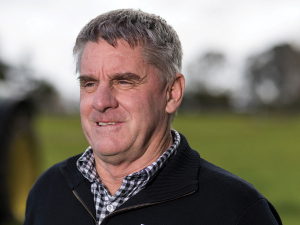
Federated Farmers has welcomed new rural policies released by ACT, saying they align closely with its own election priorities.

Rural Contractors NZ says proposed changes to land transport rules for agricultural vehicles are a welcome response by the Government to out of date regulations which have seen members hit with huge fines.
Alliance is calling for final applications for its 2027 Graduate Programme, with applications closing on Sunday 25 October.
Decades piloting planes has ensured vet and farmer David Hayes is focused on safety. So, after a serious accident while welding on farm, he is sharing his experience so others can learn from it.
Canterbury milk processor, Synlait Milk has confirmed Leon Fung as its chief executive officer.
OPINION: Making it easier to collect rainwater and use it to grow crops and livestock is a no brainer.