EU Strengthens NZ Partnerships and Trade Presence at Fieldays
The European Union ramped up its presence at this year's Fieldays.
 increase font size
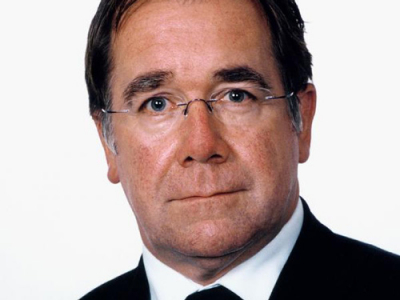 Minister of Foreign Affairs of New Zealand, Murray McCully.
New Zealand and the European Union (EU) today signed a Partnership Agreement for Relations and Cooperation (PARC).
The high representative of the union for foreign affairs and security policy / vice-president of the European Commission, Federica Mogherini, and the Minister of Foreign Affairs of New Zealand, Murray McCully, signed the agreement.
Mogherini says the ambitious agreement reflects the increasingly close friendship and cooperation that has developed between our EU and New Zealand in recent years.
“In taking this important step today, we are showing not only the breadth and depth of our existing relationship, but demonstrating that we want to expand our partnership over the coming decades. It is a partnership that benefits our citizens first and foremost, and one that has real potential to grow even further in the future," he says.
McCully says New Zealand has longstanding cultural, political and economic ties to Europe, which underpin our modern relationship with the European Union.
“This agreement reinforces our shared values, including respect for human rights and the rule of law, and continued cooperation in areas such as innovation, environmental and security issues. We look forward to implementing the agreement and the subsequent strengthening of our engagement in the years to come."
The PARC Agreement provides a comprehensive framework for more effective bilateral engagement between the EU, its member states and New Zealand.
It will strengthen political dialogue and cooperation on economic and trade matters, as well as across a wide range of other areas, from science and innovation, education and culture, to migration, counter terrorism, the fight against organised crime and cybercrime, as well as judicial cooperation.
The PARC agreement also reflects cooperation in third world countries and on global issues, including in the Pacific.
With the signature of the PARC Agreement now completed, the EU and New Zealand will focus on the completion of the preparatory processes that should lead to the launching of negotiations for a bilateral Free Trade Agreement.
The European Union ramped up its presence at this year's Fieldays.
New Zealand and the European Union are closer than ever.
A European Union regulation ensuring that the products its citizens consume do not contribute to deforestation or forest degradation worldwide threatens $200m of New Zealand beef and leather exports.
European dairy co-operative Arla Foods is forecasting a total revenue of nearly $25 billion this year.
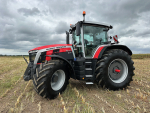
According to numbers sourced from national authorities, 151,800 tractors were registered across Europe in 2023, of which 26,200 tractors (17%) were 37kW (50 hp) and under and 131,900 (83%) were 38kW and above.
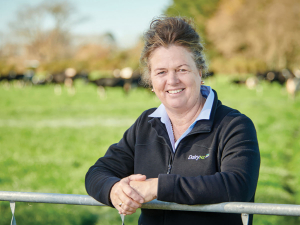
DairyNZ says Waikato farmers need certainty on Plan Change 1, but they say that certainty must be matched with practical, workable rules and a clear transition that doesn't get ahead of the new resource management system currently under review.
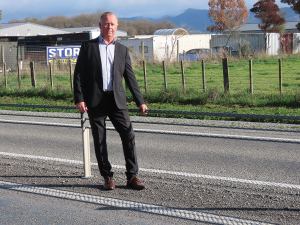
While the Government has moved quickly to make commercial hauliers' lot easier during the current fuel crisis, they appear to be stuck in the creep box when it comes to the agricultural industry.
Waikato farmers have been told that the Government’s new planning system legislation and the region’s Plan Change 1 (PC1) “won’t mesh together very well”.
Farmer owned co-operative Ravensdown has signed a two-year naming rights sponsorship of the Canterbury A&P Show.
OPINION: Confidence in the wool sector is rebounding as prices hit levels not seen in more than 15 years.
More than 300 growers, exporters, researchers, service providers and industry leaders will descend on Queenstown later this month for EXPO 2026, the annual conference for New Zealand’s apple and pear sector.