New Dairy Holdings CEO Backs Self-Contained Model
Running a tight and self-contained ship is the key to the success of the country's largest dairy farmer, says Blair Robinson, the new man at the helm of Dairy Holdings.
 increase font size
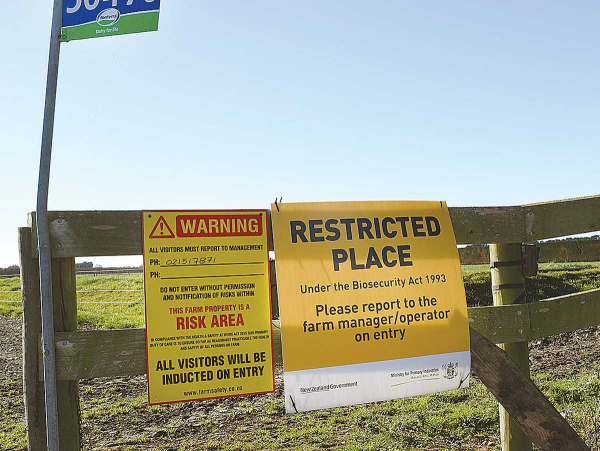 New Zealand is on track to eradicate M. bovis, says Biosecurity and Agriculture Minister Damien O'Connor.
Biosecurity and Agriculture Minister Damien O’Connor says there are currently no farms in New Zealand infected with M. bovis.
The last-known infected property in Mid-Canterbury has been destocked and declared disease-free, taking New Zealand to zero confirmed cases.
O’Connor made the announcement today as the government’s eradication plan moves into its next phase.
“Five years of hard work, sacrifice, and collaboration with MPI, DairyNZ and Beef + Lamb New Zealand have brought us to this milestone on the road to eradication,” says O’Connor.
“I want to acknowledge the hardship which affected farmers and families have felt during this time. I also want to thank the broader sector who’ve stepped up their animal tracing efforts, allowing us to move the programme on to a new surveillance phase.”
O’Connor says that allowing M. bovis to become endemic in New Zealand was estimated to cost $1.3 billion in lost production in the first ten years alone.
“At the height of the programme, there was a peak of 40 infected properties across the country and today we have none.
“While we’ve had brief periods in the past where we had no infections, we still had possible cases being investigated. This is the first time we’ve had no cases and no investigation,” he says.
Back in 2018, the decision was made to focus on eradicating M. bovis from New Zealand, a move designed to protect the national herd, Kiwi farming businesses, and export growth. The alternative was a long-term management plan.
O’Connor says that looking back, he is confident that it was the right decision.
“We always knew it wouldn’t be easy, especially for the farmers affected, but when you looked at the impact that living with M. bovis has on animal welfare and on farmers, we knew we had to try.”
“We can’t say yet that we’ve reached eradication as we may still detect new cases in the future, however, with no confirmed infection from our background surveillance since April 2022, we can be confident that we are moving in the right direction.”
O’Connor says that all indicators – from bulk milk testing to beef herd surveillance – have given the government confidence that the 10-year eradication plan is working.
“With almost 184,000 cattle culled, including 280 farms depopulated, nearly 3,000 farms subject to movement controls and many more undergoing on-farm testing, the programme has touched nearly every farming community across the country.”
He says the focus now is on next steps for the M. bovis programme, with a move to a national pest management plan (NPMP), similar to the one used for Bovine Tuberculosis control.
“As New Zealand becomes clear of active M. bovis infection and work centres on background surveillance, the time is right to transition to a new model to continue to build our farming sector’s resilience and strengthen the biosecurity system,” O’Connor says.
He says OSPRI has been nominated as the management agency, adding that it is well-placed to manage M. bovis.
“We’ll be consulting with farmers and the public about the exact shape of the NPMP later this month,” he says.
“We’re only as good as our detection systems and our on-farm records. It’s vital that we all stay vigilant and diligent so that the herds sacrificed and the emotional hardship of affected farmers wasn’t all for nothing.”
Running a tight and self-contained ship is the key to the success of the country's largest dairy farmer, says Blair Robinson, the new man at the helm of Dairy Holdings.

OPINION: It's no surprise that "world-class biosecurity" continues to dominate as the top priority for agribusiness leaders, holding the number one spot for the 16th consecutive year in KPMG's latest agribusiness report.
A miserable budget that didn’t deliver much for anyone.
National's decision to ‘dribble’ information about the NZ/India to Labour contributed to the delay in it deciding to supported the FTA.
When it comes to international trade, politicians from all sides of the aisle are united, says Labour's trade spokesman Damien O'Connor.


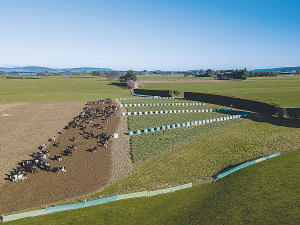
Central Otago District Council (CODC) has voted against a plan to spread treated sewage sludge from Cromwell and Alexandra on farmland near Lauder, a decision Federated Farmers says reflects strong opposition from rural residents.
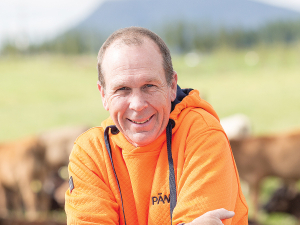
Pāmu has released its FY26 Integrated Annual Report, reporting a Net Operating Profit of $113 million, more than double the $49 million recorded in FY25.
Meat Industry Association data, released alongside the Red Meat Sector conference in Wellington, shows export value climbing across the US, China, UK and Canada.
Applications are set to open for the 2027 Zanda McDonald Award, a trans-Tasman award recognised for identifying and fast-tracking talented young leaders in agriculture and agribusiness.
The Royal New Zealand College of General Practitioners (the College) and Hauora Taiwhenua Rural Health Network are calling for investment in a proposed new training pathway for rural GPs, warning that many rural practices are struggling to recruit while a large share of the existing workforce nears retirement.
Synlait has swung to second-half profit as operations stabilise, but the dairy processor still posted a $75.4m annual loss.