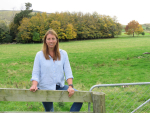
NZ Nature Fund Welcomes Active Investor Plus Visa Philanthropy Changes
The New Zealand Nature Fund (NZNF) has congratulated the government on recently announced changes to the Active Investor Plus (AIP) Visa Growth category.
 increase font size

Rural Contractors are backing the Government's plans to encourage more New Zealanders into seasonal work; they also support its decision to increase the annual recognised seasonal employer (RSE) cap to a total of 9000 workers.
Rural Contactors NZ president, Steve Levet says this boost to seasonal workers is essential in delivering the horticulture industry's forecasted future growth, but suggests a similar scheme is also needed in the rural contracting sector.
"There is no doubt the horticulture sector is an important and valuable part of New Zealand's economy and the Government is right to make provisions for that sector," he says.
"However, we need similar provisions for the rural contracting sector as there is a gap between rural contractors' needs for trained, agricultural machinery operators and unemployed New Zealanders who can do this work."
Levet believes the rules around employing temporary, skilled people from overseas prepared to work for 6-8 months each year need to be simplified as do the regulations restricting people who have previously worked here in past seasons coming back to New Zealand to work.
"Contracting is a seasonal business and one that uses sophisticated machinery that requires technical skill to operate productively," he adds. "Part of this shortfall is met by bringing in skilled operators from overseas."
Levet says political parties of all persuasions need to understand that a dire shortage of suitable agricultural machinery operators means rural contractors rely on employing skilled people from overseas on a temporary basis each season and have done so for many years.
He adds that many of the applicants Work and Income NZ (WINZ) tries to fill these vacancies with; either do not have the right skill-set and/or attitude to be successful.
"We are talking about operating highly technical and very expensive pieces machinery. It is unrealistic, unsafe and impractical to expect unemployed people to walk off the street and successfully take up these positions."
"The seasonal nature of rural contracting means workers with the right skills are needed for only a few months each year. Understandably, this kind of short-term employment does not often suit locals who are looking for fulltime work."
Levet says RCNZ will continue to work closely with the Government, political parties and officials too both ensure that locals have the best opportunity for employment, as well as continuing to lobby for changes to the rules around engaging overseas seasonal workers for the benefit of the rural contracting sector.
The New Zealand Nature Fund (NZNF) has congratulated the government on recently announced changes to the Active Investor Plus (AIP) Visa Growth category.
OPINION: At a time when farmers are advocating for less government spending and no new taxes, the dairy sector is rightly concerned by ACT's new immigration policy.
ACT's new immigration policy has come under fire from farmers and the Government.
We are encouraged that employers are already engaging with two new visas for seasonal workforce recruitment.
New figures show dairy farmers are not only holding on to their international workforce, but are also supporting those staff to step into higher-skilled roles on farm.



LIC shareholders have elected a new North Island representative to the co-operative's Board, along with five representatives to its Shareholder Reference Group (SRG), following the company's Annual Meeting held in Invercargill.
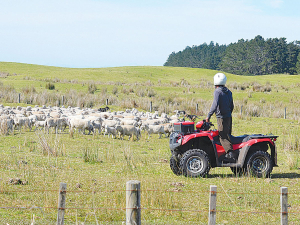
Farmers across parts of Southland and South Otago are continuing to deal with difficult conditions after a prolonged run of wet weather, with pressure building around feed supply, stock management, pasture damage, farm infrastructure and everyday workloads.
Federated Farmers says it welcomes Labour's commitment to reviewing the Sharemilking Agreements Act, calling on other major parties to do the same.
For Canterbury dairy farmers Sian Meijer and Rick Wobben, wearable technology has become one of their most valuable on-farm tools - helping manage 1850 cows across an expansive, high-performing dairy operation while improving efficiency, mating outcomes and day-to-day decision making.
Fonterra has unveiled its annual results for the 2026 financial year, posting $27 billion in revenue and close to $20 billion returned to New Zealand farmer owners and unit holders.
The first major update to the Dairy Cattle Code of Welfare in more than a decade has been released, marking what DairyNZ describes as an important step in ensuring animal welfare standards continue to evolve alongside scientific evidence and on-farm realities.