NZKGI Responds to Migrant Worker Exploitation Reports
Where any worker in the kiwifruit industry is mistreated, we expect the authorities to take action.
 increase font size
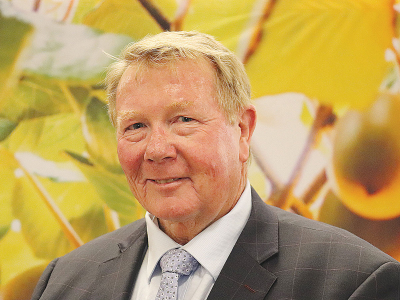 New Zespri chair Bruce Cameron.
The kiwifruit variety SunGold is this season set to overtake the traditional green Haywards variety for the first time.
Zespri chairman Bruce Cameron told Rural News that 79 million trays of SunGold will be sold this year versus 70 million trays of Haywards. This marks a “huge breakthrough” for the industry because it was SunGold that “rescued” it from the ravages of PSA in 2010, he says.
It’s great news for New Zealand because Zespri holds the plant variety rights for SunGold but not for green kiwifruit.
“Whilst we put a lot of promotion and marketing into green kiwifruit, we don’t hold the IP for Hayward green and we are competing with the Chileans and Australian’s in the northern hemisphere,” he told Rural News.
On top of SunGold now dominating, Zespri expects kiwifruit exports to be closing in on $5 billion by 2025, Cameron says.
“We are sitting at about $3b now in 2019 and our growth projections based on the 700ha we will release for the next three years will produce revenue of about $4.5b.”
The growth is part of a planned Zespri strategy dating back to the PSA days -- not a commodity bubble. While Zespri is reaping the financial benefits of SunGold, it is not resting on its laurels and will trial a new variety of red kiwifruit in NZ and Singapore. Red kiwifruit are relatively easy to grow but the challenge has been to develop a red variety with a sufficiently long shelf life.
“It’s a different fruit to handle as opposed to SunGold, but I think the challenge we have as an industry is to overcome those. It could be three to five years before we have faith in it and understand its behaviour through the supply chain.”
In Asia, where the fruit is likely to be exported, red is a lucky colour. “So any red kiwifruit is looked upon as a very lucky fruit.”
The kiwifruit industry’s future looks good and it gets many accolades, Cameron says. But it must remain vigilant and is constantly analysing risks on- and offshore. Biosecurity and proper handling of kiwifruit on the home front can result in problems in markets.
“It’s not just the trade war between the US and China,” he says. “We are cognisant of that and other geo-political issues, but there is a full matrix of issues we are analysing and keeping our ears to the ground on.”
Where any worker in the kiwifruit industry is mistreated, we expect the authorities to take action.

Kiwifruit growers are watchful but remain optimistic as concerns around the potential effects of the El Niño weather pattern this season.
More signs of a booming kiwifruit sector.
After delivering a strong financial year, rural trader PGG Wrightson says the coming months will depend on customer confidence and weather.
New Zealand growers have always adapted to changing conditions, but one challenge is steadily gaining ground across the horticulture sector: resistance.



LIC shareholders have elected a new North Island representative to the co-operative's Board, along with five representatives to its Shareholder Reference Group (SRG), following the company's Annual Meeting held in Invercargill.
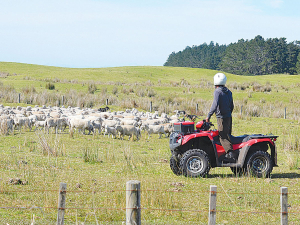
Farmers across parts of Southland and South Otago are continuing to deal with difficult conditions after a prolonged run of wet weather, with pressure building around feed supply, stock management, pasture damage, farm infrastructure and everyday workloads.
Federated Farmers says it welcomes Labour's commitment to reviewing the Sharemilking Agreements Act, calling on other major parties to do the same.
For Canterbury dairy farmers Sian Meijer and Rick Wobben, wearable technology has become one of their most valuable on-farm tools - helping manage 1850 cows across an expansive, high-performing dairy operation while improving efficiency, mating outcomes and day-to-day decision making.
Fonterra has unveiled its annual results for the 2026 financial year, posting $27 billion in revenue and close to $20 billion returned to New Zealand farmer owners and unit holders.
The first major update to the Dairy Cattle Code of Welfare in more than a decade has been released, marking what DairyNZ describes as an important step in ensuring animal welfare standards continue to evolve alongside scientific evidence and on-farm realities.