Rural Vote Debate on Q&A: Substance or Just Platitudes?
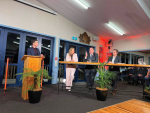
It was billed as a chance for all the political parties to woo the rural vote, but question marks hang over just how effective this was.
 increase font size
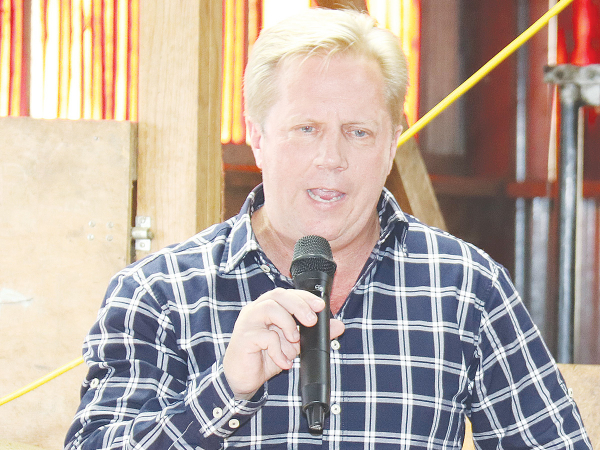 National's agriculture spokesman Todd McClay says the public services need a change of mindset when it comes to dealing with the primary sector.
National's newly-minted agriculture spokesman Todd McClay says the public services need a change of mindset when it comes to dealing with the primary sector.
Speaking along with his boss Christopher Luxon at a recent 'wool-shed' meeting in Hawke's Bay, McClay says the public service seems to think that the way to solve a problem in rural areas is to make more rules - regardless of the cost impact of these. He says some of these rules are quite unworkable in practical sense.
Instead, McClay believes bureaucrats need to understand that fewer and better rules that have less of a financial impact on farmers is the correct solution.
"Take, for example, the winter grazing slope rules," he told the audience of farmers. "They said the whole country should have a blanket rule with a 10-degree slope rule and you can't winter your animals there to feed them - unless you pay money to get a resource consent. Well, that's a mad rule."
McClay accepts that there is a need to protect the environment and waterways but believes a catchment-by-catchment approach is a better way to protect soils close to waterways.
The Hawke's Bay meeting attended by the two local National candidates, Catherine Wedd and Katie Nimon, is clearly part of a strategy by the party to shore up the rural vote, some of which could be siphoned off by ACT.
McCla emphasises that National sees agriculture as one of its top priorities. He says, as well as strengthening rural economies, it plays a vital role in earning money that provides for other important things - such as health and education. He also put out a call for people to stop unfairly criticising farmers.
"Instead, people should be championing the rural sector, not vilifying it."
At the meeting, people were keen to hear Christopher Luxon talk not only about farming but other areas of concern to rural communities - such as health and education. His promis to reduce the number of regulations drew applause.
Luxon says his goal is for agriculture to grow by 2% a year and says, if it does, there will be an extra $50 billion in the government coffers by 250.
"I want people to focus on how we grow this sector more and not burden it with more regulations," he says.
It was billed as a chance for all the political parties to woo the rural vote, but question marks hang over just how effective this was.
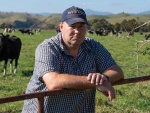
There's been widespread support from the primary sector for the Government's announcement on changes to freshwater farm plans that come under the Natural Environment Bill, which is now set to replace the existing RMA.
OPINION: In politics, credibility is and should be big. It must surely rank higher than charisma, which is quite trite and superficial. Yet, voters nowadays are often wooed and influenced by how someone looks or talks at a superficial level. TV plays a huge role in this.
I think it's going to greatly weaken National at the election. That's the view of a former senior National MP on the recent attempted coup against Prime Minister Christopher Luxon.
OPINION: Since when did one and one make three? Who didn't smell an elephant-sized rat when our leaders decided to give $60 million to save the cement factory in Northland?


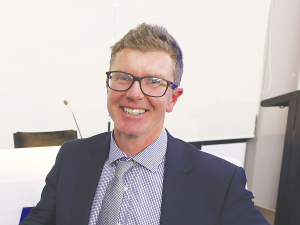
LIC shareholders have elected a new North Island representative to the co-operative's Board, along with five representatives to its Shareholder Reference Group (SRG), following the company's Annual Meeting held in Invercargill.
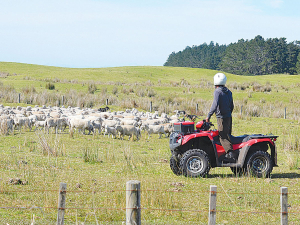
Farmers across parts of Southland and South Otago are continuing to deal with difficult conditions after a prolonged run of wet weather, with pressure building around feed supply, stock management, pasture damage, farm infrastructure and everyday workloads.
Federated Farmers says it welcomes Labour's commitment to reviewing the Sharemilking Agreements Act, calling on other major parties to do the same.
For Canterbury dairy farmers Sian Meijer and Rick Wobben, wearable technology has become one of their most valuable on-farm tools - helping manage 1850 cows across an expansive, high-performing dairy operation while improving efficiency, mating outcomes and day-to-day decision making.
Fonterra has unveiled its annual results for the 2026 financial year, posting $27 billion in revenue and close to $20 billion returned to New Zealand farmer owners and unit holders.
The first major update to the Dairy Cattle Code of Welfare in more than a decade has been released, marking what DairyNZ describes as an important step in ensuring animal welfare standards continue to evolve alongside scientific evidence and on-farm realities.