Federated Farmers Praises Labour's Emissions Tax Backdown
For the first time in a quarter of a century, Federated Farmers has something positive to say about the Labour Party’s climate change policy leading into a general election.
 increase font size

Challenges and opportunities exist for agriculture in limiting global warming to 2oC, says a leading New Zealand agricultural greenhouse gas researcher.
Dr Andy Reisinger, deputy director of the New Zealand Agricultural Greenhouse Gas Research Centre, and a lead author of the 5th Assessment Report of the Intergovernmental Panel on Climate Change (IPCC), spoke last month at the Australian Agricultural and Resource Economics Society’s (AARES) conference in Rotorua.
He says the IPCC concluded recently that emissions of carbon dioxide need to be reduced to zero by 2100 to limit global warming to 2oC, a goal “accepted by most governments around the world, and an enormous challenge”.
“Reducing greenhouse gas emissions from agriculture globally can make an important contribution to the goal of limiting warming to 2oC and would lower the global costs of achieving this goal.”
But there are difficulties for New Zealand, where almost half of total greenhouse gas emissions come from agriculture.
Raising awareness of the global potential for livestock research to reduce emissions is challenging because for many other countries, livestock contribute only a small percentage of total greenhouse gas emissions, he notes.
“New Zealand’s domestic research programme, together with its support for the Global Research Alliance for Agricultural Greenhouse Gases, is trying to increase global engagement through research collaboration and position New Zealand to lead global efforts in this area.
“Key options on the global scale for reducing agricultural emissions are increasing productivity and efficiency of food production, developing new technologies to reduce emissions without compromising food production, and managing demand by reducing food waste and influencing dietary choices away from emissions-intensive food products.”
Reisinger says that emissions per unit of livestock product have declined consistently for 20 years in New Zealand, demonstrating that improvements in productivity and efficiency can make a difference. But options are limited for New Zealand to reduce absolute emissions from agriculture within current overall agricultural growth targets, hence new technologies are needed.
“Absolute emissions from agriculture in New Zealand have increased due to increased overall production, mainly from expansion of dairy farms, in response to global demand. Most of New Zealand’s livestock products are exported. Soil carbon stores are high in New Zealand, which limits the scope for offsetting emissions by increasing soil carbon.”
For the first time in a quarter of a century, Federated Farmers has something positive to say about the Labour Party’s climate change policy leading into a general election.
Climate, nature and animal wellbeing make up Fonterra's refreshed sustainability roadmap released last week.
A five-year study has found that the cost of reducing emissions without technology may be significant and unsustainable for Northland dairy farmers.
OPINION: With the winter months officially here, I trust all is well at your place.
OPINION: The global crusade against fossil fuel is gaining momentum in some regions.


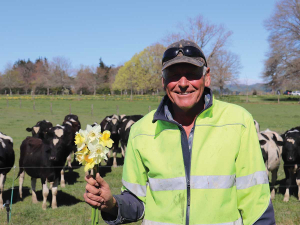
South of the central Hawke’s Bay town of Waipukurau is Taniwha Station – a highly successful 550ha bull beef farming operation.
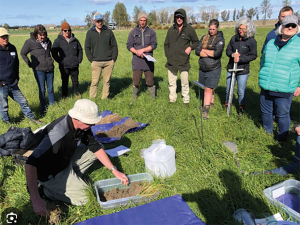
Beef + Lamb NZ funded research has shown that some simple changes to pasture management could help farmers make better use of rainfall and build resilience before dry conditions hit.
OPINION: There could hardly be a more appropriate theme for a conference than the one chosen by the red meat sector - Navigating Volatility.
When Northland leather worker Vernon Suckling started making horse saddles 50 years ago, quad bikes and side-by-side vehicles were unheard of.
Alliance Group has confirmed that eligible farmer-shareholders who supply and continue to back the business will receive up to $20 million later this year, following the strategic investment partnership with Dawn Meats.
With a general election under five weeks away, Rural News is asking major political parties about their policies and positions on key issues facing the primary sector. We will run their responses to each question over the next four weeks. The ACT Party and the Greens didn't respond in time.