Putting excrement to work
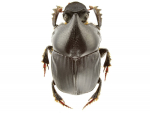
What is less than two centimetres long, loves to work during winter, has a hunger for animal poo and could be handy for grape growers?
 increase font size
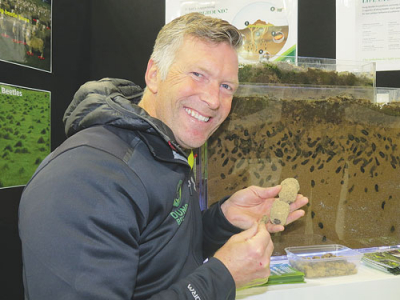 Shaun Forgie.
While scientists and farm consultants in laboratories try to solve the problem of nitrogen loss on farms, a large force of creatures works underground 24/7 on the issue.
Peter Burke reports on the work of the dung beetle and a man passionate about their progress.
Dr Shaun Forgie, an entomologist who has studied dung beetles in various countries, is one of a small group of international experts.
Having seen what these small black creatures were doing overseas, he decided to bring them to New Zealand. This began in 2010 and, as expected, required a detailed proposal to a government agency (now the Environmental Protection Agency) to get permission.
Forgie says NZ has its own native species of dung beetle, but they are confined to the high country and some specific habitats.
“We had to look at places in the world that had the beetles that would suit our environment,” he told Rural News.
“The ones we have are from southwest Europe, Germany, France, Spain, southern England and parts of southern Africa. In the end, we brought in 11 different species.”
Forgie says there are 7000-plus species of dung beetle worldwide, but he chose species that are tunnellers. In Africa, it is common to see dung beetles rolling balls of dung down a road, but these were not considered appropriate for NZ.
“The tunnelling dung beetles we have don’t look as glorious as the ball rollers of Africa, but they are very effective,” Forgie explains.
“They go straight to piles of manure and immediately go to work making huge networks of tunnels in the soil, some down as far as 45cm.
“They make these tunnels and take all the manure off the soil surface and then bring up the soil from their tunnels so you get a mixing of soils.”
Forgie says the lifestyle of the dung beetle simply revolves around burying manure and turning it into small sausage-like balls then laying an egg in it, then the larvae feed on it and the new beetle repeats the process.
“So we get all the benefits of removing surface manure to beneath the ground which means fewer contaminants go into waterways,” he says.
Ready for sale
Shaun Forgie has a facility near Kaipara and one near Auckland where he breeds the dung beetles.
These are normally sold in summer and early autumn to farmers. He also breeds dung beetles for specific environments; some species perform better in dry conditions and others in wetter areas.
So far he’s sold tens of thousands of these tiny creatures to farmers and councils, getting strong support from the Greater Wellington Regional Council and farmers in Southland and Waikato; they see the benefits of a friendly tool to reduce contaminant run-off into waterways.
“When I sell to famers -- a typical example is a 500-cow dairy farm or a 2500 SU sheep farm -- I would sell four colonies of up to 600 beetles per colony,” he explains. “I encourage the farmer to dump each colony in a paddock close to a pile of manure.”
Forgie wishes more councils could see the advantages of using and promoting dung beetles. He says in some places on farms it’s not possible to fence and plant trees close to waterways, but dung beetles can still operate in such places.
What is less than two centimetres long, loves to work during winter, has a hunger for animal poo and could be handy for grape growers?
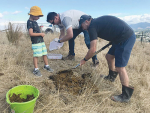
Hundreds of dung beetles have been released on the Wither Hills Farm Park in Blenheim.
A greater Wellington council officer is “really proud” of dairy farmers in the region who have backed a scheme to release dung beetles.
Could using exotic dung beetles help address soil health and water quality issues in New Zealand? It’s an option with possibilities.
Dairy farmers are taking a strong interest in dung beetles as a potentially important tool for meeting environmental obligations, says Dr Shaun Forgie, of Dung Beetle Innovations.



OPINION: In politics, credibility is and should be big. It must surely rank higher than charisma, which is quite trite and superficial. Yet, voters nowadays are often wooed and influenced by how someone looks or talks at a superficial level. TV plays a huge role in this.

Farmers can spend less time on paperwork, thanks to a new data sharing agreement between DairyNZ’s DairyBase and LIC’s MINDA software.
Kaikōura families affected by July's severe storm have found a practical solution to a problem that's kept some children away from regular schooling for weeks: a washed-out section of Inland Kaikōura Road, which has stopped the local school bus from running its usual route.
Rural New Zealand is welcoming the Government’s recent package of rural healthcare initiatives.
Interest in agritech and production animal systems has prompted Massey University's School of Agriculture and the Environment to new majors to its popular animal science degree.
Ballance Agrinutrients chief executive Kelvin Wickham says despite a tough year, he is pleased the business has returned to profit.