Beef + Lamb NZ's Lambing Kit Checklist for a Tough Season
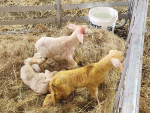
With lambing underway in many regions, Beef + Lamb New Zealand is encouraging farmers to put together a wellequipped lambing kit to help minimise lamb losses, particularly in bad weather.
 increase font size
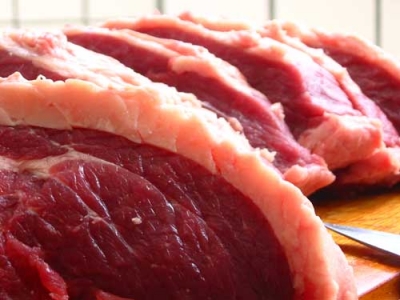
New zealand beef export returns reached a record high, exceeding lamb and mutton returns for the first time in 20 years in the season ending September 30, analysis by Beef + Lamb New Zealand's economic service shows.
It is worth noting, however, that sheepmeat returns were constrained by supply.
NZ beef and veal exports generated $3.2b in 2014-15, up 39% on the previous season. This reflected an increase in shipments (+10%) and average value (+26%).
Driven by high beef prices, mainly due to strong US demand and low dairy prices, NZ beef production increased significantly in 2014-15.
Beef exports averaged $7510/tonne in 2014-15 vs $5970 in the previous season. In the 35 years since records have been kept, the average value of NZ beef exports has not exceeded $6000/tonne.
Demand was particularly strong in North America and Northeast Asia, where exports increased by 22% and 7%, respectively, while shipments to every other region declined. The two largest export markets were the US and China.
Despite an increase in lamb production in the 2014-15 season, NZ lamb exports were down 2%, but offset by a rise in the average value of lamb exports (+3.4%).
NZ lamb export returns reached $2.6b in 2014-15, up 1.3% on the previous season. In 2014-15 half of the returns were achieved in the EU, while Northeast Asia, the second largest export region, accounted for 21% of lamb export returns.
After doubling over the previous five years, NZ lamb shipments to Northeast Asia decreased by 12% in 2014-15. This was due to more product being exported to other markets.
While 2014-15 NZ mutton shipments were down on 2013-14 – dropping 8.8% to 85,300 tonnes shipped weight – the shipments were still 13% higher than the five-year average. This reflects higher levels of production and exports in 2013-14.
The combination of lower shipments and no change in the average value resulted in mutton export returns dropping 9.0% to $445m in 2014-15.
With lambing underway in many regions, Beef + Lamb New Zealand is encouraging farmers to put together a wellequipped lambing kit to help minimise lamb losses, particularly in bad weather.

Chinese beef trade quotas and a looming suspension of Brazilian beef imports into the European Union are expected to reshape global beef trade flows over the remainder of 2026, with implications for New Zealand exporters, according to Rabobank's Q3 Global Beef Quarterly report.
Will a stronger, more coordinated voice help rebuild confidence and improve returns in the wool sector?
Bovine Viral Diarrhoea (BVD) is sometimes viewed as a dairy industry issue, but the reality is that the disease can have serious consequences for beef breeding herds as well.
Matt McRae, a farmer from Mokoreta in Southland who runs a sheep, beef and dairy support business alongside a sheep stud, has been elected to the Beef +Lamb NZ Board as a farmer director.


The Royal New Zealand College of General Practitioners (the College) and Hauora Taiwhenua Rural Health Network are calling for investment in a proposed new training pathway for rural GPs, warning that many rural practices are struggling to recruit while a large share of the existing workforce nears retirement.
Federated Farmers has called on Central Otago District Council (CODC) to drop or vote down a plan to truck sludge from Alexandra and Cromwell to farmland near Lauder, warning it would compound an "outrageous" situation created by a separate council's decision weeks earlier.
Synlait has swung to second-half profit as operations stabilise, but the dairy processor still posted a $75.4m annual loss.
LIC shareholders have elected a new North Island representative to the co-operative's Board, along with five representatives to its Shareholder Reference Group (SRG), following the company's Annual Meeting held in Invercargill.
Farmers across parts of Southland and South Otago are continuing to deal with difficult conditions after a prolonged run of wet weather, with pressure building around feed supply, stock management, pasture damage, farm infrastructure and everyday workloads.
Federated Farmers says it welcomes Labour's commitment to reviewing the Sharemilking Agreements Act, calling on other major parties to do the same.