Egmont Honey Buys Tweeddale's, Now NZ's Biggest Apiary
New Plymouth-based Manuka honey exporter Egmont Honey has completed its acquisition of Taihape beekeeping business Tweeddale's Honey, with settlement finalised on Friday, 18 September.
 increase font size
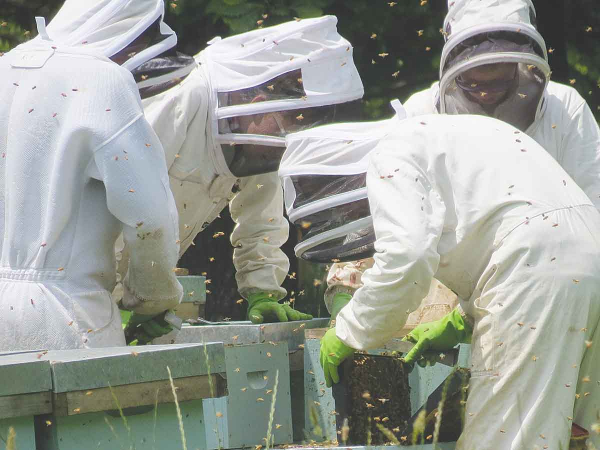 International manuka honey markets are forecast to be worth $1.27b by 2027.
New Zealand honey producers are "disappointed but undeterred", while Australian beekeepers have welcomed a "common sense" ruling.
This comes after the New Zealand's Intellectual Property Office (IPO) recently decided that NZ honey producers have no exclusive claim to the term 'manuka honey'.
The trademark win follows earlier Australian successes in other jurisdictions including the UK and Europe.
Recently elected Australian Manuka Honey Association (AMHA) chairman Ben McKee says his organisation is delighted with the judgment handed down by the IPO. He praised the decision as a "sensible outcome" that ensures Australian beekeepers can market their produce, while following other precedents around the world that manuka honey is a descriptive term.
"What we have been saying since New Zealand producers began this legal process nearly eight years ago is, our product has a long history of being recognised as manuka honey," he told Rural News.
"It is produced like the NZ product is and it also offers the sought-after antimicrobial properties that consumers around the world value so highly.
"The fact that even authorities in New Zealand cannot find a way to support the trademark claims of NZ producers should, we hope, bring this legal dispute to an end once and for all."
International manuka honey markets are forecast to be worth $1.27b by 2027.
However, chair of the Manuka Charitable Trust Pita Tipene claims its role as caretakers of taonga species on New Zealand's behalf was "not contestable" and that the findings reflected "technicalities and limitations of conventional IP law to protect indigenous rights".
"If anything, it has made us more determined to protect what is ours on behalf of all New Zealand and consumers who value authenticity. We will take some time to absorb the details of the ruling and consider our next steps."
McKee has expressed disappointment with these statements, calling them and the ongoing legal fees the Australian industry are paying in these appeals "frustrating".
He adds that although they will "continue our opposition", what Australian honey producers really wanted was to grow the manuka industry.
"We can do that better together. At some stage though, we may have to accept that without a change in industry management, working with Australia may not be a priority from some in NZ."
McKee says growing research highlighting the unique health benefits of manuka honey has led to strong demand for Australian honey from countries around the world. He also points to a study in PLOS One (an open access peer reviewed journal) from 2016 that found 22 of 80 Australian honey samples matched or even exceeded New Zealand honey in critical MGO levels - albeit with only two NZ samples as control.
"The opportunities for Australian Manuka honey are huge. Hopefully we can now focus on promoting this wonderful medicinal honey to the world, rather than fighting over naming rights."
McKee claims that the AMHA and Australian Minister for Agriculture have attempted to reah out to their NZ counterparts for communications but had not gotten a response.
Rural News asked NZ honey representatives for comment but they had not responded.
New Plymouth-based Manuka honey exporter Egmont Honey has completed its acquisition of Taihape beekeeping business Tweeddale's Honey, with settlement finalised on Friday, 18 September.
Naki Honey, a New Zealand manuka apiary company, has crafted what is believed to be the world's most expensive honey.
Thousands of honey retailers and professionals worldwide are getting a taste of the remarkable properties of New Zealand mānuka honey.
After three years of record performance, mānuka honey exporter and retailer Comvita has reported an annual net loss of $77 million.
Bee awareness month - September - ended on a high for the struggling apiculture sector.



During the nesting season, from September to December, industrious starlings can quickly build nests in the darker areas behind tractor and vehicle, usually close to hot engines, typically resulting in localised damage or in some cases complete write-offs.

The meat processing industry is much more collegial than it was in the past and is now more focused on common goals.
With the last couple of months having seen some potential tractor purchases put on hold with the impending election and continued input cost rises, year-to-date figures, ending September, has seen deliveries up around 5% over the same period in 2025, with a total of 2026 units.
Beef+Lamb New Zealand is calling for nominations for director roles in the Northern South Island and Northern North Island electoral districts.
Fonterra chief executive, Richard Allen says being resilient has helped the dairy industry overcome extreme volatility in recent years.
The head of the Ministry for Primary Industries (MPI) trade and international relations group says New Zealand is well-positioned to secure trade access and compete internationally as the world becomes more complicated, demanding and uncertain.