NZKGI Responds to Migrant Worker Exploitation Reports
Where any worker in the kiwifruit industry is mistreated, we expect the authorities to take action.
 increase font size
 HEA chief executive Simon Hegarty.
While horticultural exports rise in value, there are concerns that this growth is being impeded by a mix of tariff and non-tariff barriers.
The state of the sector and the changes occurring there are reviewed in detail in the two-yearly report of the Horticultural Export Authority (HEA).
Chief executive Simon Hegarty says the industry has maintained momentum despite two challenging years in international trade and at home, notably because of the weather.
The 233-page report analyses in detail the state of every horticultural crop, from the big export earners kiwifruit, apples, potatoes, onions and avocados, right down to nashi pears and tamarillos. It lists the number of growers, pack-houses and growing areas and shows sales trends over the last six years for each crop.
Hegarty says the data is designed to help people who are planning to export.
“It’s hugely beneficial as a reference to how their sector and other sectors are progressing and the challenges they are facing in certain markets,” he told Rural News. “It’s a snapshot in time of the sector; there is a lot of information and detail and it’s a great starting point for people doing market research.”
Hegarty has talked to exporters about this and the value they get out of it.
He says while people can build up knowledge over time, this document has a lot of valuable information in one place that it is easily accessible. The information is only available to people who belong to organisations that fund HEA.
The report notes that the European Union remains the largest market for NZ horticultural exports followed by China, Japan and Australia. China is the big mover: in 2010, horticultural exports to China were a mere $80 million; today they are nearly $600m.
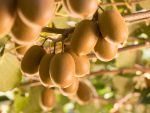
Kiwifruit remains the biggest single export earner, its value having risen by 11% on just a 1% increase in volume.
Potatoes are a big mover, having outrun onions to claim third spot as an export earner.
“Potato exports -- fresh and frozen – are mainly French fries; frozen goods have grown a lot,” says Hegarty. “The reputation of NZ’s quality product is being picked up by our customers offshore and that’s positive for the potato sector.”
But higher export value and volume will only continue if tariffs are lifted through free trade agreements, Hegarty says. He points to the value to NZ of the CTPP, which will see tariffs quashed in the key Japanese market, while in Korea our hort exports are now benefitting from tariffs having been lifted.
But Hegarty says non-tariff barriers continue to stifle expansion.
Where any worker in the kiwifruit industry is mistreated, we expect the authorities to take action.

Kiwifruit growers are watchful but remain optimistic as concerns around the potential effects of the El Niño weather pattern this season.
James Blair, an agronomist for AS Wilcox and the Pukekohe regional champion, has won the 2026 Young Grower national title.
Claimed to be the first autonomous robot for New Zealand vegetables growers, the first Kilter AX-1 unit has arrived in the country.
After delivering a strong financial year, rural trader PGG Wrightson says the coming months will depend on customer confidence and weather.



In Dacre, near Invercargill in New Zealand’s South Island, Bruce Dinnington is running a dairy operation unlike any other.

A free online platform aggregating governance vacancies across rural and regional New Zealand has been launched.
Environment Minister Nicola Grigg has announced details of a new rural plastics recycling scheme.
Agricultural drone operators say that a government decision to allow lower-risk drone work without certification won’t lower standards but drive innovation and efficiency.
OPINION: Warning bells are ringing in the arable sector.
Farmgate lamb prices are down by 8%, beef cattle by 4.5% and farm expenditure up by 4.2%.