
NZ Avocado Sector Eyes Bigger Crop and New Export Markets
The avocado sector is entering the new season with a larger crop and positive market opportunities.
 increase font size
 NZ Avocados is forecasting that export volumes will be down over a million trays this season due to weather-related impacts on fruit quality.
Avocado growers are taking a major hit from weather-related impacts this season.
Grower body NZ Avocados is forecasting that export volumes will be down over a million trays this season due to weather-related impacts on fruit quality.
It has forecast volumes of around 4.4 million trays, with 1.4 million of those trays bound for export. However, things are looking better for next season.
NZ Avocados chief executive Brad Siebert says they are at the tail end of a challenging season where grower export pack-outs are down while operating costs are rising. He adds that increased competition in some key markets is also impacting export returns.
"NZ has had multiple seasons of terrible weather and this has contributed to significant volumes of fruit diverted to the local market, leading to lower overall returns," he told Rural News.
Commentin on the impact of lower volumes on grower earnings, he points out that it's more realistic to look at grower profitability than simple returns.
"The downgrading of fruit due to past wind events has of course created significant reductions in export volumes and this has been exacerbated by fruit age to market from unreliabile shipping schedules," Siebert explains.
"For an orchard business, the other half of the equation is expenditure on fuel, fertiliser, labour and supply chain costs that have been increasing exponentially."
He says the challenge ahead is to understand where efficiencies can be gained on orchard and through the supply chain whilst increasing demand.
Siebert says growers are looking forward to the 2024-25 season where fruit volumes are significantly up. "And if Mother Nature plays her part, we should be able to capitalise on these export opportunities and bring much needed value back to our growers."
Diverse Export Markets
New Zealand avocados are exported to over 30 countries, helped by our growers' relative pest free status.
This season the industry has exported to South Korea, Hong Kong, Taiwan, Thailand, China, Japan, India, Singapoere, Pacific Islands, UAE and Malaysia.
Australia remains a priority market but an oversupply there means that country's producers are also looking at export opportunities.
Siebert says Australia remains a priority market for NZ particularly at certain times of the season. "We also have positive news from the season relating to new market opportunities with Canada being serviced for the first time and we are back exporting to the US."
But the biggest development this season has been the local market becoming the biggest market.
Siebert says NZ Avocado needs to look after that.
"We do not import any avocados into the country, which means every avocado purchased in NZ is supporting local growers.
"We therefore need to increase consumption in New Zealand towards the per capita consumption rates that other countries like the US have achieved.
"That will come with a united sector delivering quality fruit to consumers who consistently purchase the world's most versatile and nutritious fruit."
The avocado sector is entering the new season with a larger crop and positive market opportunities.

The avocado industry is facing an extremely challenging season with all parts of the supply chain, especially growers, being warned to prepare for any eventuality.
New Zealand avocado growers have received a major boost by securing a collective FernMark Licence for their exports.
Avocado growers are reporting a successful season, but some are struggling to keep their operations afloat following years of bad weather.
While NZ Avocado is not directly involved in selling fruit, it does have a significant role in supporting exporters to develop and grow markets.



LIC shareholders have elected a new North Island representative to the co-operative's Board, along with five representatives to its Shareholder Reference Group (SRG), following the company's Annual Meeting held in Invercargill.
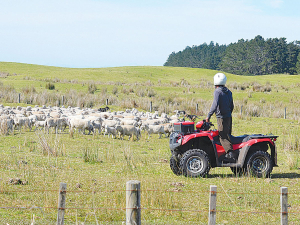
Farmers across parts of Southland and South Otago are continuing to deal with difficult conditions after a prolonged run of wet weather, with pressure building around feed supply, stock management, pasture damage, farm infrastructure and everyday workloads.
Federated Farmers says it welcomes Labour's commitment to reviewing the Sharemilking Agreements Act, calling on other major parties to do the same.
For Canterbury dairy farmers Sian Meijer and Rick Wobben, wearable technology has become one of their most valuable on-farm tools - helping manage 1850 cows across an expansive, high-performing dairy operation while improving efficiency, mating outcomes and day-to-day decision making.
Fonterra has unveiled its annual results for the 2026 financial year, posting $27 billion in revenue and close to $20 billion returned to New Zealand farmer owners and unit holders.
The first major update to the Dairy Cattle Code of Welfare in more than a decade has been released, marking what DairyNZ describes as an important step in ensuring animal welfare standards continue to evolve alongside scientific evidence and on-farm realities.