Ballance Farm Environment Awards Launch on West Coast
The Ballance Farm Environment Awards are coming to the West Coast of the South Island.
 increase font size
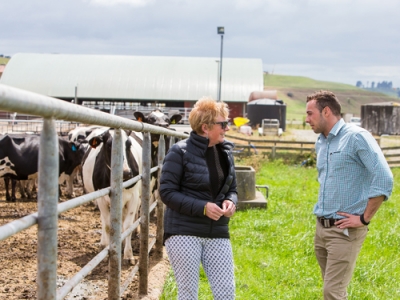 Ali McLean meets with Chris Tidey from Ravensdown’s growing Environmental Consultancy business.
A Rangitikei farming family is able to look to the future with certainty, having secured a 25-year controlled land use consent.
The Bull family owns three dairy farms, straddling two catchments, which the Bulls wanted to ensure were compliant for the next 25 years.
Ali McLean, sister and business partner of Adrian Bull, says the process was made simple by bringing in Chris Tidey, Ravensdown environmental consultant, who did the work for them.
"I was very impressed with him. All we had to do was give him the background work and he did the rest. He's quite passionate about what he does, which helps."
Tidey says the Bulls were very clear that they wanted the security of the Controlled Land Use Consent.
"I enjoyed working with them because they were really good at keeping detailed records and they knew what they wanted. Being able to deliver that to them was really satisfying."
The farm had to be modelled over two different catchments, with half the farm inside the Coastal Rangitikei catchment (targeted catchment) and the other half within the Lower Rangitikei catchment (non-targeted catchment).
Tidey modelled two different scenarios, the status quo and their target scenario, the latter which would future proof their farms and enable them to plan ahead.
McLean says Tidey knew the right people and what they required, which was a huge part of the process.
"Having someone like Chris to sit down and explain the process to you and why it's there really helps."
Tidey said the challenge was to go from a milking scenario of 900 cows milking two thirds in spring and one third in autumn to an even split throughout the year.
"Moving a third of the herd into summer milking meant there was an extra 400 cows on-farm during the winter period. To mitigate the effect that would have we pushed some of their nitrogen fertiliser applications back to early autumn and changed their effluent application to a lower rate (less than 10mm) by purchasing a new irrigator."
Fortunately the proposed target scenario was within the boundaries of the controlled activity consent and the consent was eventually granted.
"There was a hell of a lot of back-and-forth with the council requiring additional information for the consents, with the whole process taking about four months rather than the usual two," Chris added.
Ali says dealing with government agencies and compliance processes is part of farming now, which is made a lot simpler by having Ravensdown Environmental Consultants to help them through it.
Now at the end of the process, Chris says he's really pleased he was able to help get the Bulls the consent they wanted.
"They were absolutely chuffed – I was really happy when it worked out."
The Ballance Farm Environment Awards are coming to the West Coast of the South Island.
OPINION: It appears to be difficult for people who haven’t tried to run a business to understand the difference between assets and cash.
There's been widespread support from the primary sector for the Government's announcement on changes to freshwater farm plans that come under the Natural Environment Bill, which is now set to replace the existing RMA.
The chair of the country's environmental regulator, the Environmental Protection Authority (EPA), says changes are already under way to improve the performance of the agency to better meet the needs of those who interface with them.
New Zealand's Emissions Trading Scheme (NZ ETS) encourages afforestation while not achieving climate goals, says a new report released by the Parliamentary Commissioner for the Environment, Simon Upton.


For the first time in a quarter of a century, Federated Farmers has something positive to say about the Labour Party’s climate change policy leading into a general election.
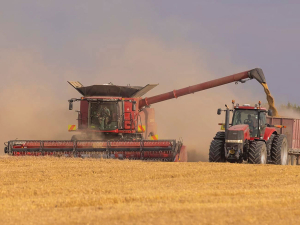
A warning for New Zealand seed and grain companies – be prepared for an exodus of farmers from the arable sector.
Now in its fourth year, the 2026 Fencing Industry Awards, formed part of the proceedings of the FCANZ Conference, held in Nelson during August.
DairyNZ deputy chair Cameron Henderson has been re-appointed unopposed for another term.
OPINION: The stats speak for themselves.
Farms across the upper North Island are trialling different pasture mixes as part of a research programme that aims to build greater resilience into farming systems.