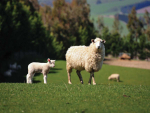
Early Weaning Lambs: What the Massey Trials Found
Farmers with high-quality feed available in late spring could consider weaning at least a proportion of their lamb crop early to benefit both lambs and ewes.
 increase font size
 Good nutrition and adequate drench inputs helps with preventing worms in calves and cattle.
Cattle can be infected with several species of roundworms when grazing pastures.
In severely affected immature calves, look for classic signs of parasitism - weight loss, profuse scouring, dullness.
Cattle 18 months-plus are more likely to show depressed growth rates. But when these older cattle are under enough feed stress, they can show more severe disease too.
Ostertagia
Ostertagia survives across the range of NZ environments. Calves are most at risk – especially from late summer to early winter.
Early infections in spring build summer larval numbers on pasture and calves become re-infected with increasing numbers of Type I Ostertagia into autumn and winter.
As calves mature to 12-18 months old, they start to develop resistance to Ostertagia. Stressed and/or underfed older cattle in late winter and spring can be at risk of Type II Ostertagia mass eruptions from the stomach wall. Cattle get sick fast, in as few as two days after such a diet change. Dramatic weight loss and death can occur before animals even start to scour.
Treatment
Good nutrition, plenty of low worm contamination feed and adequate drench inputs (per your farm system) in calves and R1s.
In older cattle, good feeding and management is key. Well-fed, older cattle free of other health challenges rarely succumb to Ostertagia.
Strategic drench treatments for R2 and adult cattle can sometimes be a good preventive measure. Common treatment times would be pre-winter and/or end of winter.
ML/’mectin drenches are particularly effective at removing inhibited larvae. Injections are a good choice for R2 and older cattle. Calves/R1’s should be treated orally with drenches containing ML drench.
Cooperia
Cooperia live in the small intestine and is a common cause of poor performance in New Zealand calves.
Cooperia can lay many eggs and larvae can build up quickly on pasture. It needs higher temperatures than Ostertagia to develop and are usually most troublesome in calves from late spring through their first winter.
Calves are most at risk – especially artificially reared animals, intensively grazed in systems dominated by young cattle. As calves reach 12 months, they start to develop some resistance to Cooperia and faecal egg counts start to fall.
The bigger and better- grown your calves, the faster they become immune. Very good calves shrug off Cooperia by 6-9 months. Meanwhile, poorly grown, stressed calves may still be susceptible at 12-15 months.
Treatment
Heavy Cooperia burdens cause weight loss, scouring and even deaths in calves, though each individual worm is not as nasty as Ostertagia. Many more Cooperia are needed to create the same level of disease. FECs in sick calves may exceed 2000+ eggs per gram.
Cooperia oncophora has developed almost complete resistance to the ML/’mectin drench family. If you drench calves with single active injections or pour-on’s, many Cooperia can survive and make calves sick.
Cooperia is also starting to show resistance to combination drenches; don’t presume drenched calves are safe from infection.
Spell pastures to reduce worm larval burdens; cross graze with other animals or adult cattle and feed crop or new pasture – these all help reduce your calves’ Cooperia challenge.
Trichostrongylus
Trichostrongylus axei, also known as Stomach hair worms (T. axei), can infect cattle, horses and sheep.
Two other species of Trichostrongylus live in the small intestine. They are mostly a minor part of cattle worm burdens.
T. axei can dominate outbreaks of clinical parasitism in autumn calves and in R1’s later in winter and into the following spring. Look for reduced appetite, weight loss and scouring.
Eggs take at least 5 days to hatch and develop to the infective L3 stage, often longer. From ingestion of L3 larvae to egg laying adults in the gut takes around 3 weeks.
This worm tends to be a ‘late bloomer’ in cattle systems, typically peaking on pasture and challenging yearling to 18 month old cattle in their second spring. Like Ostertagia it tolerates cool conditions and can survive frosts.
Older calves and yearlings, autumn-born calves are most at risk. T. axei larvae may peak on pasture as late as October. Undergrown young cattle may not develop strong resistance to this worm until 18-20 months.
Treatment/Prevention
Good nutrition plenty of low worm contamination feed and adequate drench inputs (per your farm system) helps with preventing of this worm in calves and R1 cattle.
Spelling pastures to reduce worm larval burdens; cross graze with other animals or adult cattle.
Lungworm
Dictyocaulus viviparus is the most common and problematic lungworm species in cattle.
Signs usually start 2 -3 weeks after infection. Listen for rattly shallow breathing and a harsh cough. Calves lose weight, may appear tucked up and have a harsh coat.
The best way to identify worms in faeces is larval recovery, not FEC.
Treatment/Prevention
Wean calves onto pastures free of very young calves the previous year or onto pastures thoroughly cleaned by other stock classes since.
Don’t defer or miss early drenches for newly weaned calves if they’re grazing contaminated pasture.
Lungworm almost never occurs in calves reared on cows and weaned in autumn.
Farmers with high-quality feed available in late spring could consider weaning at least a proportion of their lamb crop early to benefit both lambs and ewes.
The first major update to the Dairy Cattle Code of Welfare in more than a decade has been released, marking what DairyNZ describes as an important step in ensuring animal welfare standards continue to evolve alongside scientific evidence and on-farm realities.
Bovine Viral Diarrhoea (BVD) is sometimes viewed as a dairy industry issue, but the reality is that the disease can have serious consequences for beef breeding herds as well.
Animal health company Bovonic is gearing up for its next stage of growth after increasing New Zealand sales of QuadSense by more than 50% in the last 12 months, including a record quarter for the business this year.
With lambing underway in many regions, Beef + Lamb New Zealand is encouraging farmers to put together a wellequipped lambing kit to help minimise lamb losses, particularly in bad weather.



Federated Farmers has welcomed new rural policies released by ACT, saying they align closely with its own election priorities.

Rural Contractors NZ says proposed changes to land transport rules for agricultural vehicles are a welcome response by the Government to out of date regulations which have seen members hit with huge fines.
Alliance is calling for final applications for its 2027 Graduate Programme, with applications closing on Sunday 25 October.
Decades piloting planes has ensured vet and farmer David Hayes is focused on safety. So, after a serious accident while welding on farm, he is sharing his experience so others can learn from it.
Canterbury milk processor, Synlait Milk has confirmed Leon Fung as its chief executive officer.
OPINION: Making it easier to collect rainwater and use it to grow crops and livestock is a no brainer.