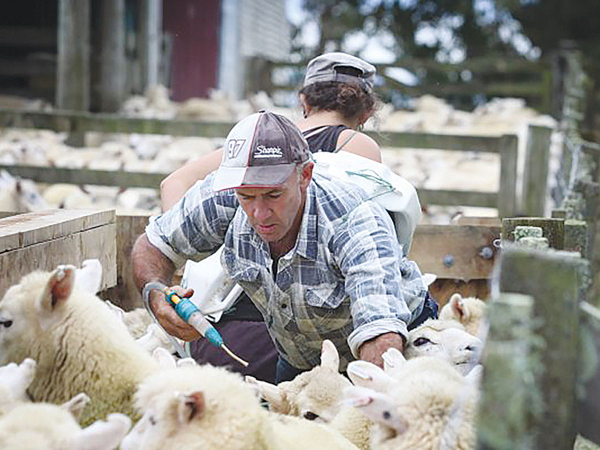
Analysis by Dunedin-based Techion New Zealand shows the cost of undetected drench resistance in sheep has exploded to an estimated $98 million a year.
A key contributor to the dramatic failure is that commonly used triple drenches are shown to be non-effective on 27% of New Zealand sheep farms. This mirrors other industry reports and highlights the increasing productivity and sustainability threat to the sheep farming sector.
In 2020, Techion - the business that developed the FECPAKG2 parasite testing platform - reported the cost of undetected drench resistance was $48 million a year. However, during the past three years, the company has seen triple drench failure increase from 15% of properties to 27% in 2023.
In 2017, a study by Techion alongside UK retailer Sainsbury's showed undetected drench resistance reduced carcass value by 14%. Using 2023 Ministry for Primary Industries statistics this showed that nearly 18 million lambs went to the works in the 2022-2023 financial year with undetected drench resistance that could be costing the New Zealand sheep sector $98 million in 2023.
At an individual farm level, for a property producing 4000 lambs annually, undetected drench resistance may reduce income by an estimated $81,200 per year.
"Farmers using untested, partially effective drenches will not see visual signs until things start to become serious," says Wormwise programme manager, Ginny Dodunski. "While in the intervening years, farms can be quickly breeding high numbers of drench resistant worms."
She adds that if a drench is only 70% effective, each time that drench is given it's effectively leaving 30% of the worms behind.
"These then have three weeks to continue to breed and lay eggs, if you're drenching every 28 days, so it's obvious how quickly resistance can build up."
Techion founder Greg Mirams says the days of farmers simply assuming a triple drench will work are now gone.
"With limited effective quarantine protection in place, farmers are often unwittingly importing triple drench resistance onto their properties," he explains. "Many farmers have not tested whether their drenches are effective and as a result, are sufferng production losses they are usually not aware of."
He adds that farmers generally only become aware there is a problem when they experience poor lamb performance in late autumn, or a large tail end in hoggets or ewes through the winter.
"Unfortunately, when farmers observe these production losses, the drench has likely been failing for years."
Meanwhile, other drench options fared no better in the latest analysis, with BZ/Lev combinations failing on 50% of properties, while Lev/Aba combinations were failing on 32% of properites.
Mirams says the key to the success of a farm system approach is to understanding worm burden via easy access to FEC data, which allows timely decisions and enables monitoring of the results of management changes.
"In two cases this year, the change in drench efficacy on the property was so significant that we went back and tested again, as we didn't believe the changes could be so dramatic over three years," he adds.
"We're seeing the reduction in drench effectiveness increasing significantly. This can have a devastating impact on the farmer, their mental health, their property value and the wellbeing and performance of their stock."
Monitoring Drench Efficacy
Mirams claims that Techion's FECPAKG2 is a cost-effective and intuitive diagnostic tool.
"It is designed to empower farmers, veterinarians and animal health advisors to ensure treatment is appropriately targeted, timed correctly and that drug use is effective."
He adds that by using the system regularly, farmers gain an insight into when and how parasites are impacting their animals. It also lets farmers know what triggers a parasite outbreak and what drugs work effectively on their property, allowing treatments to be based on facts.