Massey Uses Portable Analyser to Measure Pasture Soil GHGs
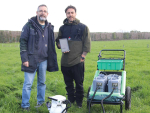
Researchers at Massey University are using a special piece of scientific equipment to improve the measurement of greenhouse gas emissions from pasture soils.
 increase font size
 Jenny Weston.
An animal health academic is urging best practice as a means of precluding the spread of disease.
The dean of Massey University’s Veterinary School, associate professor Jenny Weston, has spoken out in light of an outbreak of disease due to Mycoplasma bovis on a large South Canterbury farm.
Weston says while the outbreak is being contained and investigated, it is important for all farmers to be thinking about biosecurity and what animals, people and vehicles coming onto their farms might be carrying
“Nearly all farmers will buy in breeding bulls/rams, meaning they could also be bringing in infectious diseases like BVD [bovine viral diarrhoea] and Johne’s disease, which are important to look out for, as well as drench-resistant parasites and antibiotic resistant pathogens.
“There are a few things farmers can do to ensure the health and welfare of their livestock and to maintain the smooth running of their business,” Weston says.
Movements should be minimised and preferably minimise the number of sources of livestock. Record all movements (even between your own properties with multiple farms and grazing blocks) through the National Animal Identification and Tracing (NAIT) programme.
Test all incoming animals for things that can be relatively easily tested for.
Vaccinate and quarantine drench when animals come onto the farm. Quarantine and keep new animals isolated for at least 1-2 weeks.
Other things to consider include:
Insist on cleanliness of people, vehicles and equipment coming onto your farm.
Provide good washing up facilities, e.g. for boots, aprons, etc for people coming onto or leaving your farm as many pathogens can be transmitted via blood or faeces.
Ideally, look to coordinate grazing rotations with the neighbours so that your animals aren’t “over the fence” from the neighbour’s animals.
Researchers at Massey University are using a special piece of scientific equipment to improve the measurement of greenhouse gas emissions from pasture soils.

Interest in agritech and production animal systems has prompted Massey University's School of Agriculture and the Environment to new majors to its popular animal science degree.
Testing confirms H5 bird flu in a single northern giant petrel, found dead on a remote Cape Palliser beach in the Wairarapa, says Dr Mary van Andel, the Ministry for Primary Industries' (MPI) Chief Veterinary Officer.
The industry is crying out for graduates with agricultural related degrees.
The apple sector is working with the Government to unlock access to two key markets that could bring millions in revenue for apple growers.



National’s much-touted free trade deal with India featured in the Rural Issues Debate at Mystery Creek, Hamilton on Wednesday night.

New Zealand's 2026-27 freshwater fishing season has opened, with anglers encouraged to head to rivers and lakes over the coming days as conditions look favourable across much of the country.
Central Otago District Council (CODC) has voted against a plan to spread treated sewage sludge from Cromwell and Alexandra on farmland near Lauder, a decision Federated Farmers says reflects strong opposition from rural residents.
Pāmu has released its FY26 Integrated Annual Report, reporting a Net Operating Profit of $113 million, more than double the $49 million recorded in FY25.
Meat Industry Association data, released alongside the Red Meat Sector conference in Wellington, shows export value climbing across the US, China, UK and Canada.
Applications are set to open for the 2027 Zanda McDonald Award, a trans-Tasman award recognised for identifying and fast-tracking talented young leaders in agriculture and agribusiness.