A rapid antigen test (RAT) aimed at early detection of facial eczema (FE) in ruminants may help manage a disease that costs the New Zealand economy millions of dollars each year.
The Ministry for Primary Industries’ Sustainable Food and Fibre Futures fund is investing more than $35,000 in a project with Tokaora Diagnostics to develop a prototype FE RAT and undertake field testing. The test could be used with sheep, cattle and deer, but initial trials will focus on dairy cattle.
is caused by a toxin found in fungal spores that grows on dead and dying plant matter in warm, moist conditions The damage it does to the liver causes the body to be unable to process waste and, along with a breakdown of chlorophyll in the skin, leads to heightened photosensitivity. This gives the pronounced sunburn and cracked skin that gives the disease its name.
MPI’s director of investment programmes Steve Penno says that, as a liver disease, facial eczema often doesn’t show physical symptoms until it’s too late to save the animal.
“FE is a long-standing issue for our agricultural sector and with climate change it’s expected to get worse as the spores that cause the disease are more likely to grow.”
Tokaora Diagnostics is a family-owned research company. It is headed by chief researcher Frey Livingston and his mother Pam, who is the managing director. The company conducted initial research and development through start-up grants from Callaghan Innovation. It also won the Venture Taranaki Power Up Awards in 2022 and received mentoring through the Sprout Agritech Accelerator programme.
Frey says they are grateful to have received so much support to bring attention to an ‘invisible’ problem.
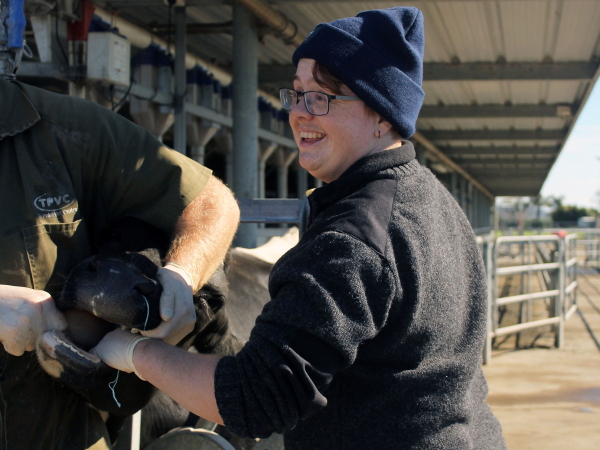
“Right now, farmers can test for the disease through blood samples taken by vets but it is expensive and time consuming. With our solution, farmers will be able to do the testing themselves quickly and easily via nasal mucus or saliva.”
Frey told Rural News that current testing costs about $25 per head, with at least a day or two for the sample to be shipped to a laboratory and analysed. While Tokaora’s test is not yet in production, he is confident that they could sell it for less than $10 a test, with results expected in around 15 minutes.
Financial losses from FE in New Zealand have been estimated as high as $274 million per year. This comes from lost production and the cost of labour, treatment and deceased animals.
Frey says that early, accurate detection of facial eczema will bring significant savings to farms in affected areas.
“It will enable farmers to surveillance test, facilitating timely treatment and allow more informed purchasing, breeding, and culling decisions. For vets, it will be a quick diagnostic tool when called to a poorly animal and for researchers it will give a timely answer to the ‘who has it and how badly’ question.”
MPI has invested in a range of projects aimed at combating FE, including breeding spore-resistant grass and working with vets, dairy farmers and rural professionals to raise awareness about how to take preventative action.