Award-winning Māori farm severely damaged by isolated Northland thunderstorm
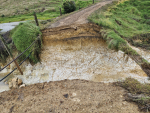
One of the country's top Māori farms has been badly damaged by a severe isolated thunderstorm which hit parts of the east coast of Northland last week.
 increase font size
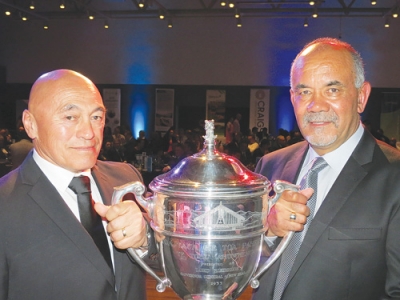 Cedric Nepia and Te Urua Flavell with Ahuwhenua Trophy.
The Ahuwhenua Trophycompetition that will in 2016 decide the top Maori dairy farm gives a great focus to Maori working in farming, says the Minister of Maori Development, Te Ururoa Flavell.
The minister officially launched the 2016 competition at the Federation of Maori Authorities conference in Wellington, last week. Entries are now open and details are on the Ahuwhenua Trophy website.
The trophy is the longest running primary sector competition in New Zealand, inaugurated in 1932 by the Maori leader Sir Apirana Ngata and Governor-General Lord Bledisloe.
Its purpose is to showcase achievement in the Maori farming sector to all New Zealnders, in particular successful approaches to governance, financing, management, environmental sustainability and the incorporation of tikanga Maori in business activities. Another key objective is to acknowledge the significant contribution Maori make to the overall NZ economy.
Flavell says there is great rivalry between iwi and towns and that is a great thing because it forces everyone to lift their standards.
He says in recent years some of the competition finalists have been trusts, which have collaborated and aggregated their lands for greater scale and therefore better economic returns for their people. But Flavell says there is still too much unproductive Maori land, and he hopes the Ahuwhenua competition can be a catalyst for change in this regard.
Flavell says Maori agriculture offers great job opportunities for young people.
"I have been down south and seen one of the training programmes Ngai Tahu offers. They are engaging with a lot of young Maori on their farms in the South Island and creating a whole lot of career opportunities. They give them a home, a farm to work on and with the training they are giving them they are lining up the young people to take over Ngai Tahu farms in the future."
Meanwhile, the chairman of the Ahuwhenua Trophy management committee, Kingi Smiler, says entering the competition offers a unique opportunity for individual Maori farmers, trusts and incorporations to get valuable professional feedback on their farming operations.
"The judges of the competition are highly skilled professionals in the agribusiness sector and they have access to data which can benchmark individual operations. All previous participants in the competition have said it was an invaluable exercise and they gained feedback they otherwise wouldn't have got. The modest cost of entering the Ahuwhenua Trophy is more than made up for by the benefits that can accrue, including becoming a finalist and winning the award."
Smiler is appealing to farm consultants who work for Maori farmers to encourage their clients to enter the competition. He says these people hold influence over many Maori farming operations and would see the benefits of their farms entering Ahuwhenua.
"For too long, Maori have failed to tell their own people and all New Zealanders their success stories. Maori farming is one of these and throughout the country great things are being done on land owned by Maori," he says.
One of the country's top Māori farms has been badly damaged by a severe isolated thunderstorm which hit parts of the east coast of Northland last week.
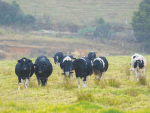
Recently two of New Zealand's top Maori sheep and beef farms held field days as part of the prestigious Ahuwhenua Trophy competition. The two are: Whangaroa Ngaiotonga Trust, northeast of Whangarei, and the proprietors of Tawapata Onenui farm on Mahia Peninsula in southern Hawke's Bay. Reporter Peter Burke attended both field days.
Farms from Northland and northern Hawke's Bay are the finalists in this year's Ahuwhenua Trophy competition for the top Māori sheep and beef farms.
The search is on to find the top Māori sheep and beef farm with entries now open for the 2025 Ahuwhenua Trophy competition.
A dairy farm owned by one of the largest Māori dairying farming operations in the country has won the prestigious Ahuwhenua Trophy for the top Māori dairy farm for 2024.


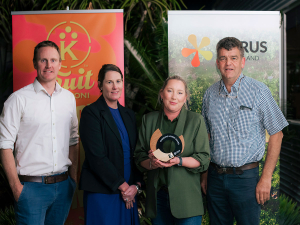
New Zealand's citrus growers were challenged to build their future on the value embedded in their fruit rather than the volume they produce, at Citrus New Zealand's annual gathering in Gisborne on 17 September.
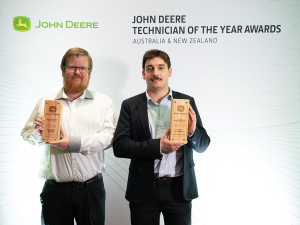
Leading John Deere technicians and apprentices from New Zealand and Australians were recognised at the recent sixth annual JD Technician of the Year Awards, held in Brisbane.
In Dacre, near Invercargill in New Zealand’s South Island, Bruce Dinnington is running a dairy operation unlike any other.
A free online platform aggregating governance vacancies across rural and regional New Zealand has been launched.
Environment Minister Nicola Grigg has announced details of a new rural plastics recycling scheme.
Agricultural drone operators say that a government decision to allow lower-risk drone work without certification won’t lower standards but drive innovation and efficiency.